
Helmet Guide: Choosing the Right Motorcycle Helmet & Getting the Perfect Fit
Your helmet is the single most important piece of motorcycle safety gear you’ll ever buy. Whether you’re commuting, touring, riding adventure bikes, or tackling dirt tracks, choosing the right helmet, and making sure it fits properly, can make all the difference.
This guide explains the different types of motorcycle helmets, what they’re best suited for, how to achieve the correct fit, and the safety standards to look for before buying.
Contents
Which type of motorcycle helmet is the safest?
A full-face helmet offers the highest level of protection because it covers the entire head, including the chin. Since a significant number of motorcycle impacts involve the chin area, a full-face helmet is generally considered the safest choice for road riding.
How tight should a motorcycle helmet fit?
A new helmet should feel snug all the way around your head without causing painful pressure points. It shouldn’t move independently when you shake your head, but it also shouldn’t cause discomfort or headaches.
How do I measure my head for a helmet?
Use a flexible tape measure around the widest part of your head, approximately 2 cm above your eyebrows and ears. Compare the measurement with the manufacturer’s sizing chart, as sizes vary between brands.
Should I buy a helmet online?
If possible, try the helmet on in person first. Different brands suit different head shapes, so even if the size is correct, one manufacturer may fit you better than another.
What safety certifications should I look for?
ook for recognised safety standards such as: ECE 22.06, DOT, Snell (where applicable). Always buy from a reputable retailer.
How often should I replace my helmet?
Most manufacturers recommend replacing a helmet every 5–7 years, or immediately after any significant impact, even if there is no visible damage.
Can I wear glasses with a motorcycle helmet?
Yes. Many modern helmets include channels for spectacle arms, and modular helmets are often particularly convenient for riders who wear glasses.
Is a modular helmet as safe as a full-face helmet?
Modern modular helmets that meet current safety standards provide excellent protection, although a fixed full-face helmet generally offers the highest structural strength.
Types of Helmet
1. Full-Face Helmet
The full-face helmet is a motorcycle rider staple. It fully encloses the head, face and chin, and is a good choice for most riding activities. Given that around 50% of all motorcycle accidents involve the chin, a fully enclosed helmet should really be your number one choice.
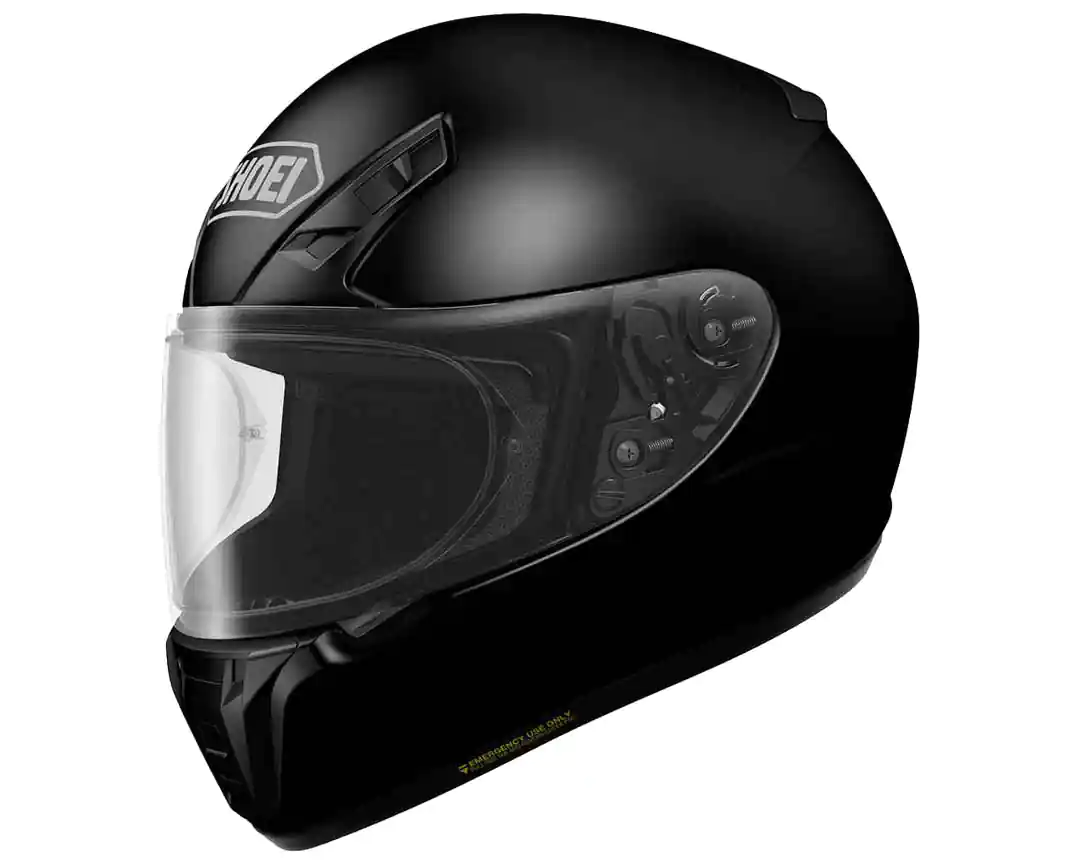
The full-face helmet is a motorcycle rider staple. It fully encloses the head, face and chin, and is a good choice for most riding activities. Given that around 50% of all motorcycle accidents involve the chin, a fully enclosed helmet should really be your number one choice.
2. Modular Helmet
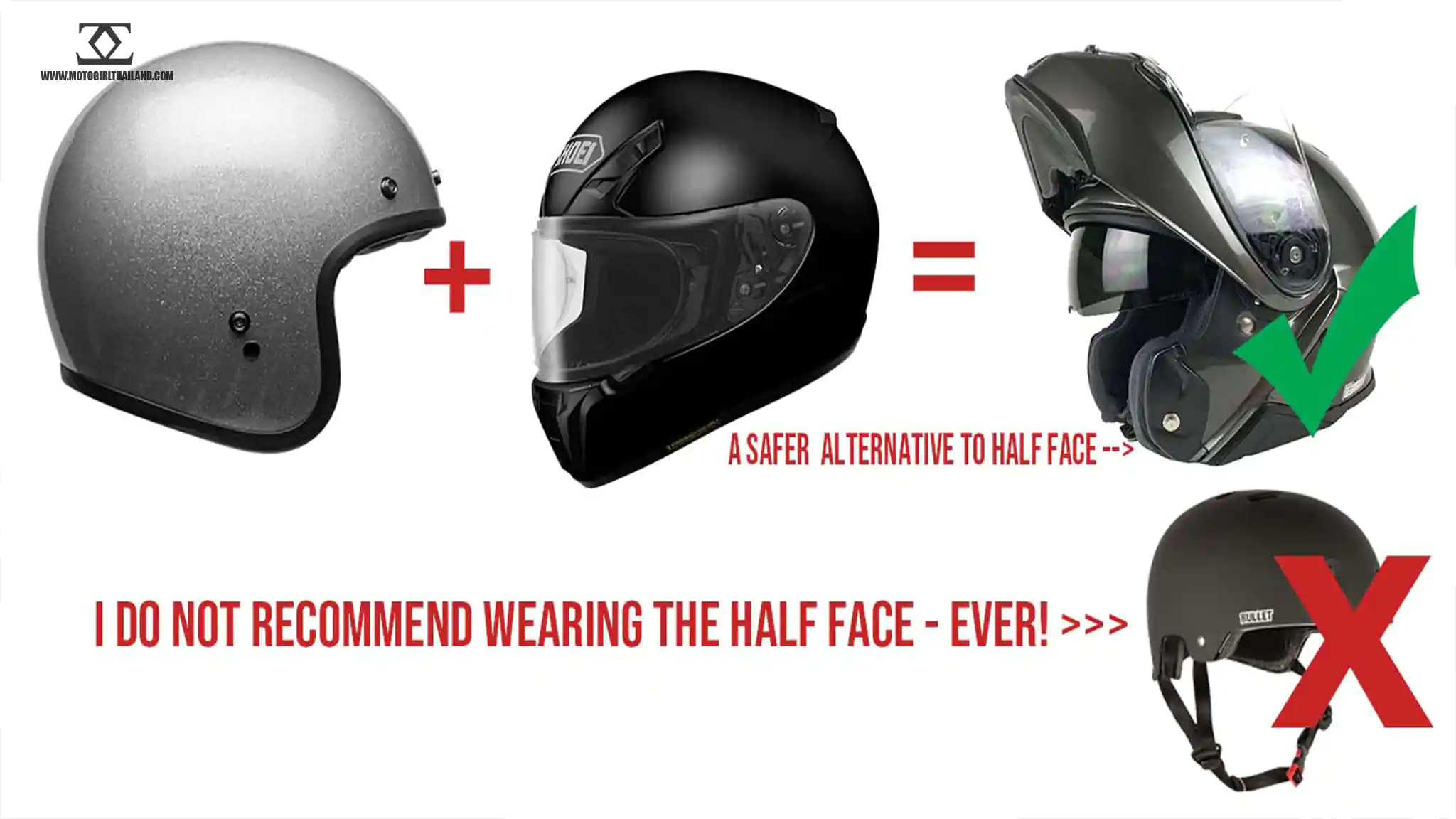
The modular/flip-up helmet is a combo of the open face and full face helmet. The compromise is that they are more weighty than the full face helmet, due to the additional design features (ie: the hinge for the flip-up front area).
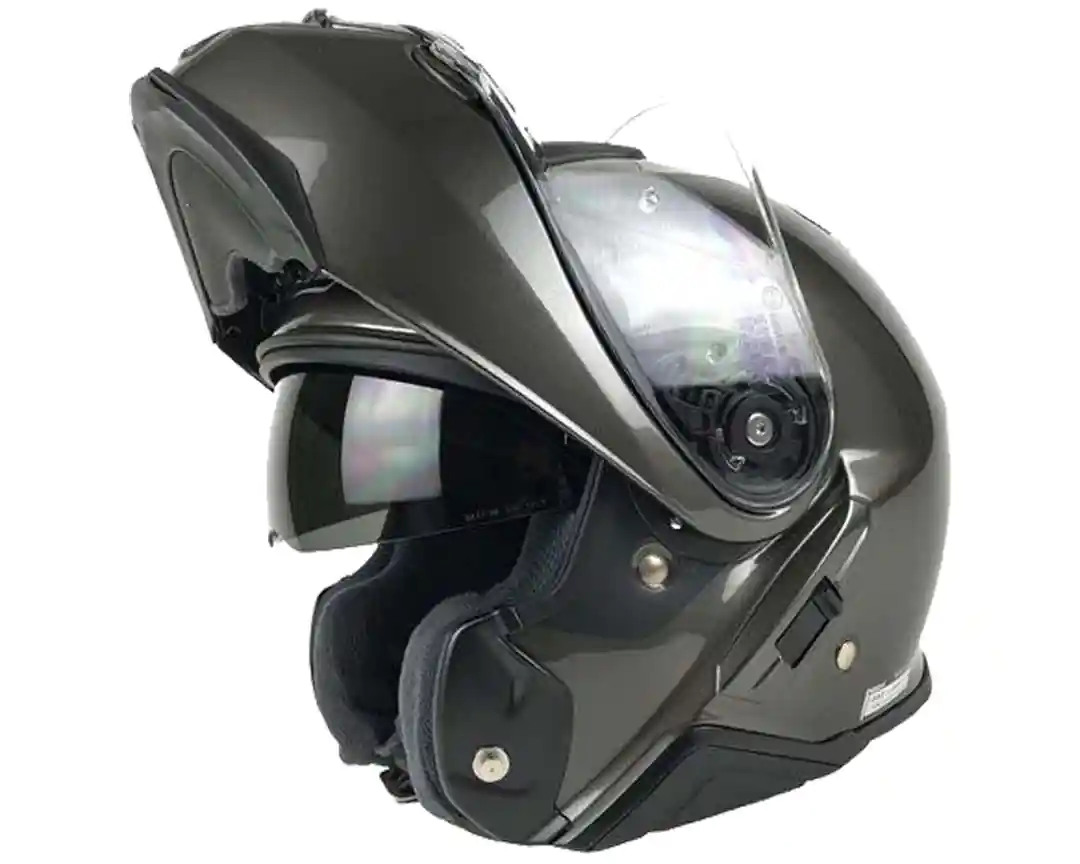
The modular is made from similar materials as the full face, with the same focus on safety and comfort. This helmet, along with the Dual Sport is a popular choice for adventure riders, who are looking for more versatility.
3. MX Helmet
Motocross helmets are designed to allow more airflow than full-face helmets, offering maximum protection at minimum weight. These helmets are often slightly less padded out than the full-face helmet, and need to be worn with goggles.
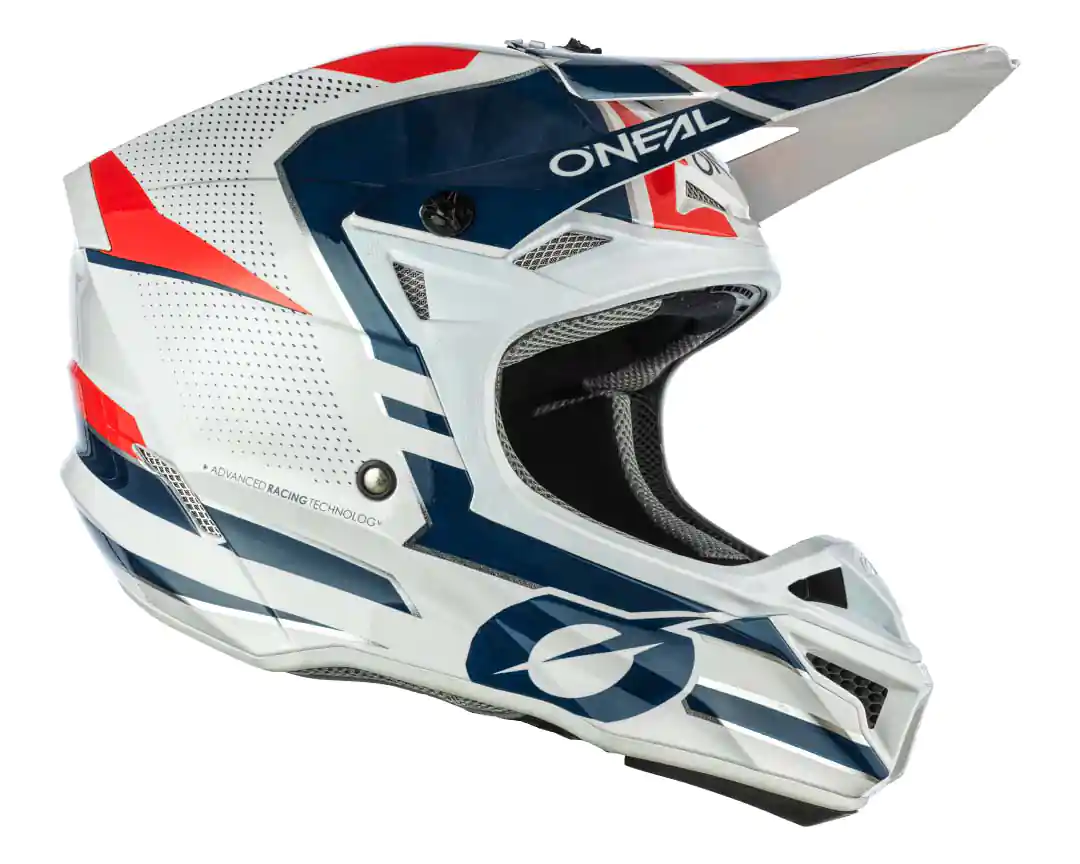
helmets are often slightly less padded out than the full face helmet, and need to be worn with goggles.
4. ADV / Dual Sport
Designed to be used on-road and off-road, the dual sport is a good compromise for those who enjoy riding both road and dirt.
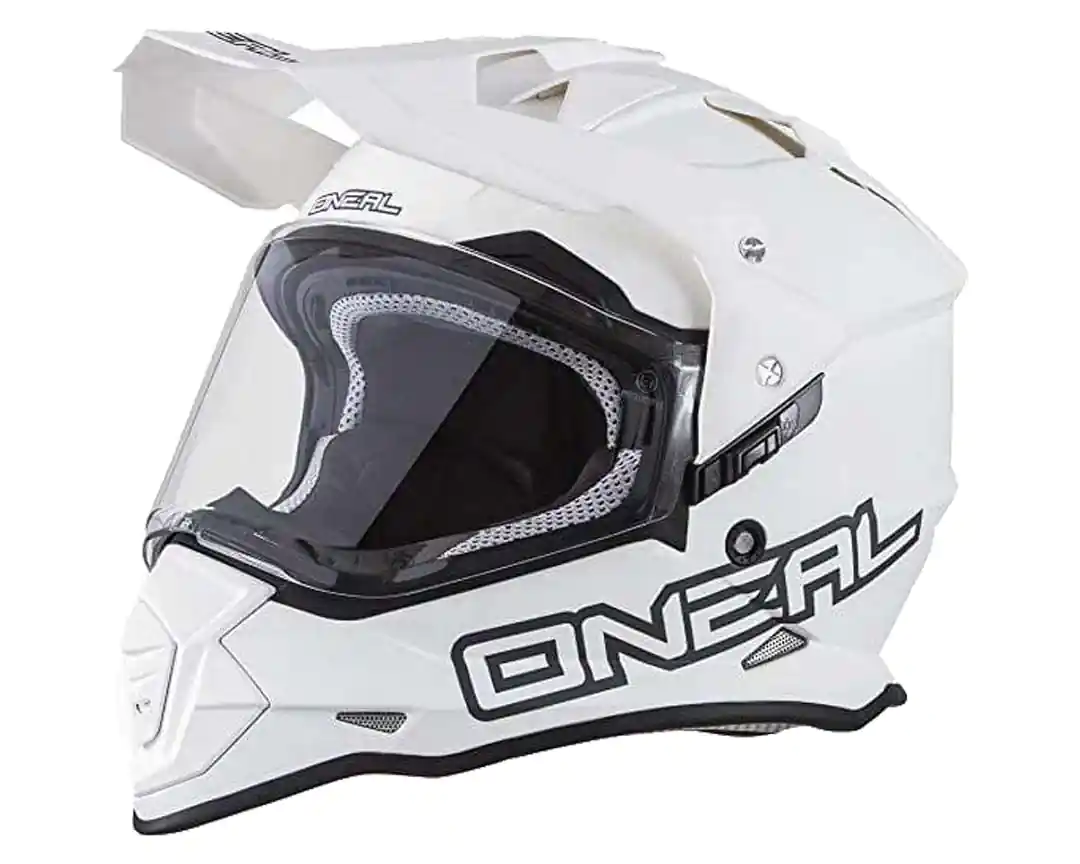
The helmet padding matches the full-face helmet (more padding than off-road), and the design has been tailored to be more aerodynamic. The less protruding chin bar and visor helps prevent the head from being thrown back when riding at speed.
5. Open-Faced
Also known as the 3/4 helmet, the open face is a popular lightweight helmet for many riders. The compromise, however, is the lack of chin protection.
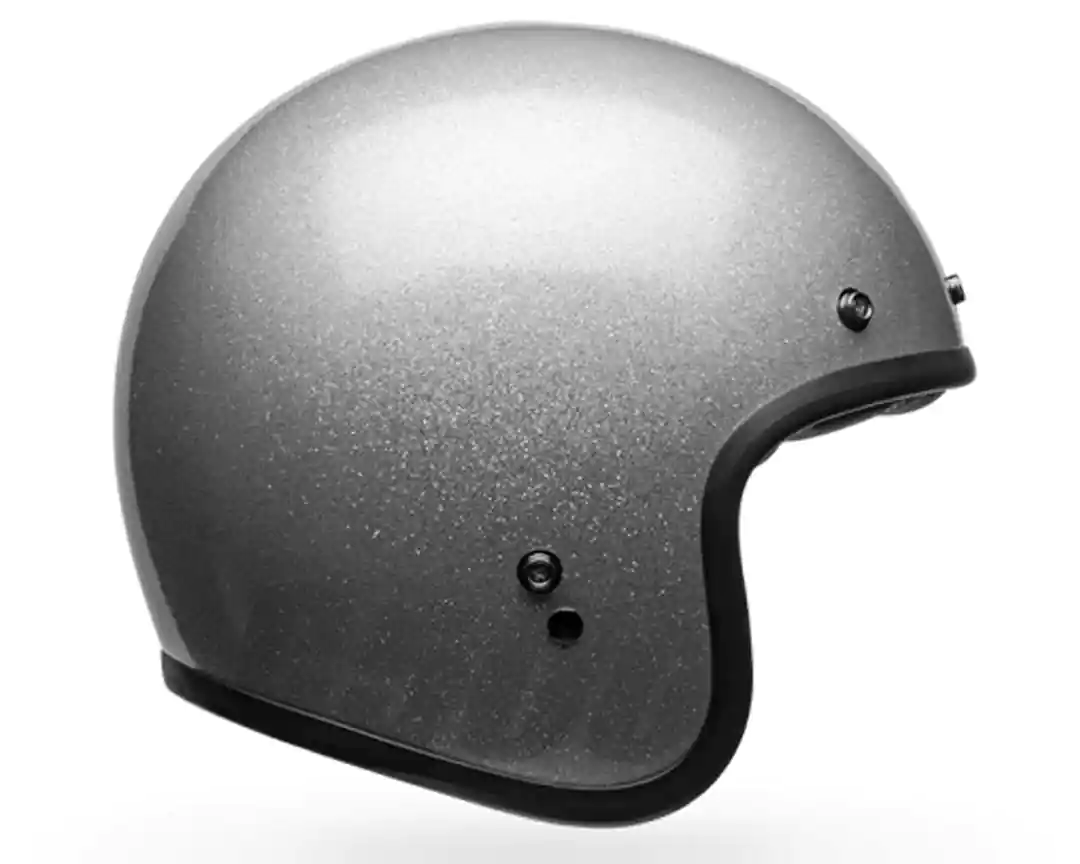
Many of these helmet styles will come with a clear visor, which protects against the elements.
6. Half-Face
With just the top of the head being minimally protected, this helmet is the least safe option to wear (bar wearing none at all). Most often this style of helmet will not meet motorcycle safety requirements.
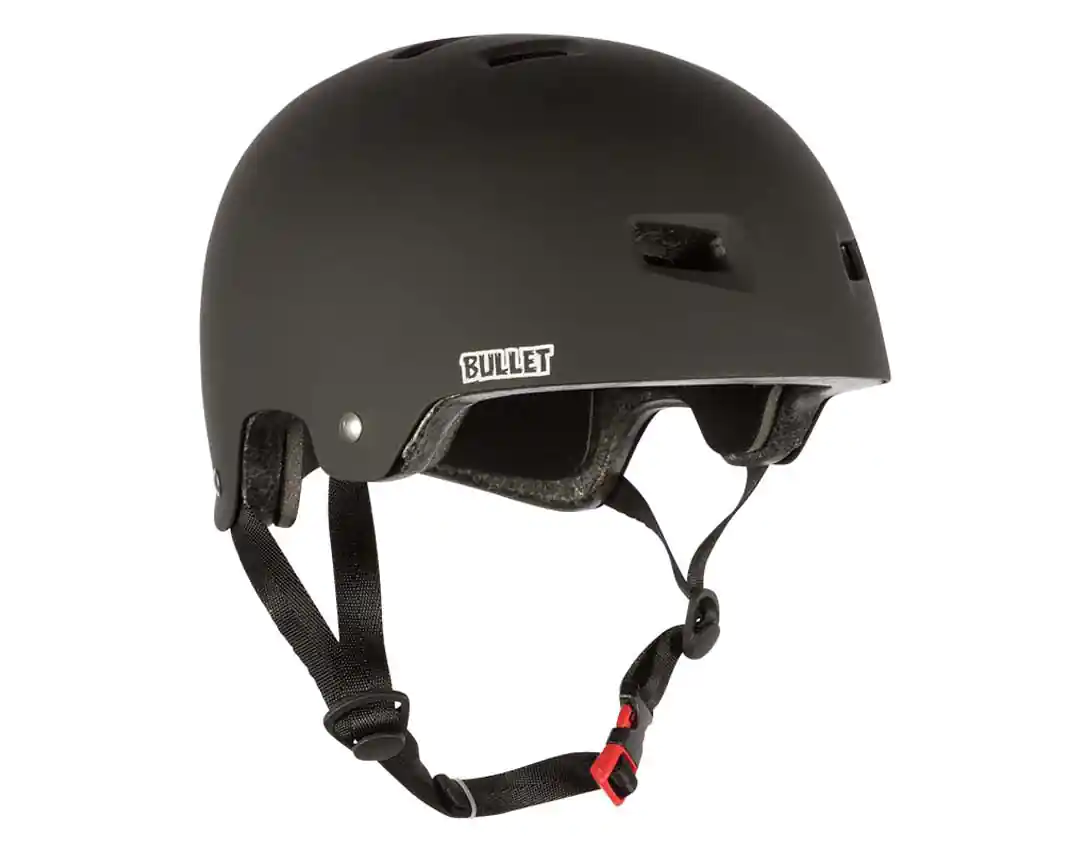
Many of these helmet styles will come with a clear visor, which protects against the elements.
How To Get The Right Fit
Helmet Guide Sizing Chart
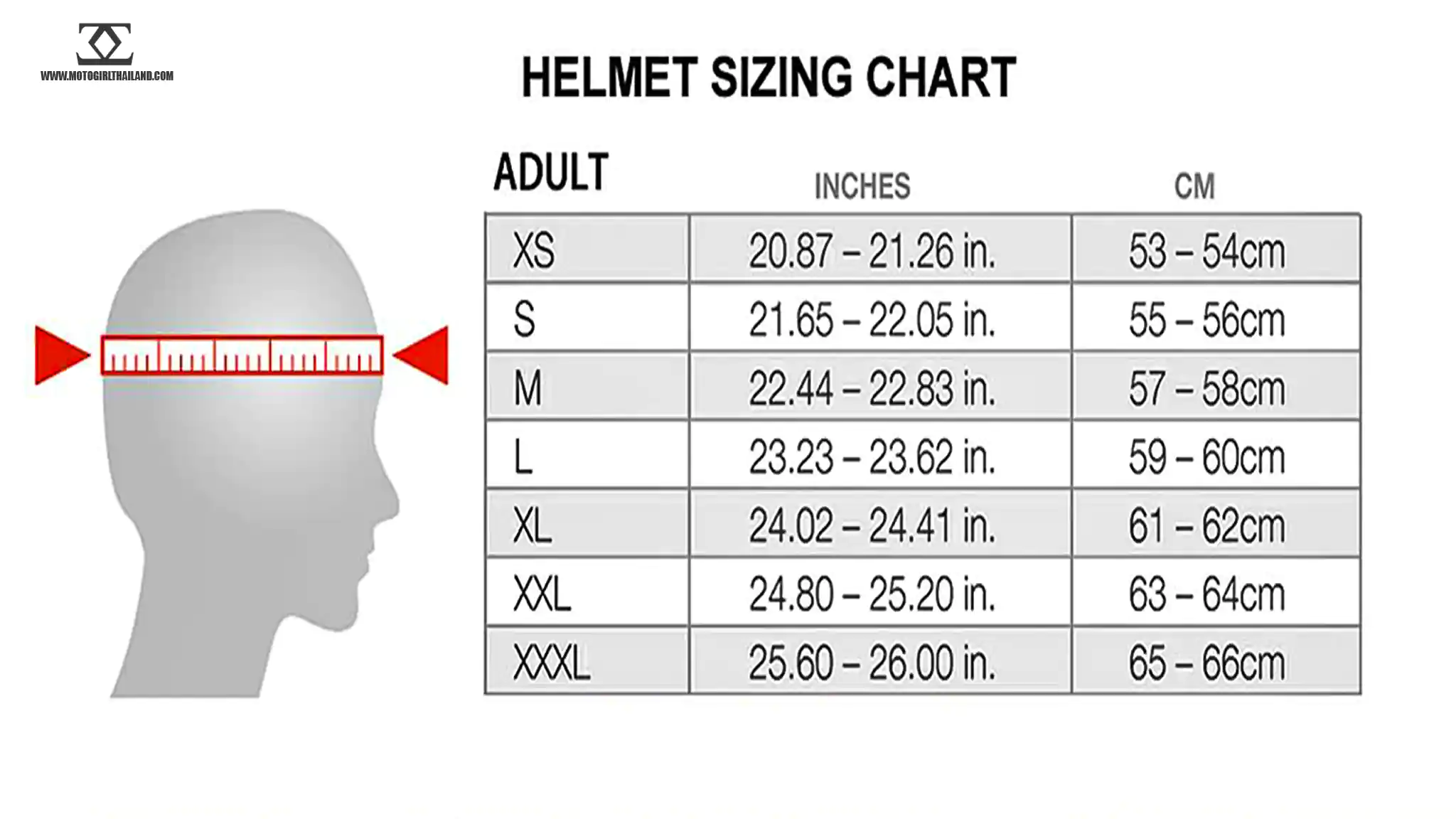
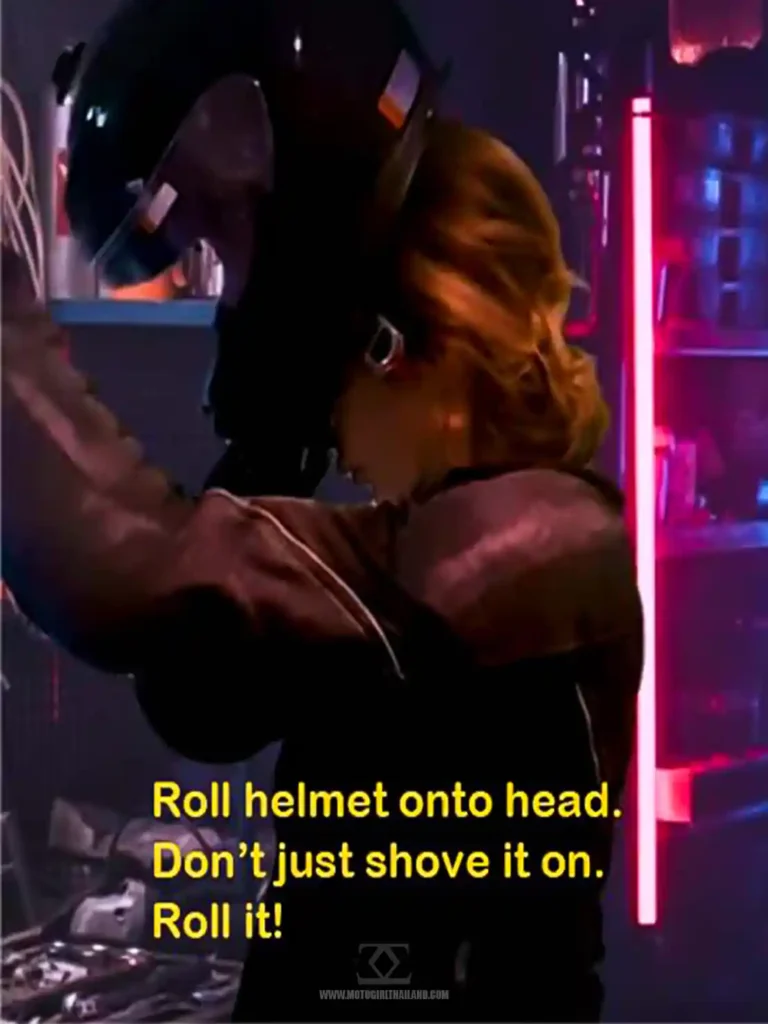
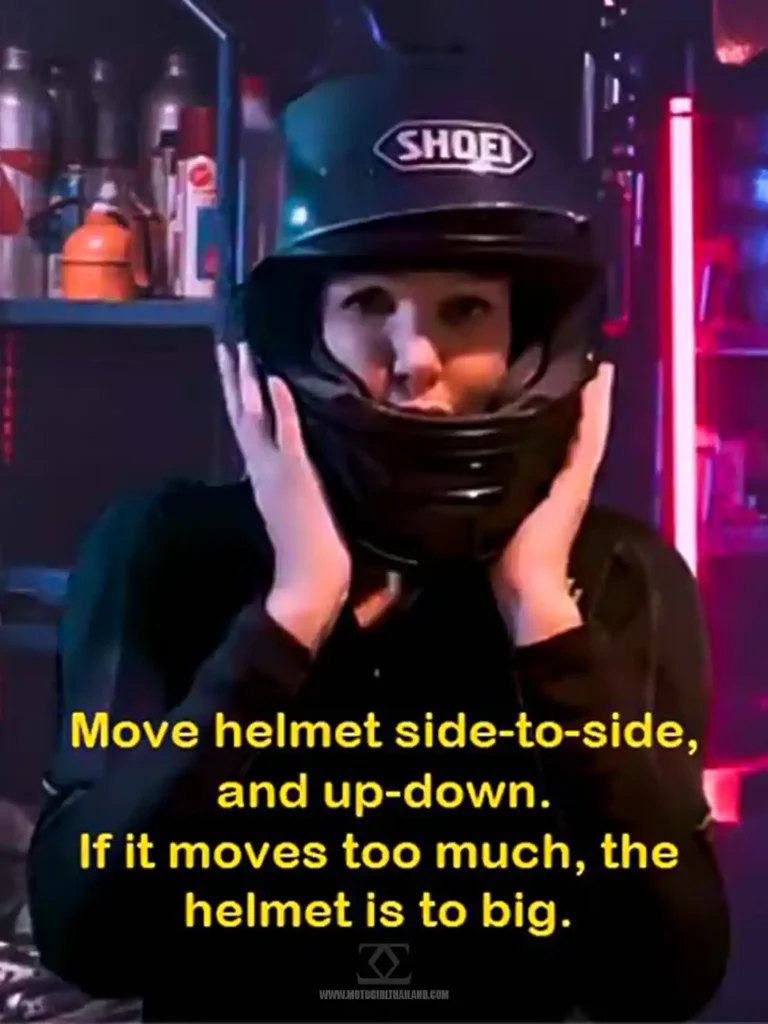
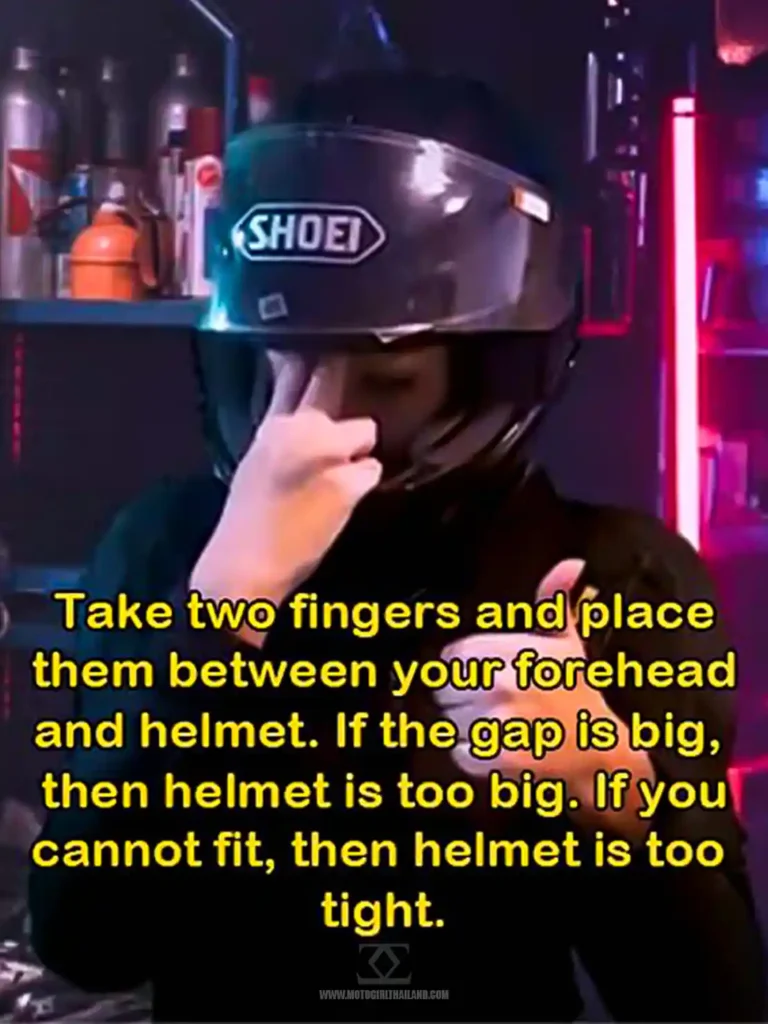
Video Helmet Guide: The Best Fit – Skip ahead to 2.12 if you want to see the fitting guide only
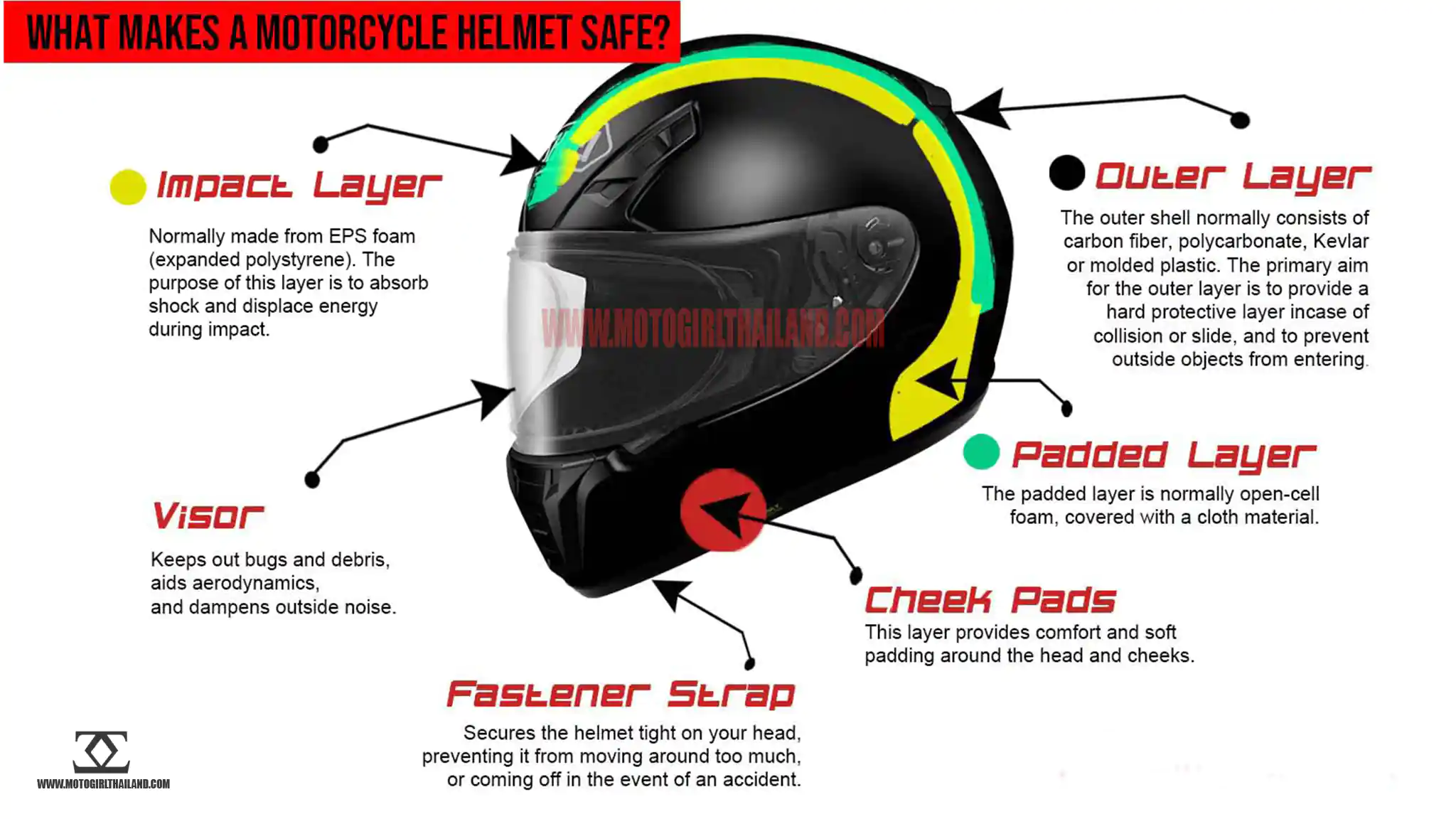
What Makes a Helmet Safe?
Safety Factors
Which One Should You Choose?
Which Helmet?
The best choice of helmet ultimately depends on what kind of riding you are doing. If you are riding mainly on the road, then a full-face helmet is your best choice. However, if riding more off-road then obviously a motocross helmet is the better option.
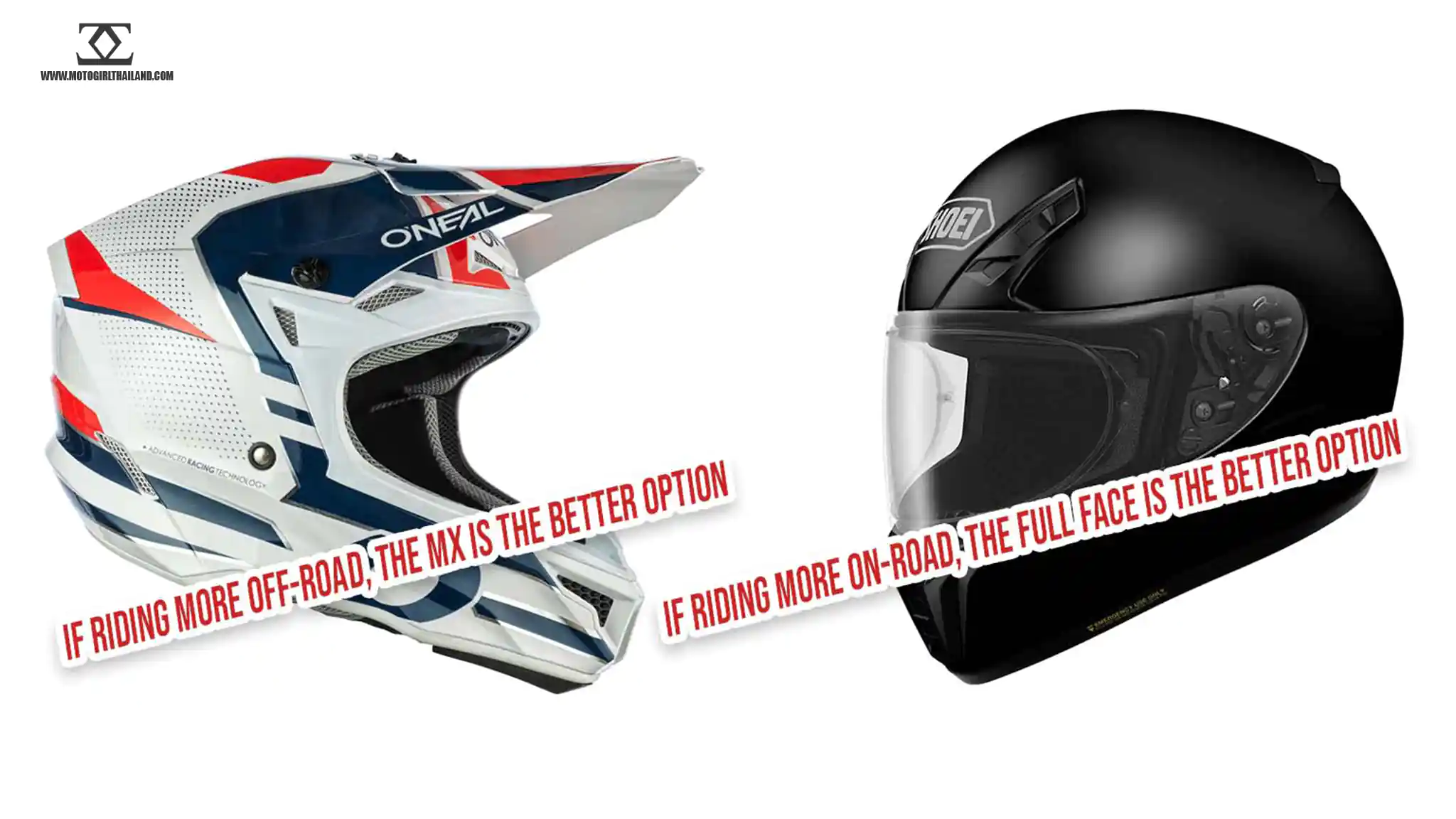
If you are riding on-road with a bit of trail and off-road thrown in, then a dual sport helmet is a nice compromise between on-road and off-road, which many adventure riders wear.
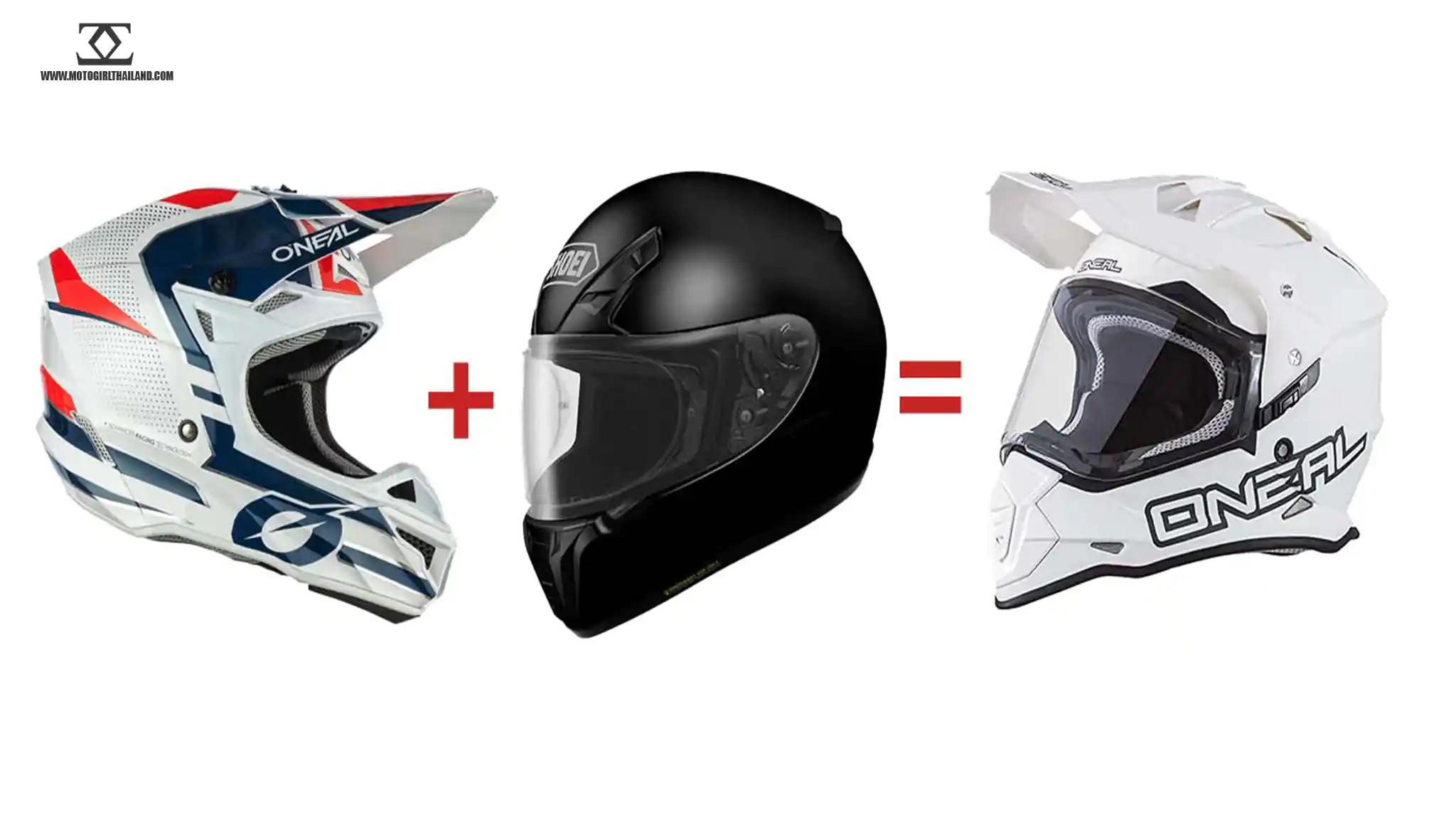
As for the open-face and half-face helmets, these provide the least amount of protection (with the half-face being minimal). These helmets, although convenient, don’t offer nearly as much protection as the other options. Given that around half of all motorcycle accidents involve the chin, then it makes more sense to wear a helmet with more protection. A better option would be the modular helmet, which can be flipped up into an open-face style and flipped down for more protection. The modular is another popular choice for many adventure riders, due to the versatility it offers.
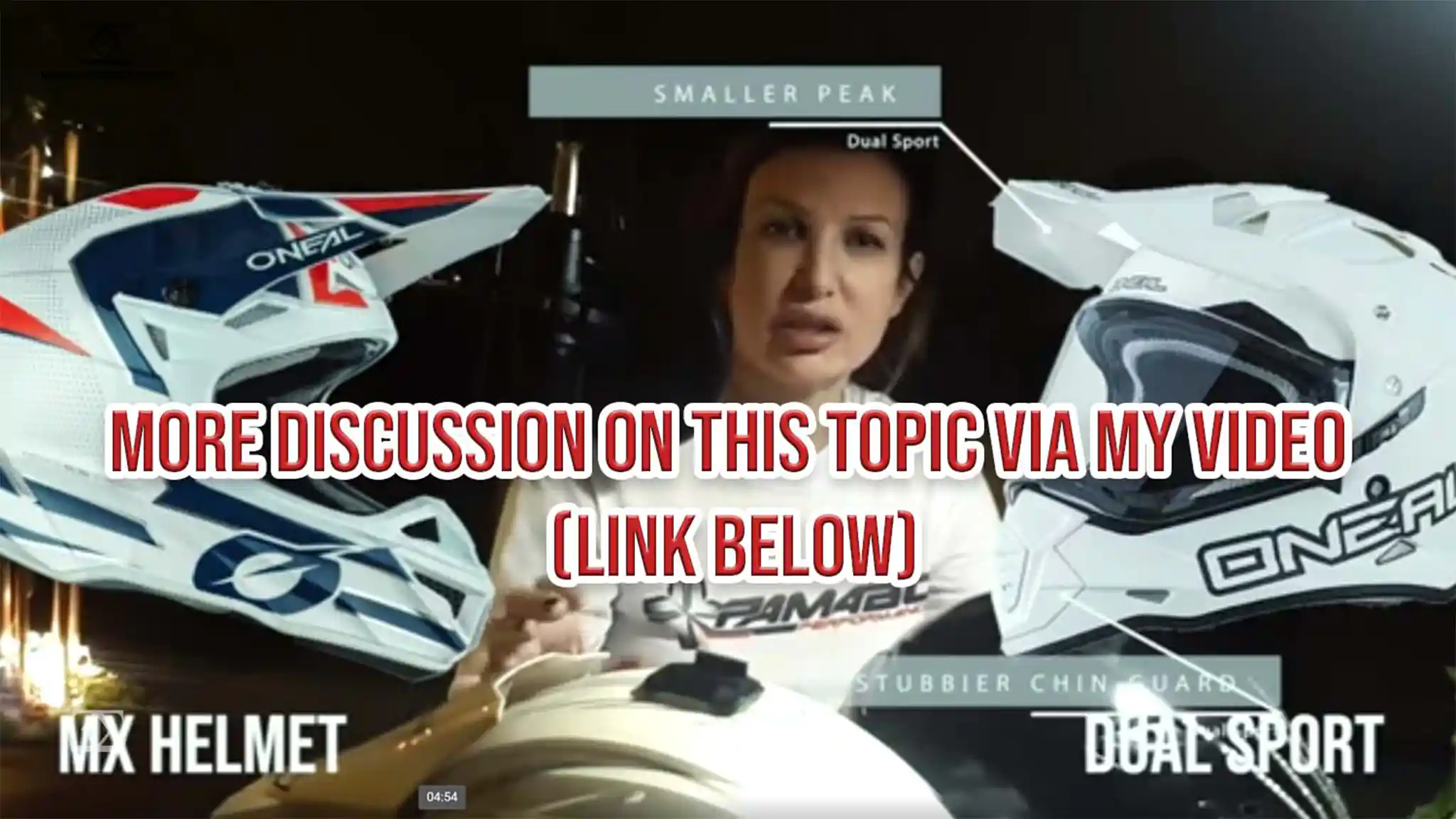
The video above also contains clips from my personal video diary from an accident I had in 2011 whilst wearing an open-face helmet. I have placed a warning prior to this segment playing, in case you prefer not to watch.