
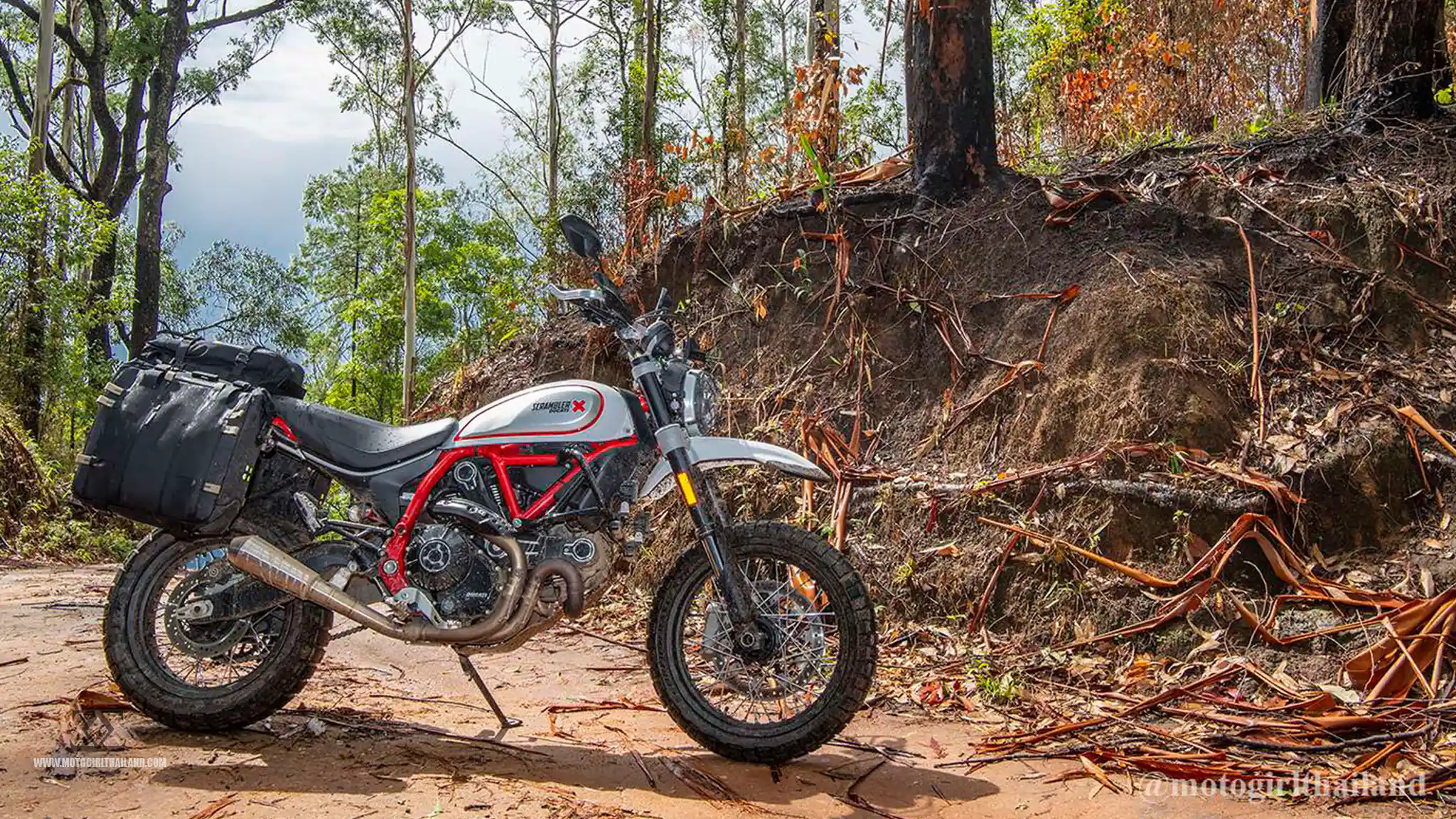
The Ducati Desert Sled – Review
Reviews | Motorcycle Review
The Ducati Desert Sled is one of those bikes that still turns heads years after it first launched. It looks purposeful, has real off-road styling, and unlike many retro scramblers, it was actually built to handle rougher terrain.
I first got a proper feel for the Desert Sled on a ride up to San Pa Kia, where wet trails, mud, and slippery sections gave me a good sense of what this bike is like away from perfect tarmac.
Click to Close
Contents
Honda CRF300L Review – Lightweight, Capable & Built for Thailand?
BMW 310GS Review – Small Adventure Bike, Big Fun?
Yamaha MT-07 Review-All Torque, No Talk?
Specs at a Glance
Specifications Overview
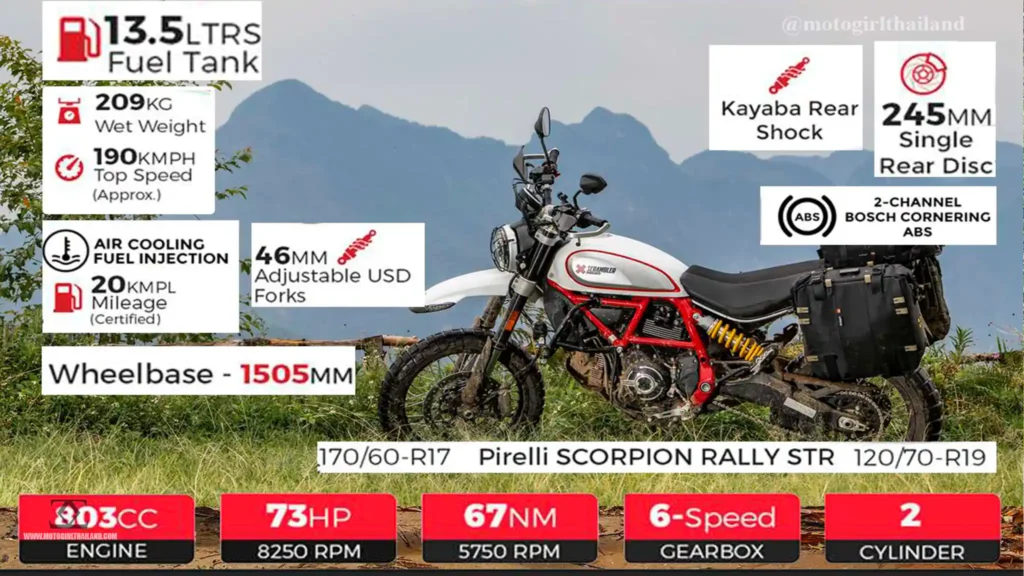
- Engine: 803cc air-cooled L-twin
- Power: 73–75 hp
- Torque: 68 Nm @ 5,750 rpm
- Transmission: 6-speed
- Seat Height: 860 mm / 33.9 in
- Wet Weight: 207 kg
- Fuel Capacity: 13.5 litres / 3.6 gallons
- Suspension: 46 mm fully adjustable USD forks, Kayaba rear shock with preload and rebound adjustment, 200 mm travel front and rear
- ABS: switchable for off-road use
- Tires: Front 120/70 R19, Rear 170/60 R17
First Impressions
Initial Thoughts
The first thing I noticed was the height. At 860 mm, the Desert Sled is a tall bike, and at 207 kg wet it isn’t exactly lightweight either. Sitting on it at 165 cm, I was very aware that I was unable to solidly flat-foot on the bike and that it could potentially be an issue off-road.
Looks-wise, the Desert Sled feels like one of the few retro-styled scramblers that actually backs up the image with proper hardware. Ducati genuinely changed the Scrambler chassis for the Desert Sled rather than simply putting knobbly-looking tyres on an Icon. It has a taller stance than the standard Scrambler models, a wide handlebar, more suspension travel, a beefed-up frame, and proper dual-sport proportions.
Is it Adventure-Ready?
Adventure Ready?
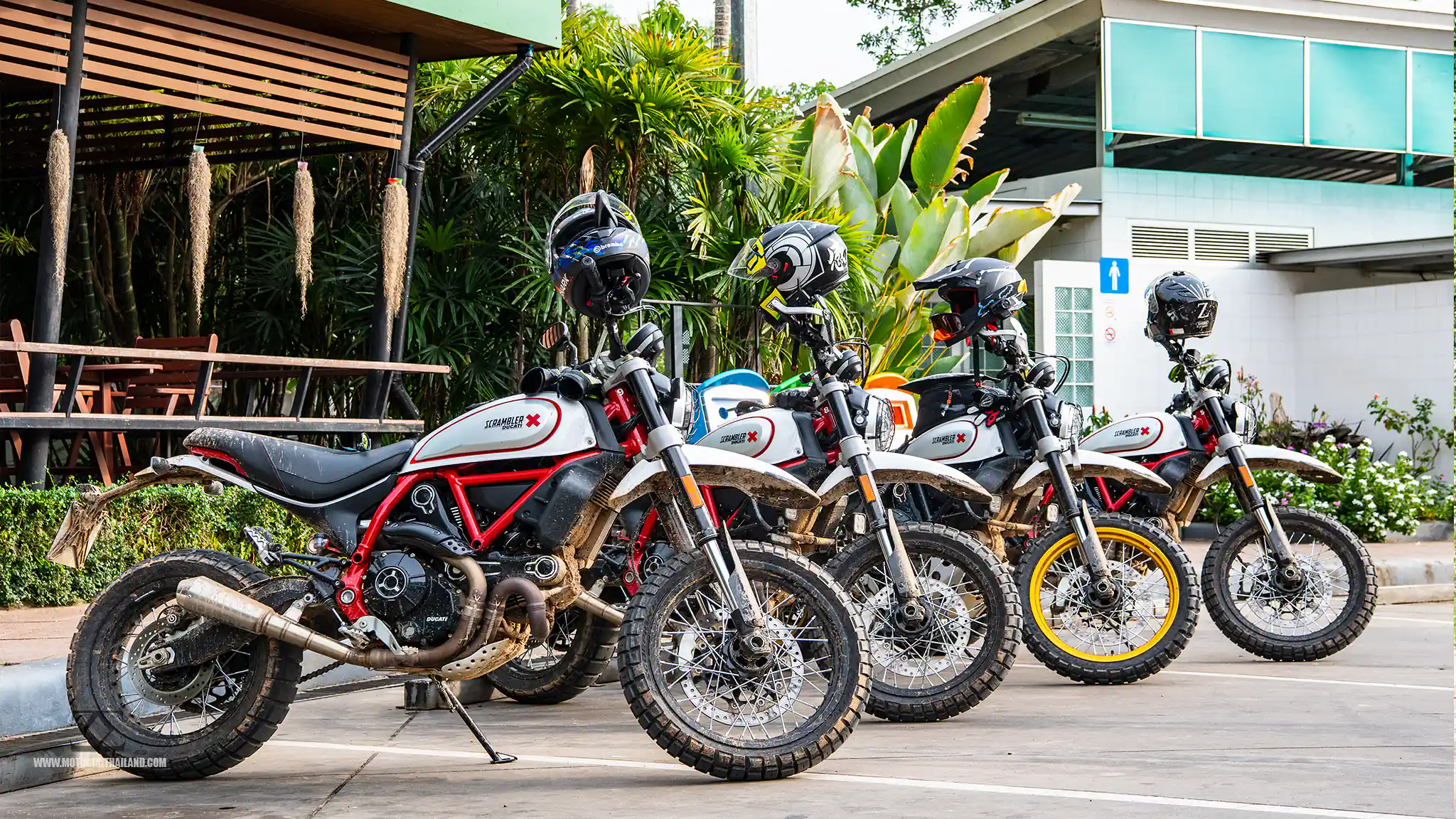
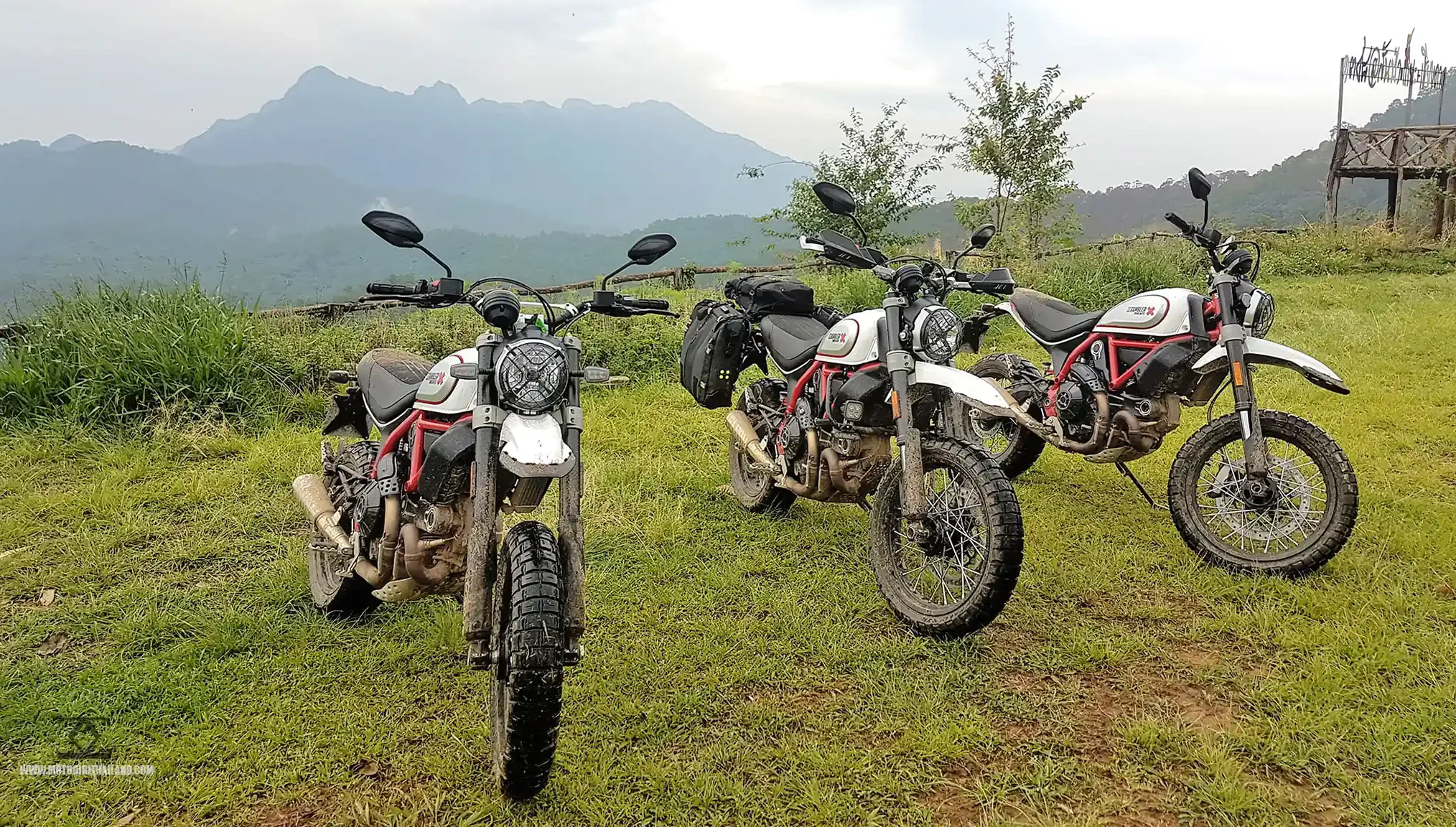
For a scrambler, yes. More than most. The Desert Sled was designed with a reinforced frame, longer swingarm, longer-travel suspension, and 19/17-inch spoked wheels, so it is far more than a styling exercise. It is not a full adventure bike in the modern sense, and it is not the bike I would choose for long, technical off-road expeditions over something lighter and more dirt-focused. But for mixed riding, broken roads, gravel, trails, mountain routes, and the kind of unpredictable surfaces you often find in Thailand, it has genuine ability.
Features and Technology
Features of The Ducati Desert Sled
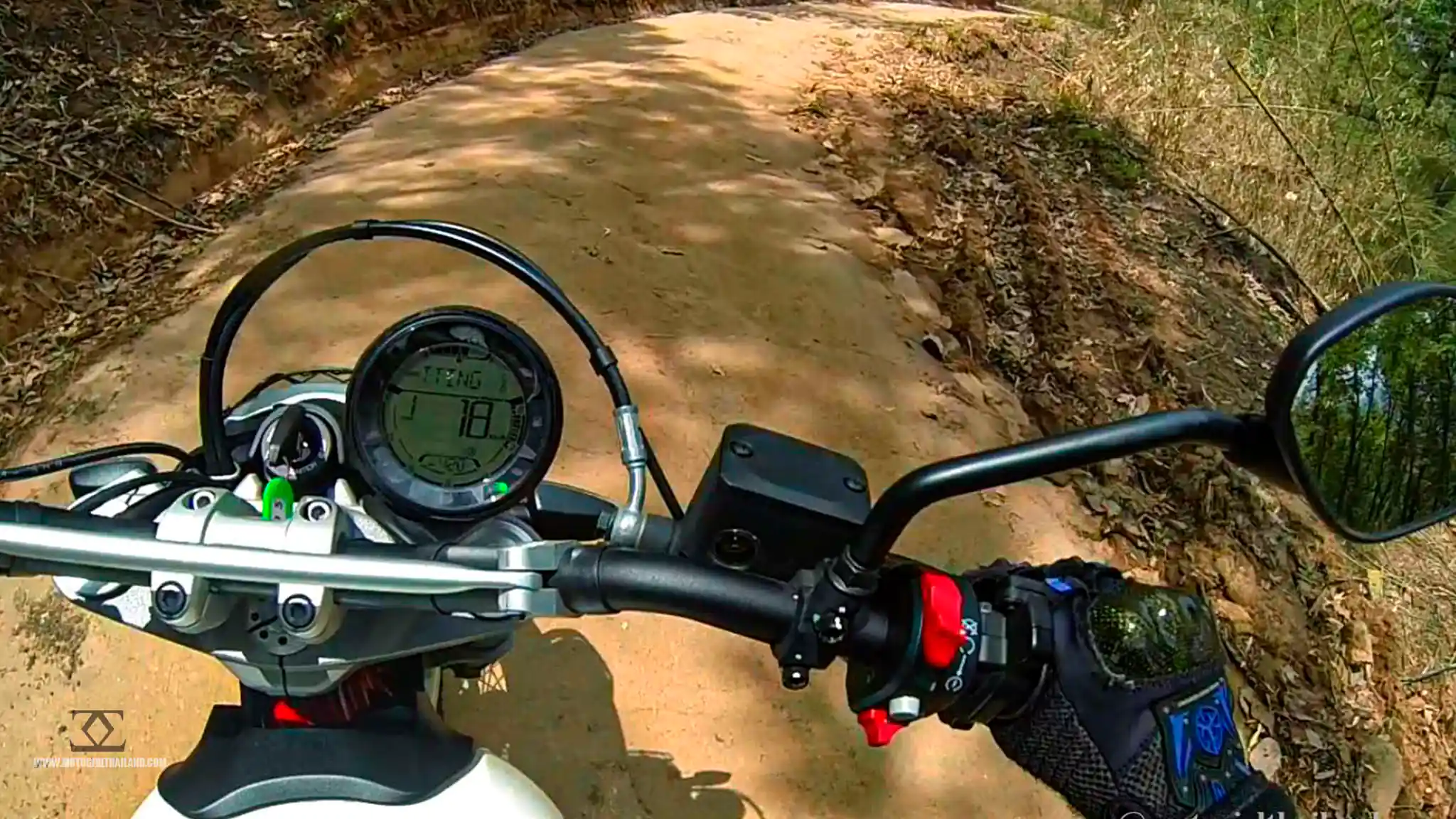
The Desert Sled isn’t packed with electronics, and that’s part of its appeal. Ducati concentrated on making the chassis more capable rather than turning it into a rolling computer.
The biggest differences between the Desert Sled and the standard Scrambler are the hardware underneath it.
- 46 mm Kayaba USD Forks. Fully adjustable forks with 200 mm of travel give the Desert Sled considerably more suspension capability than the standard Scrambler.
- Adjustable Rear Suspension. The Kayaba rear shock offers preload and rebound adjustment, with 200 mm of rear wheel travel.
- Reinforced Trellis Frame. Ducati strengthened the frame and altered the geometry to make the bike better suited to rougher terrain.
- 19-inch Front Wheel: The larger front wheel helps the bike deal with uneven surfaces and loose terrain.
- Pirelli Scorpion Rally STR Tires. These give the Desert Sled much more genuine mixed-surface ability than a conventional road-oriented Scrambler.
- Switchable ABS. ABS can be disabled through the instrument panel, which is useful when riding off-road where some riders may want more control over wheel lock-up.
- Engine Skid Plate. The underside of the engine has additional protection for riding over rougher surfaces.
- High Front Mudguard and Headlight Guard. Both add to the Desert Sled’s practical off-road equipment as well as its distinctive appearance.
- Digital Instrumentation. The LCD display is relatively simple compared with modern adventure bikes. Later versions added useful information such as fuel level and gear position.
There is no huge TFT screen, cruise control, riding-mode menu or complicated electronic package to distract from the riding experience. For me, that simplicity is part of what makes the Desert Sled appealing.
On-Road Performance
Riding On-Road
On the road, the Desert Sled is lively, fun, and full of character. The 803cc L-twin gives it enough punch for twisty roads and weekend rides, and the wide bars make it easy to throw into corners.
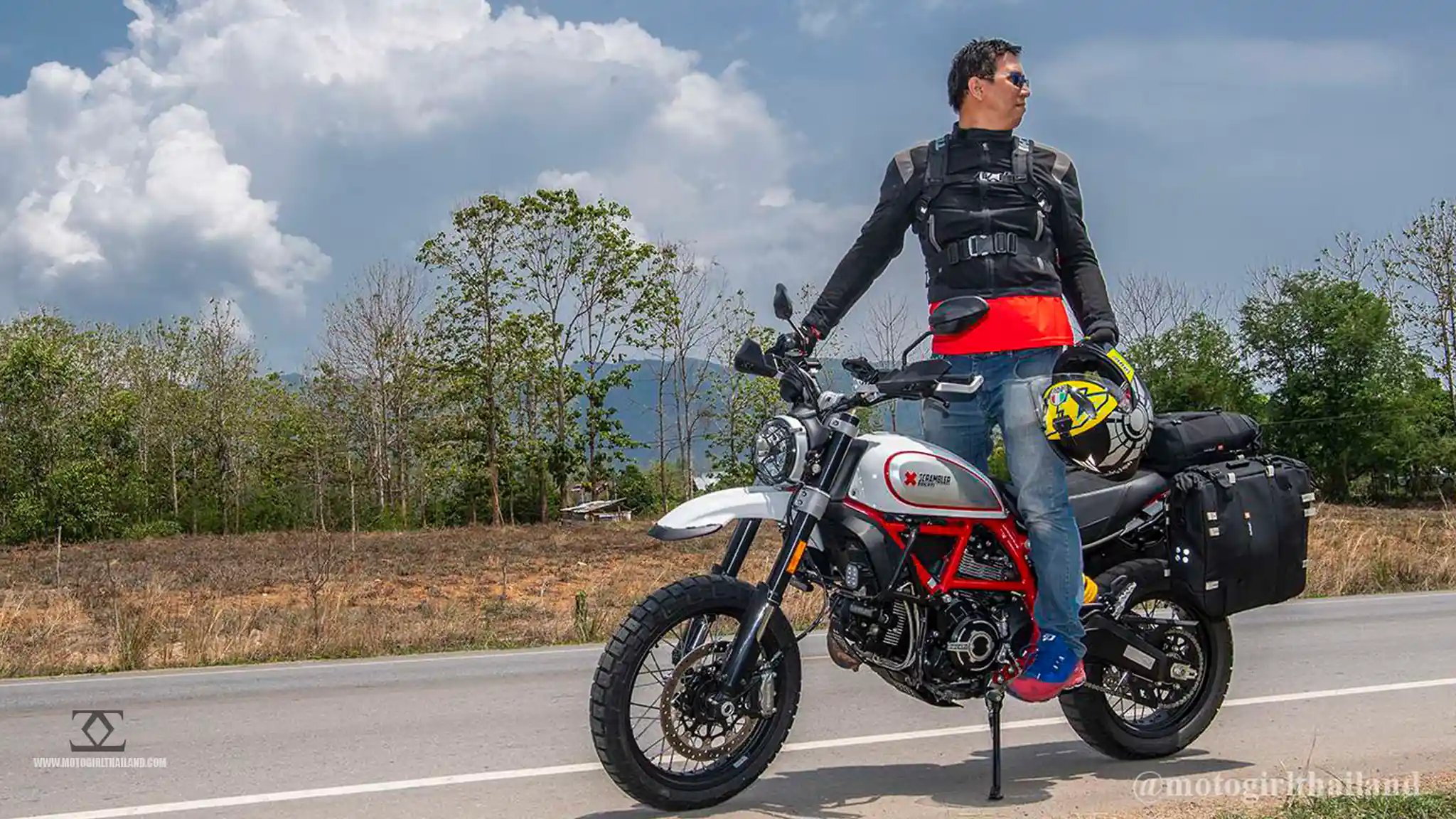
On the road, the Desert Sled surprised me. I expected a bike with this much off-road hardware to feel compromised, but it was remarkably smooth. I took it up to around 150 km/h and was surprised by how composed it remained. It isn’t a sports bike, but the 803cc L-twin has plenty of performance for Thailand’s mountain roads.
Off-Road Capabilities
Riding Off-Road
The Ducati Desert Sled as a genuinely capable off-road bike for its class, but the 207 kg weight changes what “off-road capable” means for me. On wet trails and muddy sections, it stayed more composed than I expected, and the tyres worked well enough, but the weight factor was consistently on my mind.
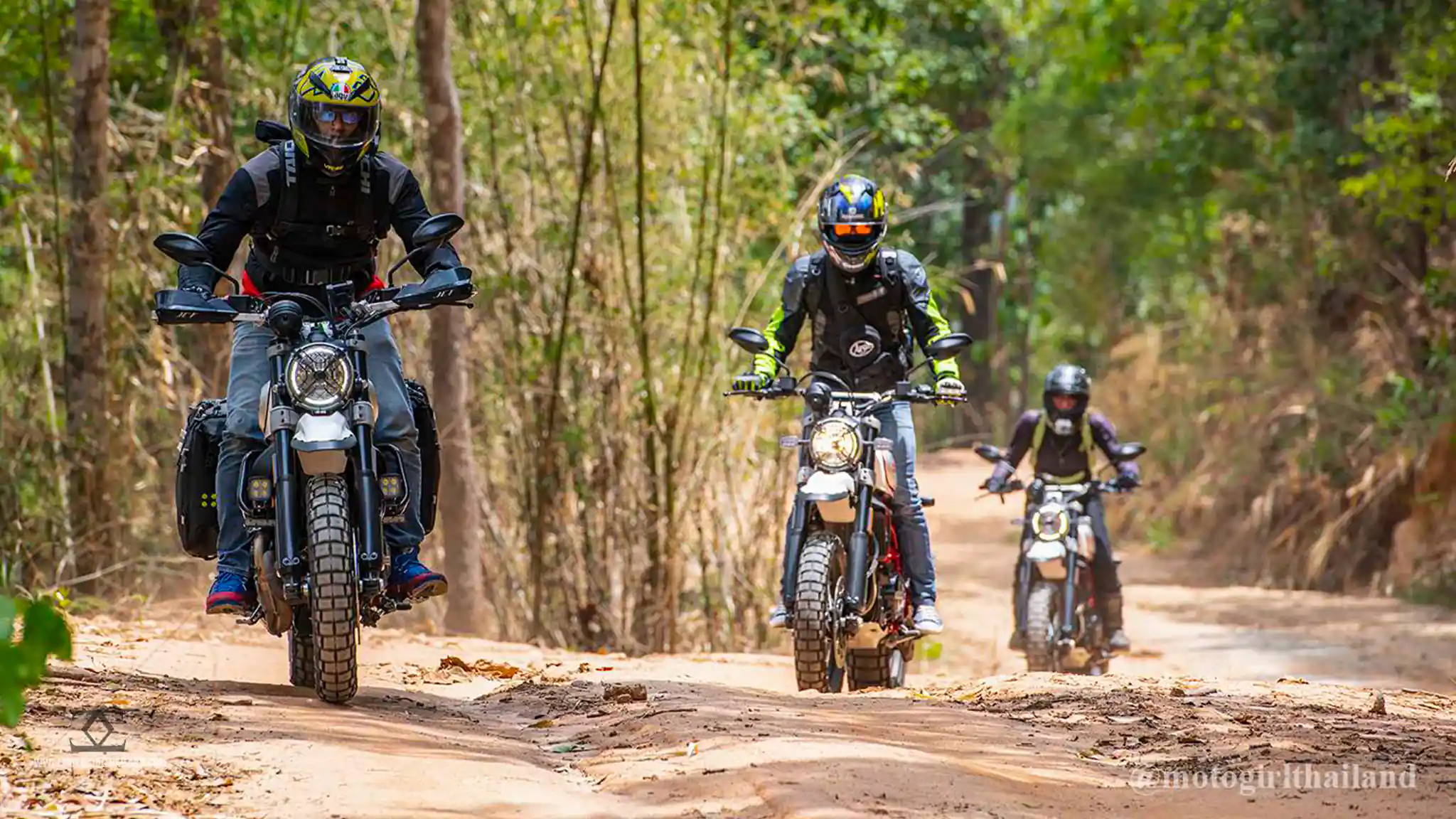
Given that it is still a heavier, more expensive Ducati rather than a lightweight trail bike, there is a limit to how wild most owners will want to go with it. But if your idea of adventure in Thailand includes dirt roads, mountain tracks, rough concrete, village backroads, or unplanned detours, the Desert Sled makes a strong case for itself.
Touring Potential
Riding Comfort
The Desert Sled can tour, but it would not be my first choice for long-distance comfort. It has enough engine and chassis ability for weekend escapes and shorter multi-day trips, and there are accessory options for luggage. But wind protection is basically nonexistent, and the overall setup feels better suited to day rides and backroad exploration than to eating up huge highway miles. For Thailand, where many great rides are shorter, slower, and more scenic, that is less of a problem than it might be elsewhere. For repeated long motorway stretches, though, there are better options.
Performance on Thailand’s Terrain
Is it Thailand-Suitable?
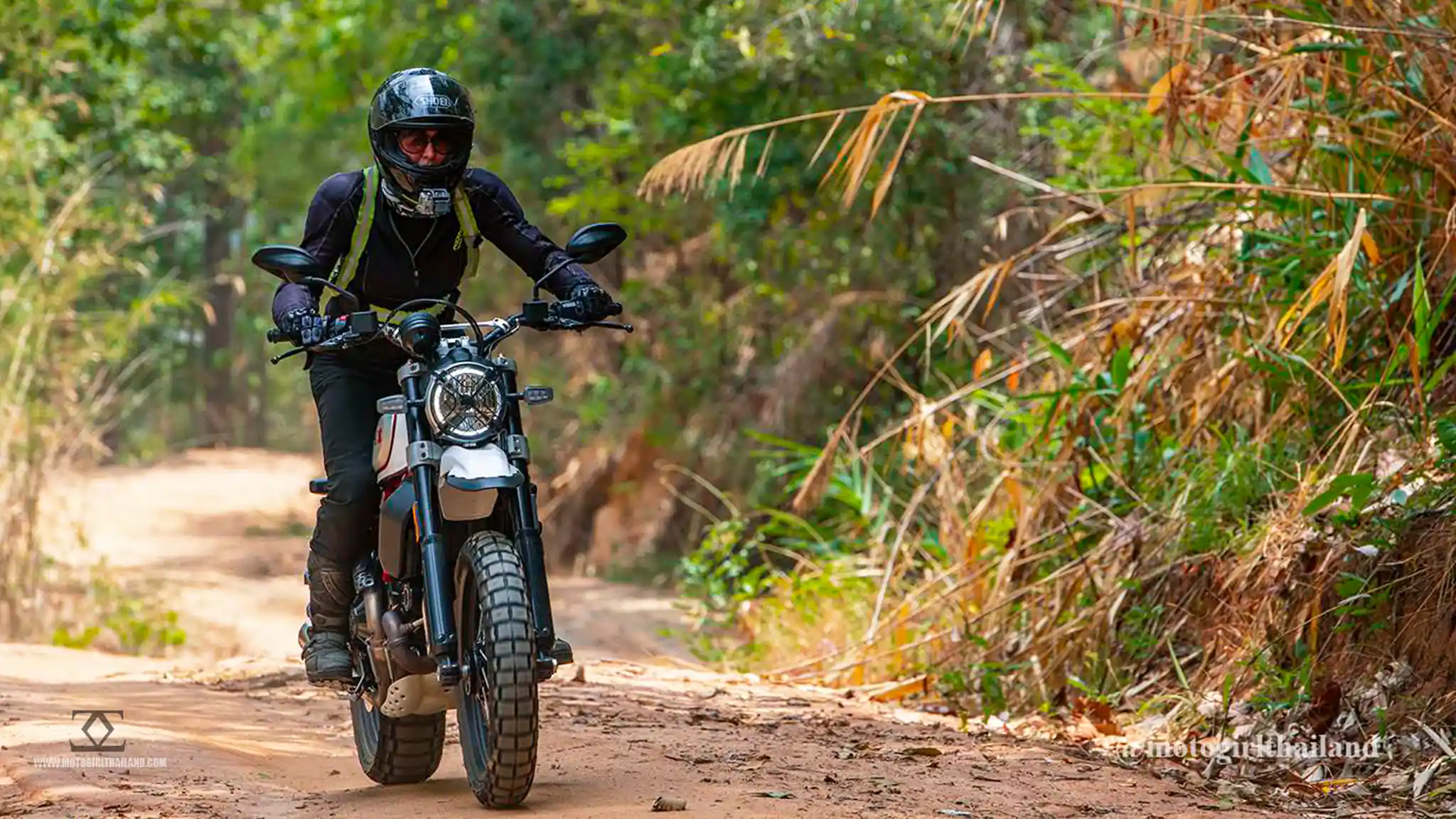
Thailand is actually one of the places where the Desert Sled makes a lot of sense. Not because it is the perfect bike, but because the riding conditions here often reward versatility more than specialisation. Broken tarmac, rough shoulders, steep mountain roads, hidden gravel, muddy viewpoints, and patchy rural surfaces are all part of normal riding. The Desert Sled’s suspension, tyre setup, upright stance, and general toughness suit those conditions well. It is also a fun match for northern routes, scenic detours, and exploratory rides where you are not entirely sure what the road will become.
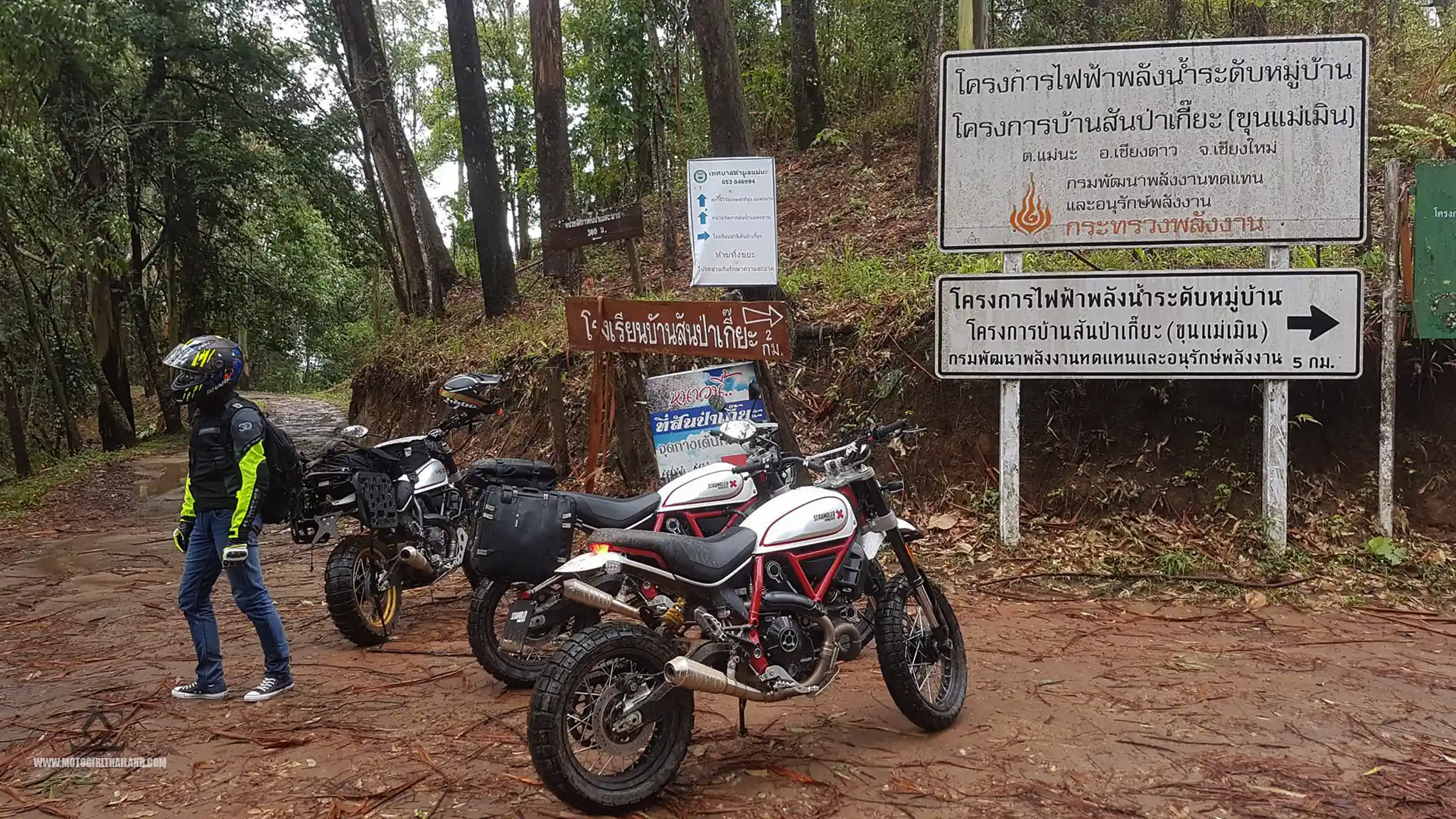
The downsides in Thailand are the height, the weight when maneuvering slowly, and the fact that if you want one now you are realistically looking at the used market.
Comfort and Ergonomics for Shorter Riders
Info for Shorter Riders
At 860 mm, the seat height is a serious consideration. Taller riders will probably enjoy the roomy feel, commanding view, and easy standing position, but shorter riders may find it intimidating, especially on uneven ground or with luggage.
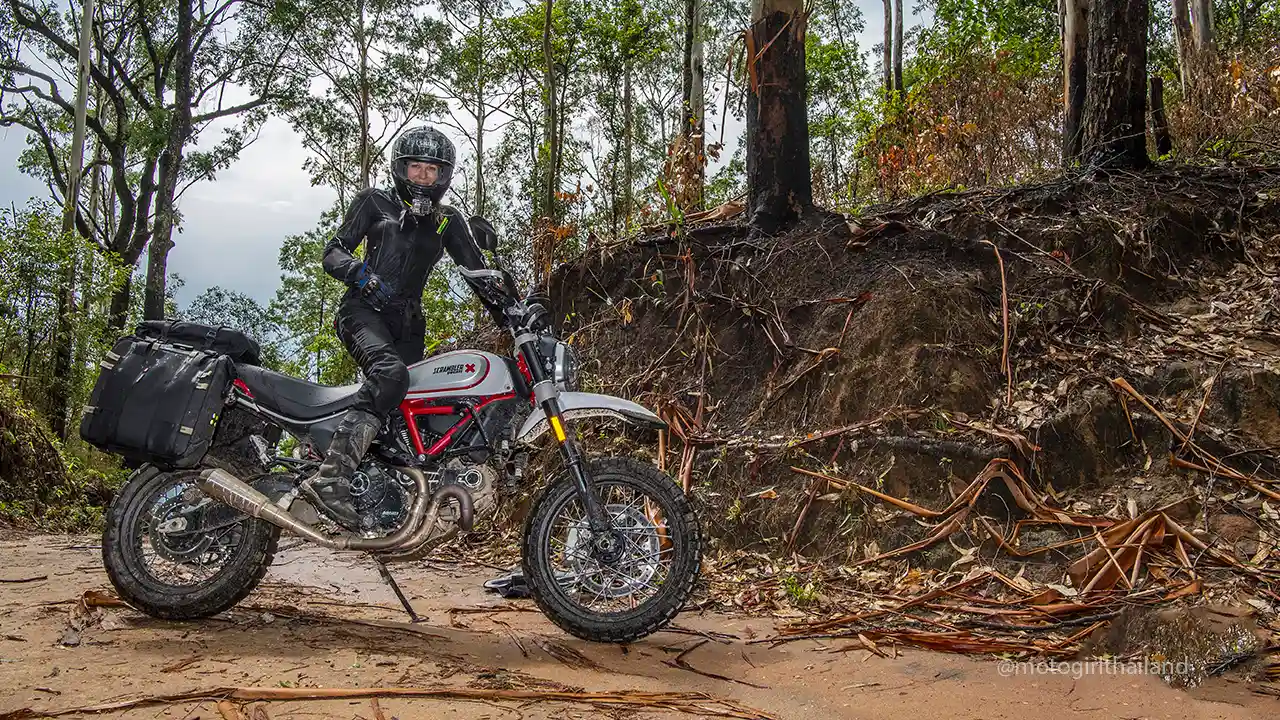
For me, this wasn’t simply a question of whether I could touch the ground. It was what happened when I needed to stop on uneven or sloping ground. The combination of the 860 mm seat height and 207 kg wet weight meant I had much less margin for error than I have on lighter bikes.
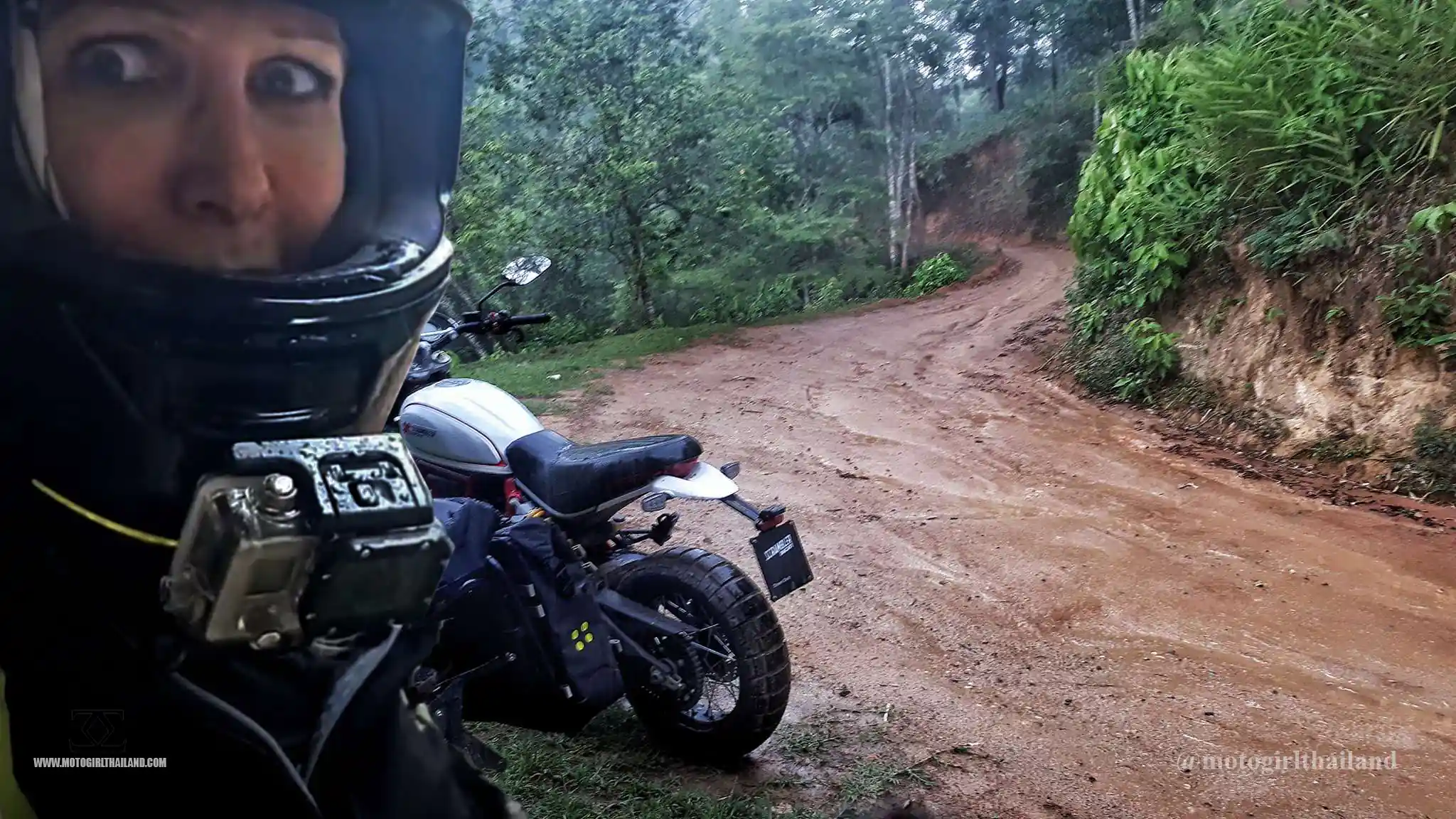
Eventually, I found out exactly where the limits were. On the trail, I lost my balance and dropped the bike, bending the clutch lever. I then managed to drop it on the opposite side and bend the brake lever. The Desert Sled wasn’t doing anything wrong; the problem was that I couldn’t get enough of my feet down to save a heavy bike once it started going over.
Maintenance / Ownership
Maintaining the Desert Sled in Thailand
One of my concerns with owning a Ducati in Thailand would be what happens when you take it a long way away from the main Ducati service network.
Routine maintenance is one thing, but if something more complicated goes wrong while I’m somewhere remote, I would be less confident than I would be on one of the simpler bikes I normally ride.
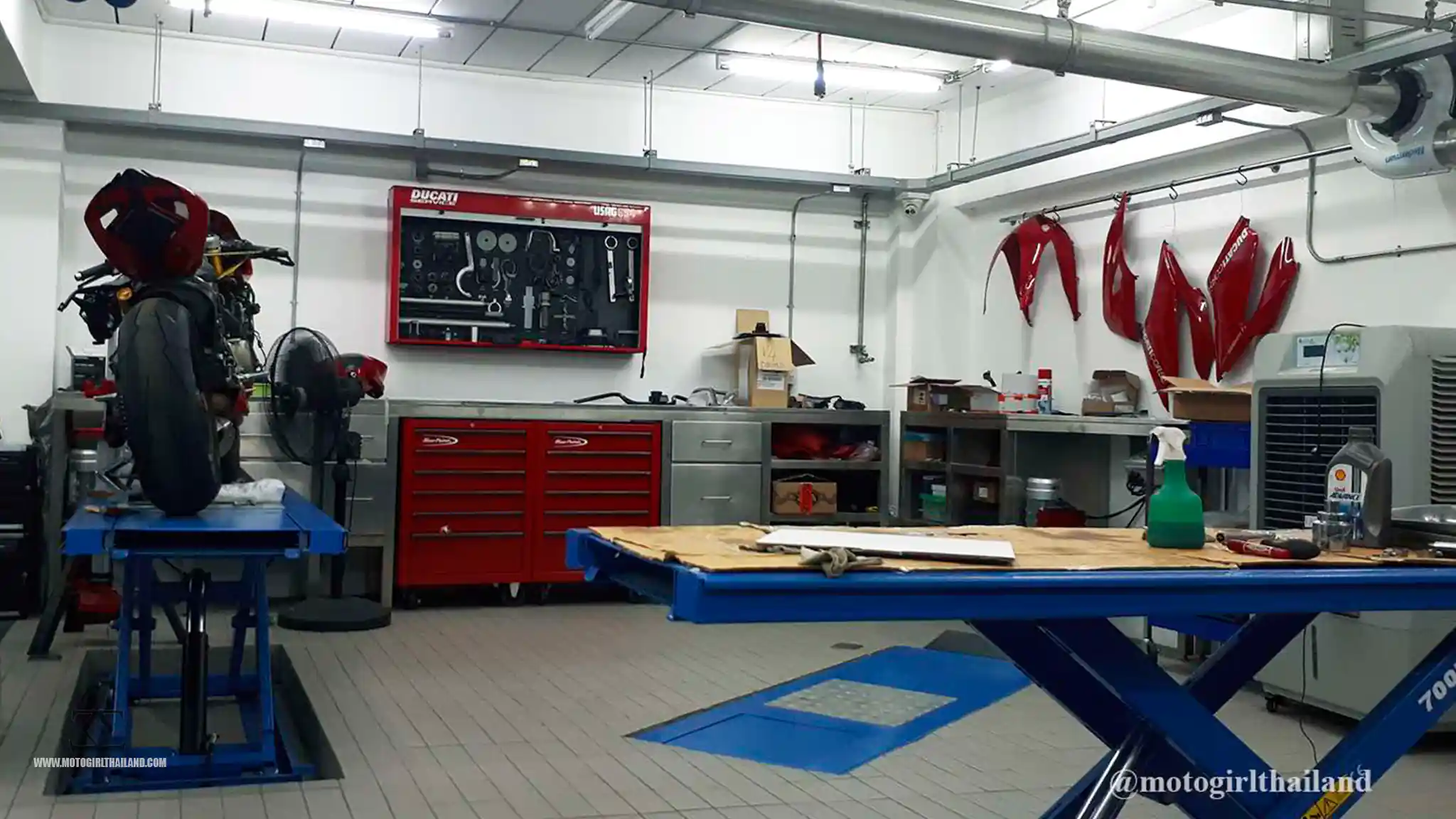
That’s not to say that the Desert Sled is unreliable, or that a local motorcycle shop couldn’t deal with it. It’s simply a question of how comfortable I would be relying on a general mechanic for a Ducati-specific problem when I’m several hours from home.
For me, that matters because of the way I ride. I regularly head into remote areas where getting a motorcycle repaired isn’t necessarily as simple as finding the nearest authorised dealer.
Ducati does have an authorised service network in Thailand, so anyone considering buying one should check where their nearest service centre is and what support is available before committing to a used Desert Sled.
Final Thoughts
The Ducati Desert Sled – My Conclusion
The Ducati Desert Sled is still one of the most interesting scramblers Ducati has made. It has character, style, proper hardware, and enough off-road credibility to be more than just a fashion piece.
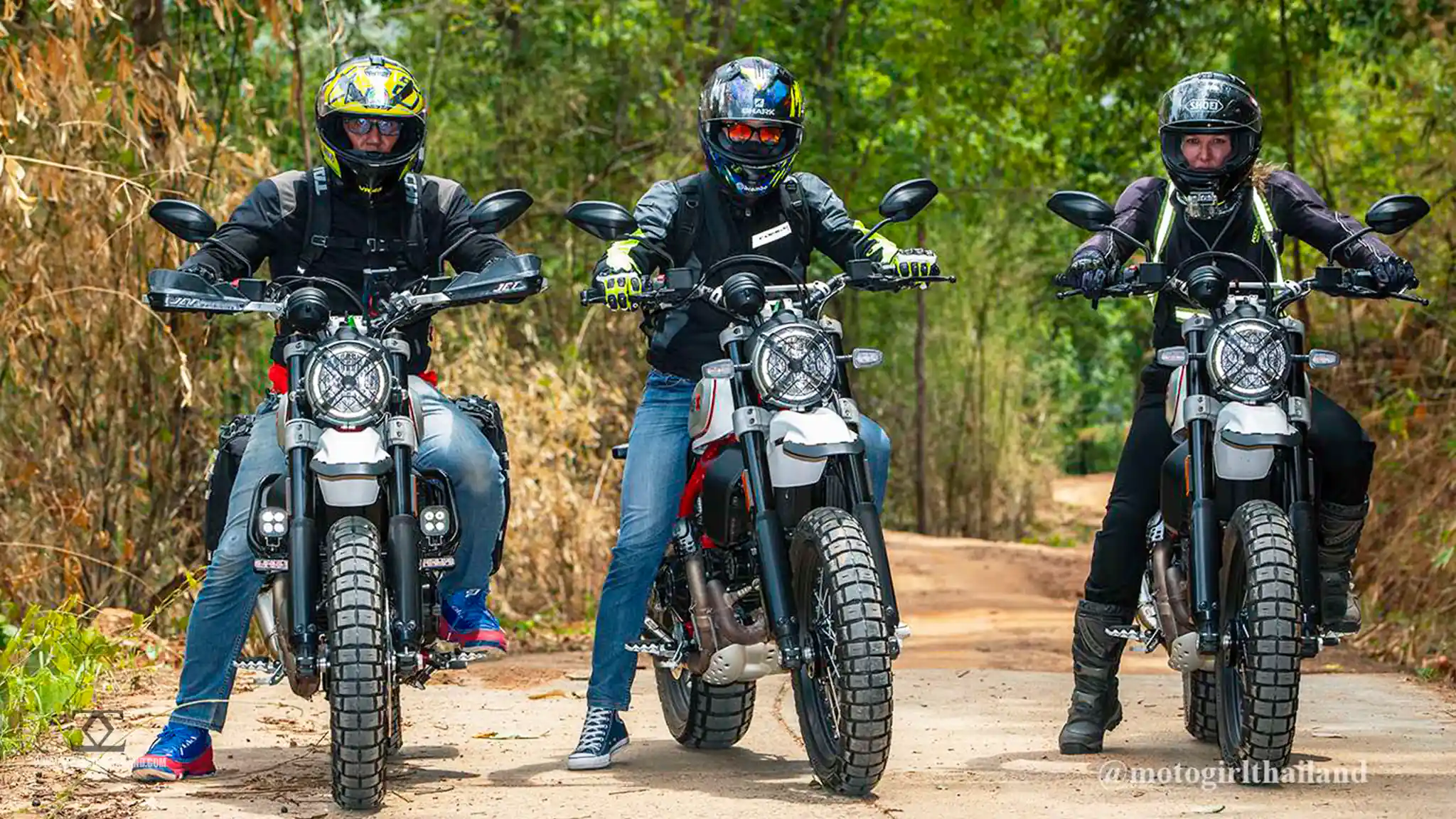
It is not the easiest bike, not the cheapest to own, and not the most practical choice for every rider in Thailand. But if you want something with personality that can handle Thai backroads, mountain routes, rough surfaces, and the occasional muddy adventure while still feeling special every time you look at it, the Desert Sled remains a very appealing option. As a used buy in Thailand, it makes the most sense for riders who value fun, individuality, and versatility over outright comfort or convenience.
Have you ever ridden the Ducati Desert Sled? Is there other aspects that you would have liked to to have covered? Leave a comment. I’d be interested to read your thoughts.