Chiang Mai Province | Place Guide
Beyond the tourist trail is a hidden world of Chiang Mai temples tucked deep in the jungle, perched on misty hillsides, and rooted in ancient legends. These 20 lesser-known temples aren’t just photo ops, they’re peaceful, often mystical spaces that offer a more intimate, authentic glimpse into the region’s spiritual and cultural soul.
Do I need a motorcycle to visit these temples?
No. Most are accessible by car/truck. You could visit by car or hire a driver. Many of these temples are in rural or mountainous areas though, so it is best to use a vehicle that can handle these kinds of roads. A scooter or motorcycle tends to give more ease of access, though.
Are the roads suitable for beginner riders??
Some routes are beginner-friendly, but others include steep climbs, tight curves, or uneven surfaces. Look for the road icon in the guide, which indicates if the route is straight, curvy, twisty or steep, so you can choose what suits your confidence and experience.
How long does it take to visit all the temples?
You can spread them out over as many days are you need, depending on your pace. Most of the temples are an hour or less away from the city, making them perfect for half-day or full-day rides.
Are these temples really “hidden”?
Yes. These are not your typical tourist stops. Most are quiet, lesser-known locations that even many locals don’t regularly visit. That said, please help keep them special by visiting respectfully.
Is there an entrance fee?
Most temples are free to enter, but donations are appreciated and encouraged to support maintenance and local communities.
What should I wear when visiting temples??
Dress respectfully: shoulders and knees should be covered. Lightweight clothing works well in the heat, and carrying a scarf or sarong is a good backup.
Can I take photos at these temples?
In most outdoor areas, yes. However, always be respectful. Avoid photographing monks without permission and check for signs inside buildings.
Is it safe to ride these routes?
Generally, yes. But conditions can vary. Expect occasional potholes, gravel, or narrow roads. Ride within your limits, especially in wet conditions, and always wear proper gear.
Do I need offline navigation?
Thailand has great mobile net signal. It is unlikely that your signal will disconnect for long periods, although it may intermittently disconnect in some places. Use the GPS location markers in this guide and follow along even if the route temporarily disconnects.
What’s the best time of year to visit?
The cooler season (November–February) is ideal. Avoid peak burning season (roughly February–April) if possible due to air quality. Early mornings offer the best light and quietest atmosphere.
Can I visit these temples in one loop?
Some can be linked into loops, while others are more remote and better done separately.
Are there food and fuel stops along the way?
In some areas yes, but not everywhere. It’s best to fuel up beforehand and carry water and snacks, especially for the more remote routes.
Is this guide suitable for solo travellers?
Absolutely. The routes are manageable solo, and many riders prefer the peaceful, reflective nature of these locations. There is only one that has a short dirt section, but it is still fairly minimal.
What makes this guide different from Google Maps or blogs?
This isn’t just a list of temples. It is curated from decades of riding in the region, picking out ones that are unique in some way.
1 – Loha Prasat Sri Mueang Pong
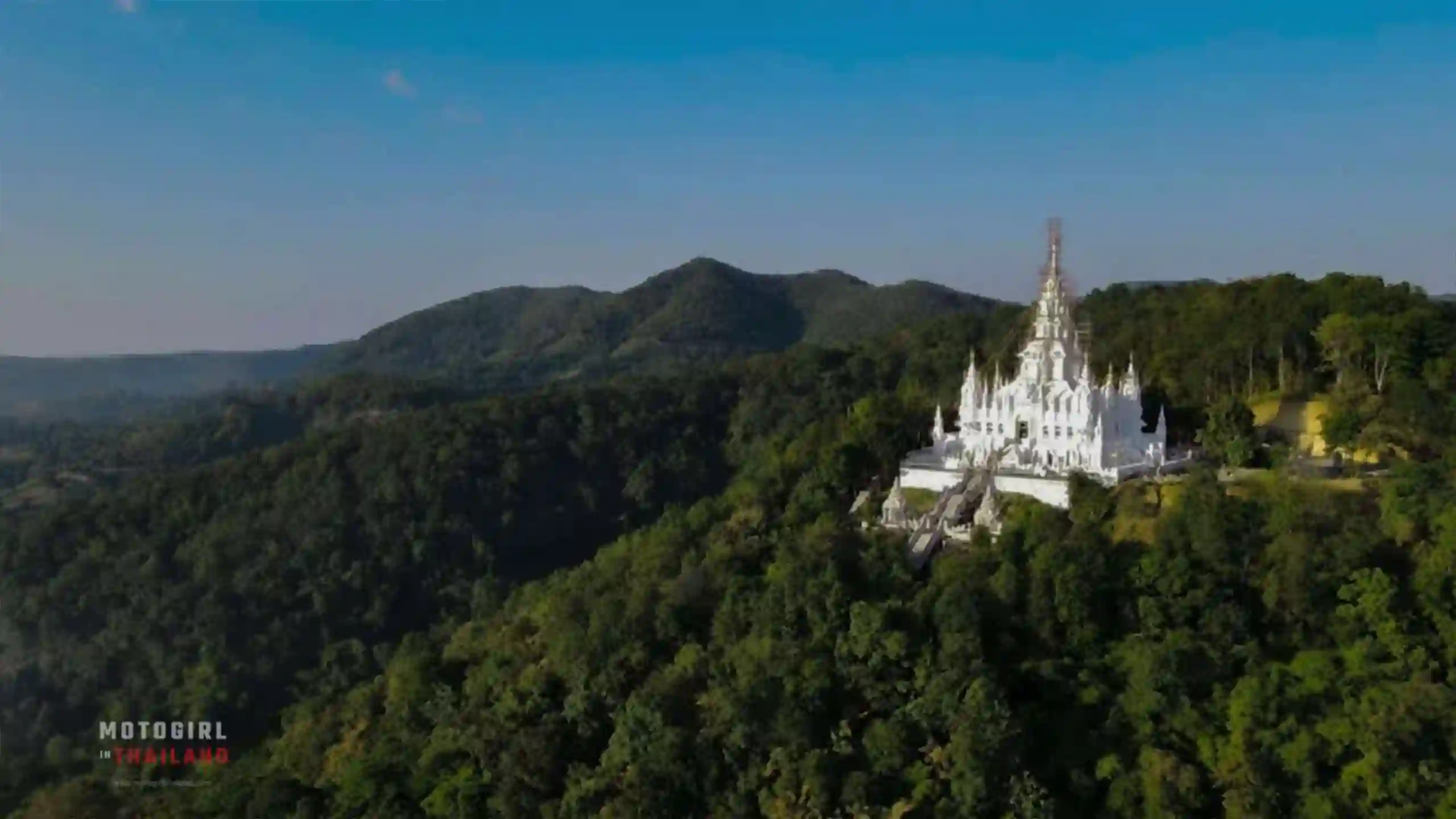
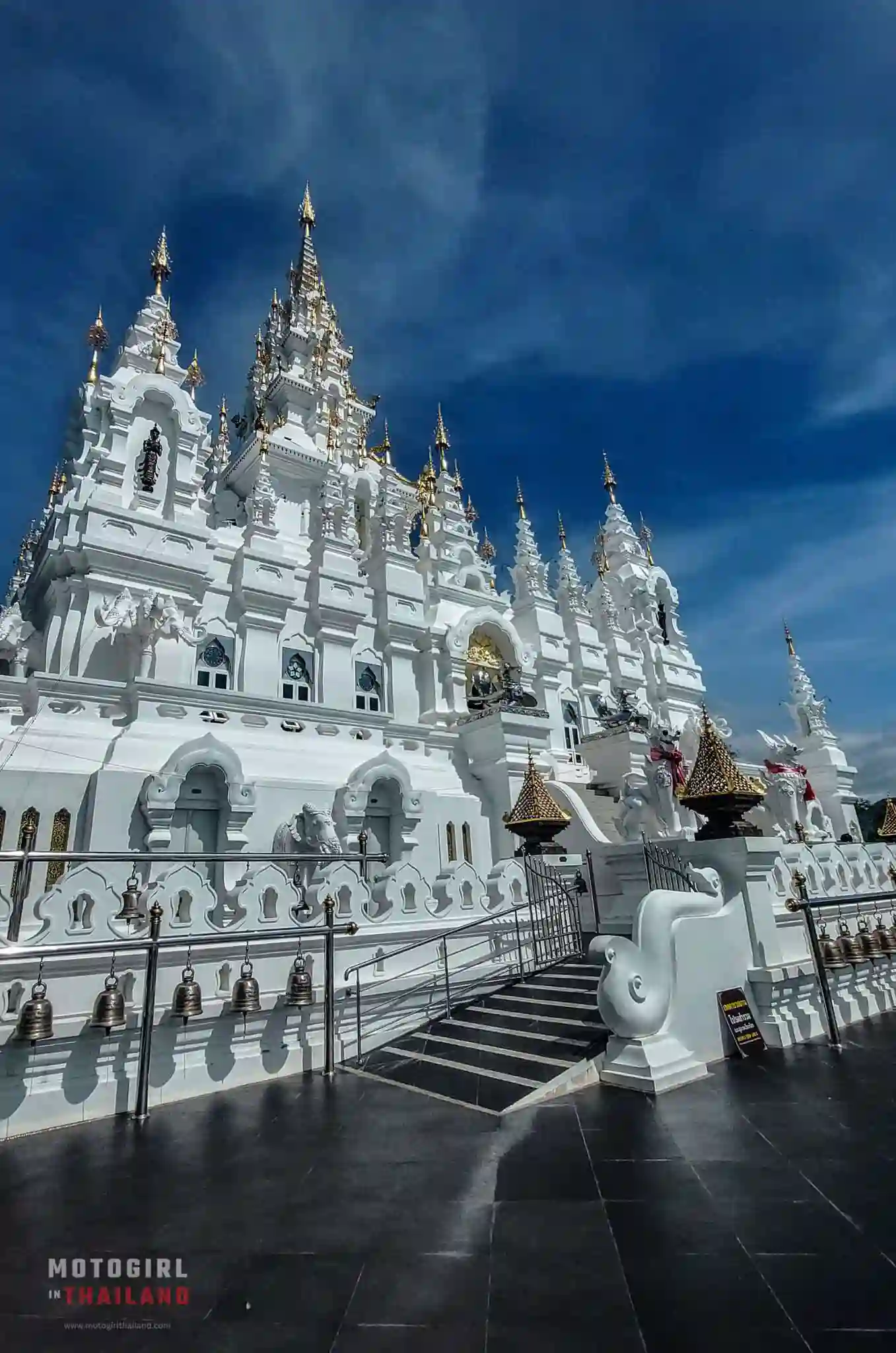
Perched atop a forested hill in the Hang Dong District, stands โลหะปราสาท พระธาตุศรีเมืองปง / Loha Prasat Sri Mueang Pong, (known also as Wat Ban Pong), a serene temple complex, renowned for its striking White Pagoda. This gleaming white and gold temple was constructed over 15 years. It enshrines an ancient stupa and features a three-tiered design with 120 spires, symbolising core Buddhist principles.
20 KM
From City
35 Min
From City
Paved
Straight
Loha Prasat Sri Mueang Pong
Loha Prasat Sri Mueang Pong feels like something magical no matter the time of day or season. The luminous white-and-gold tiered temple that rises like a dreamscape from the trees.
Parking and Access:
- Parking: Available at the base of the temple (Wat Ban Pong); limited parking near the summit. (Visitors can reach the site by ascending a serene 900-step staircase or park at the base temple and use one of the red songtaew trucks to take you up to the summit.)
- Disabled Access: Yes
Facilities:
- Bathrooms: Basic toilet facilities on-site
- Food/Drinks: There may be vendors on-site, however, it is advisable to bring water and snacks
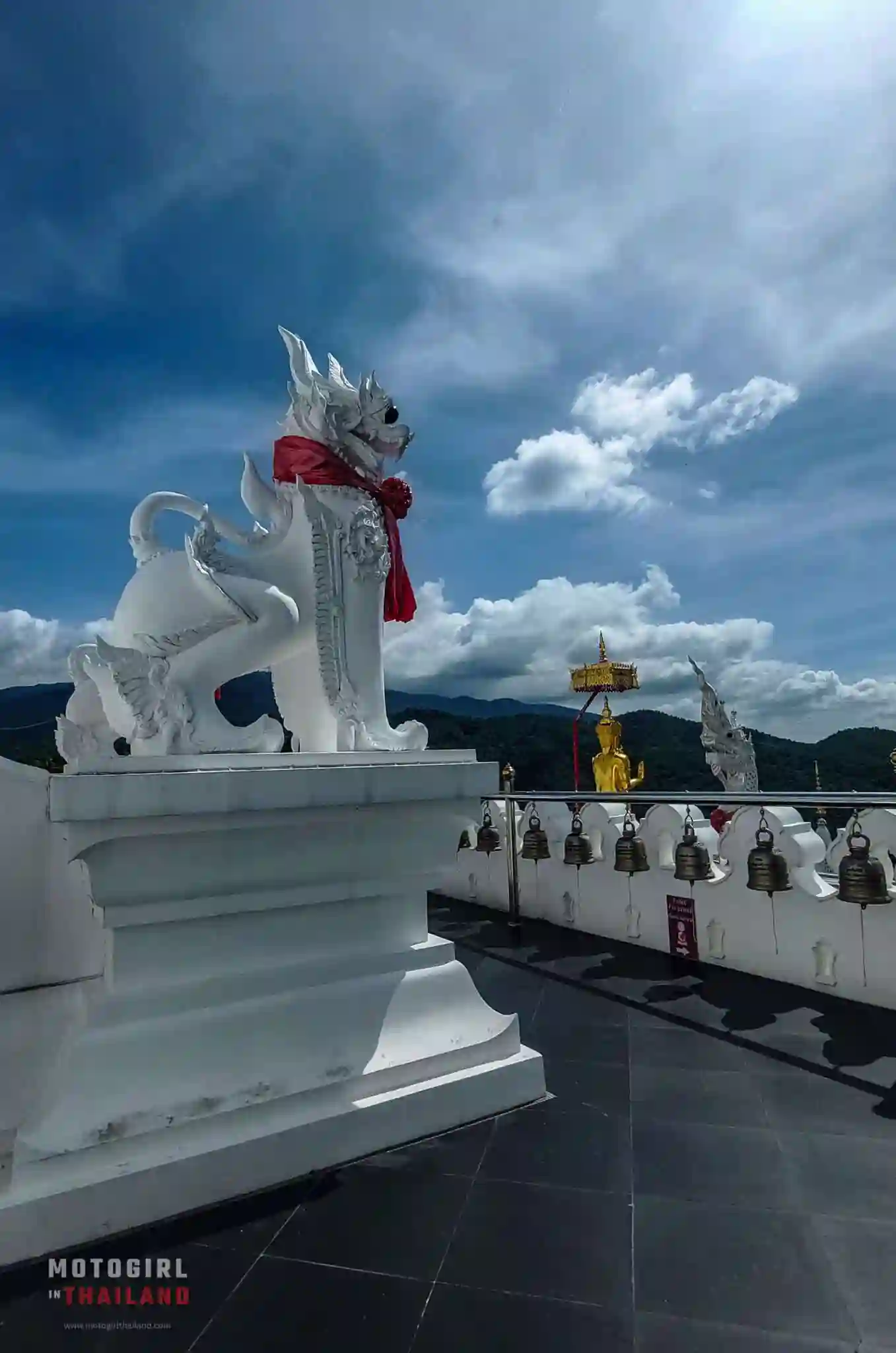
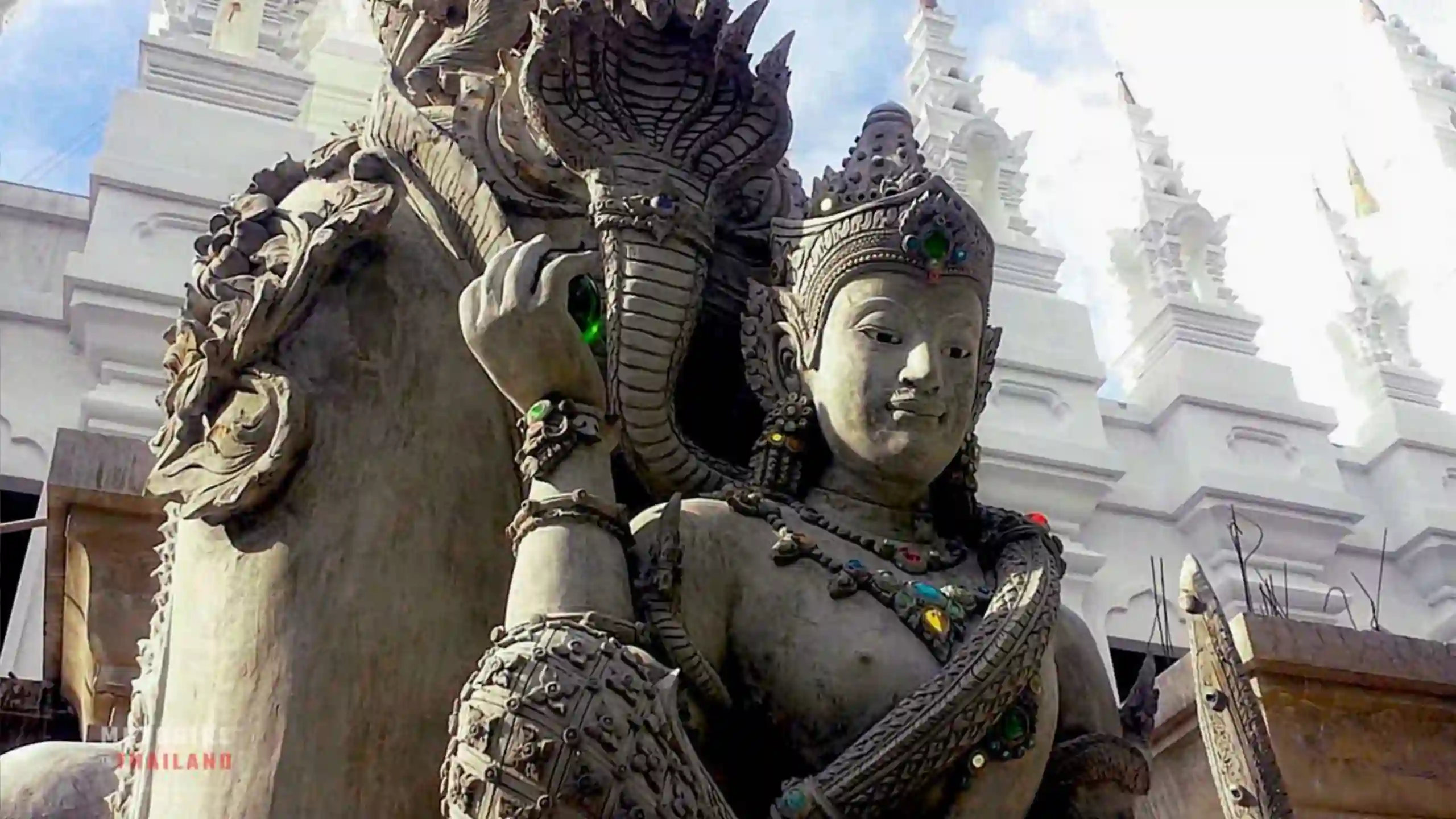
Inspired by Bangkok’s famed Loha Prasat, (known as the “metal castle”), but shaped with Lanna soul, its delicate spires and peaceful presence invite pause and wonder. The structure’s design incorporates elements representing the Four Noble Truths and the Triple Gem (Buddha, Dhamma, Sangha).
Historical and Cultural Aspects:
Loha Prasat Sri Mueang Pong is Thailand’s second “metal castle” and the world’s fourth, it draws inspiration from the original Loha Prasat structures of ancient India and Sri Lanka, as well as Bangkok’s 19th-century Loha Prasat at Wat Ratchanatdaram. This temple uniquely integrates the Lanna architectural style, characterised by its white facade and golden spires, reflecting the region’s cultural heritage.
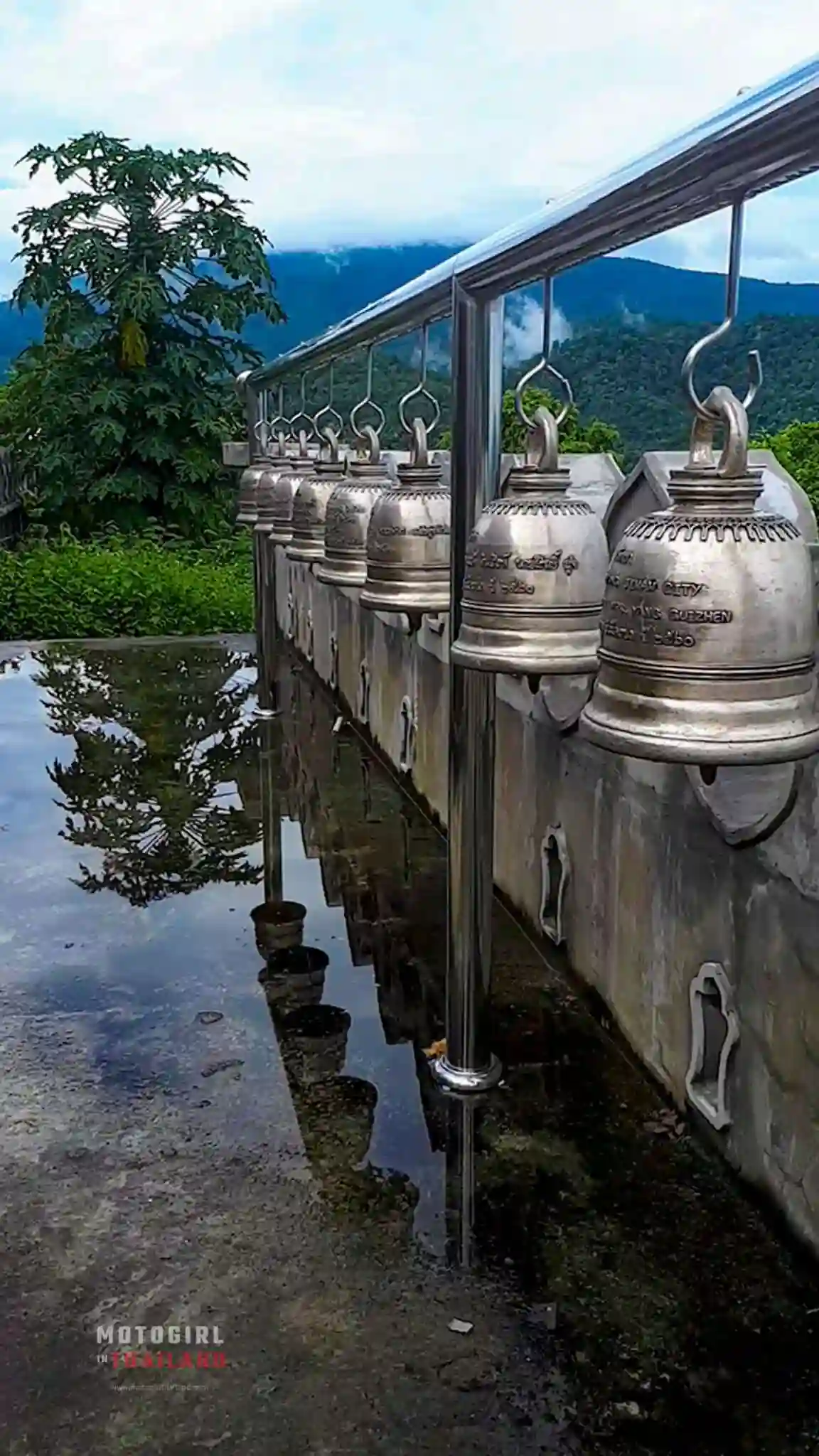
The White Pagoda, visible from afar, symbolises purity and enlightenment, aligning with Buddhist teachings. The temple grounds are well-maintained by resident monks and volunteers, reflecting the community’s dedication to preserving this sacred space.
Architectural Features:
The multi-tiered design of Loha Prasat Sri Mueang Pong is symbolic and deeply rooted in Buddhist cosmology. In traditional Buddhist architecture, multi-tiered structures represent the journey toward enlightenment, with each level symbolizing a different stage of spiritual progress. The temple’s ascending tiers mirror the concept of ascending through the different realms of existence, ultimately reaching Nirvana — the state of ultimate peace and liberation.
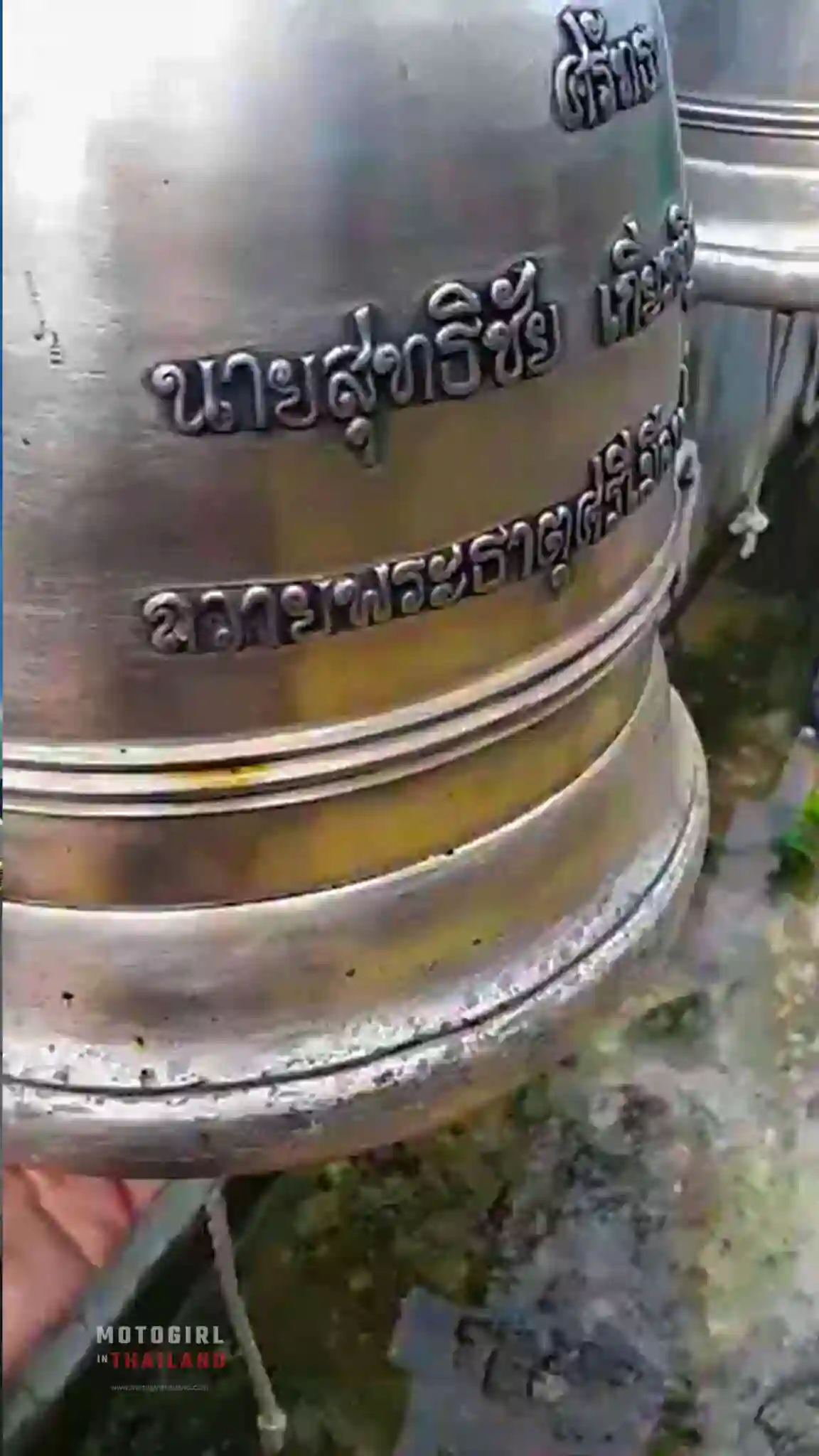
The number of tiers in a Loha Prasat typically correlates with the “Thirty-Two Levels of Enlightenment”, a Buddhist concept representing the stages one must transcend to achieve spiritual awakening. Additionally, the multi-tiered design helps to elevate the temple both physically and symbolically, making it a visual representation of the path to higher consciousness.
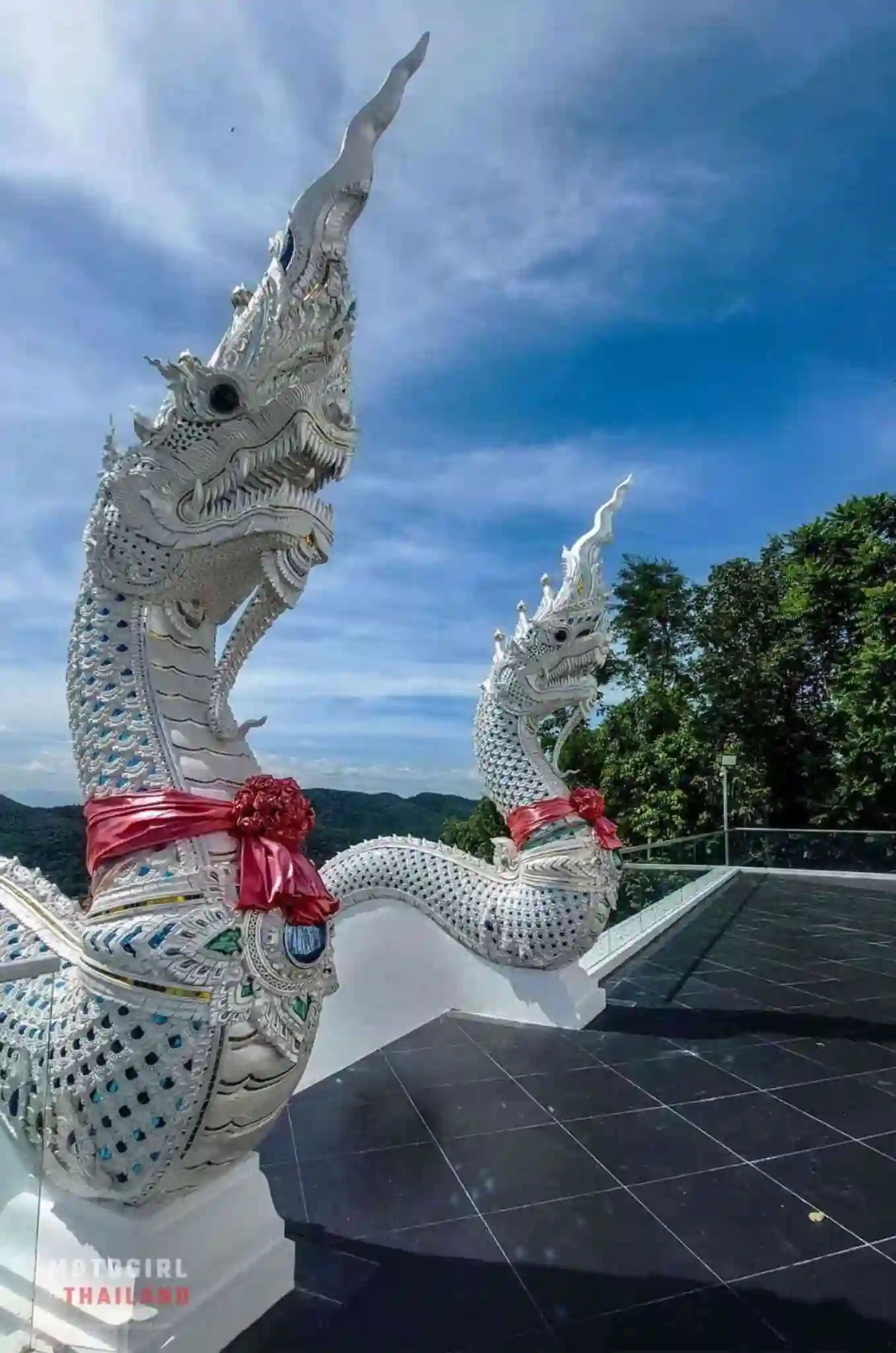
This design is inspired by similar structures in ancient Indian Buddhist architecture, particularly those built in places like Sri Lanka and India, where tiered buildings were often used to symbolise the gradual ascent toward spiritual purity. The Loha Prasat in Chiang Mai continues this tradition while incorporating the distinct Lanna architectural style..
Additional Notes:
It’s common to see monks engaged in daily routines, and visitors are encouraged to observe respectfully. On certain religious observance days, access to specific areas may be restricted.
2 – Wat Khantha Phueksa
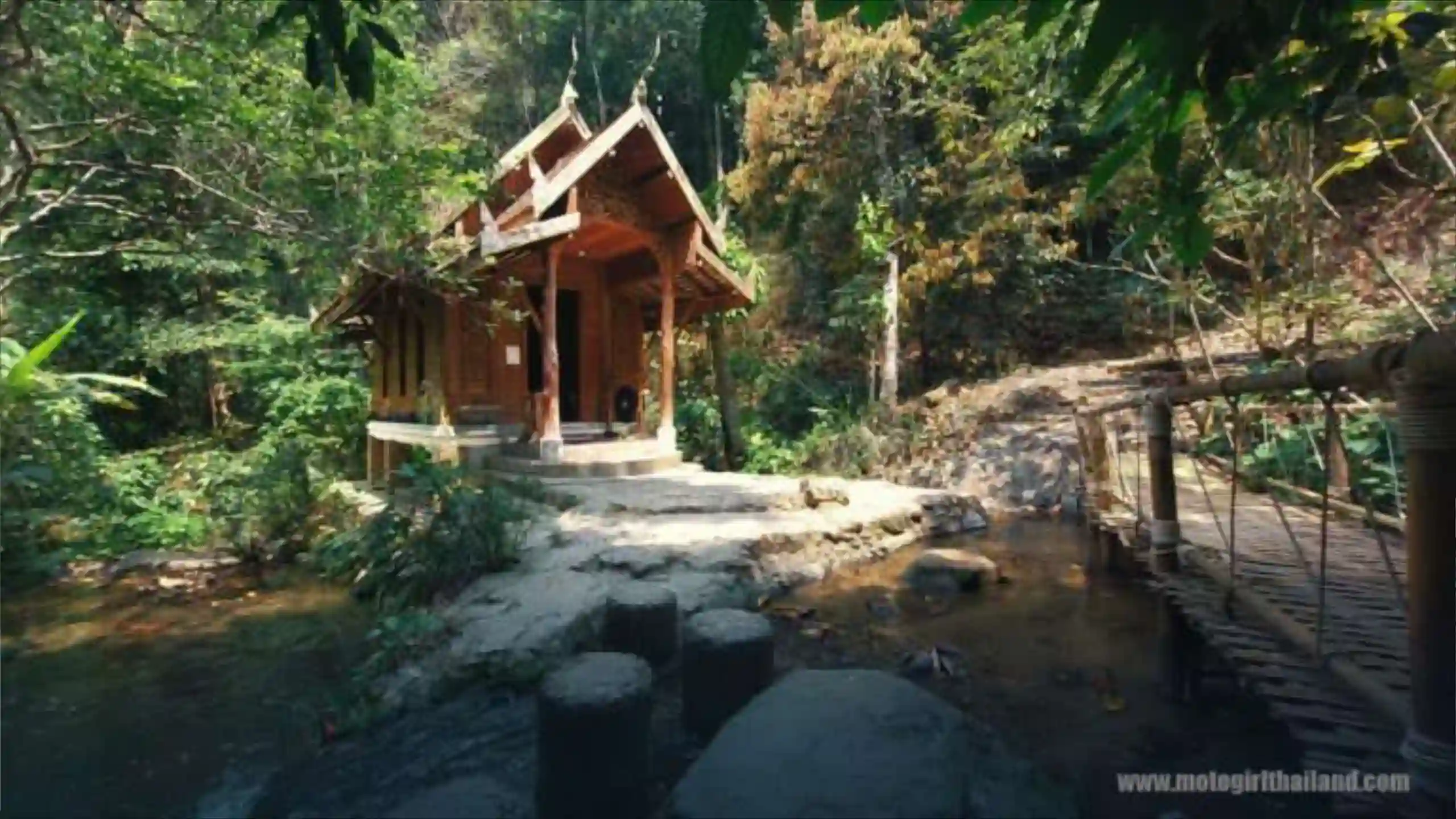
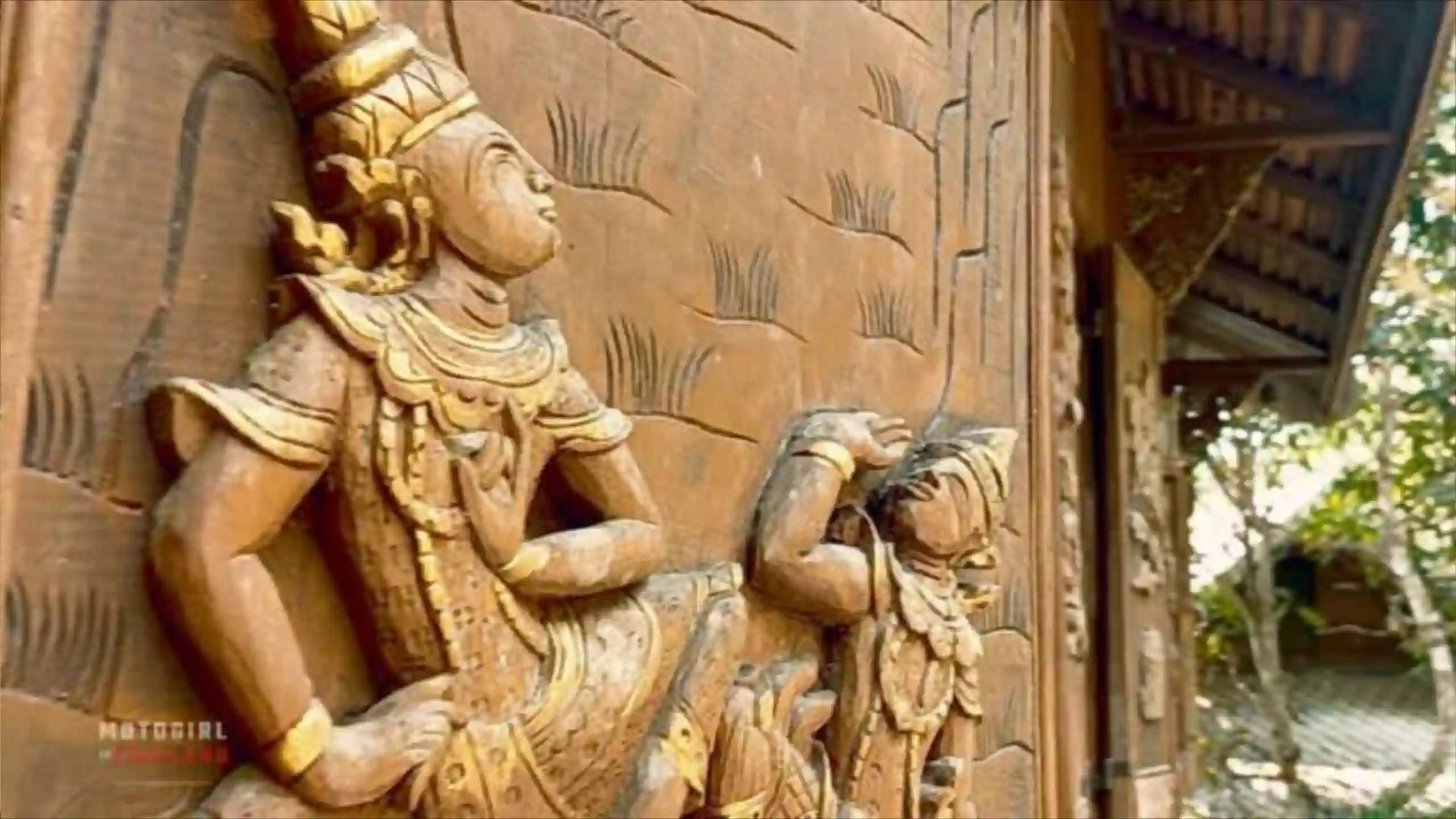
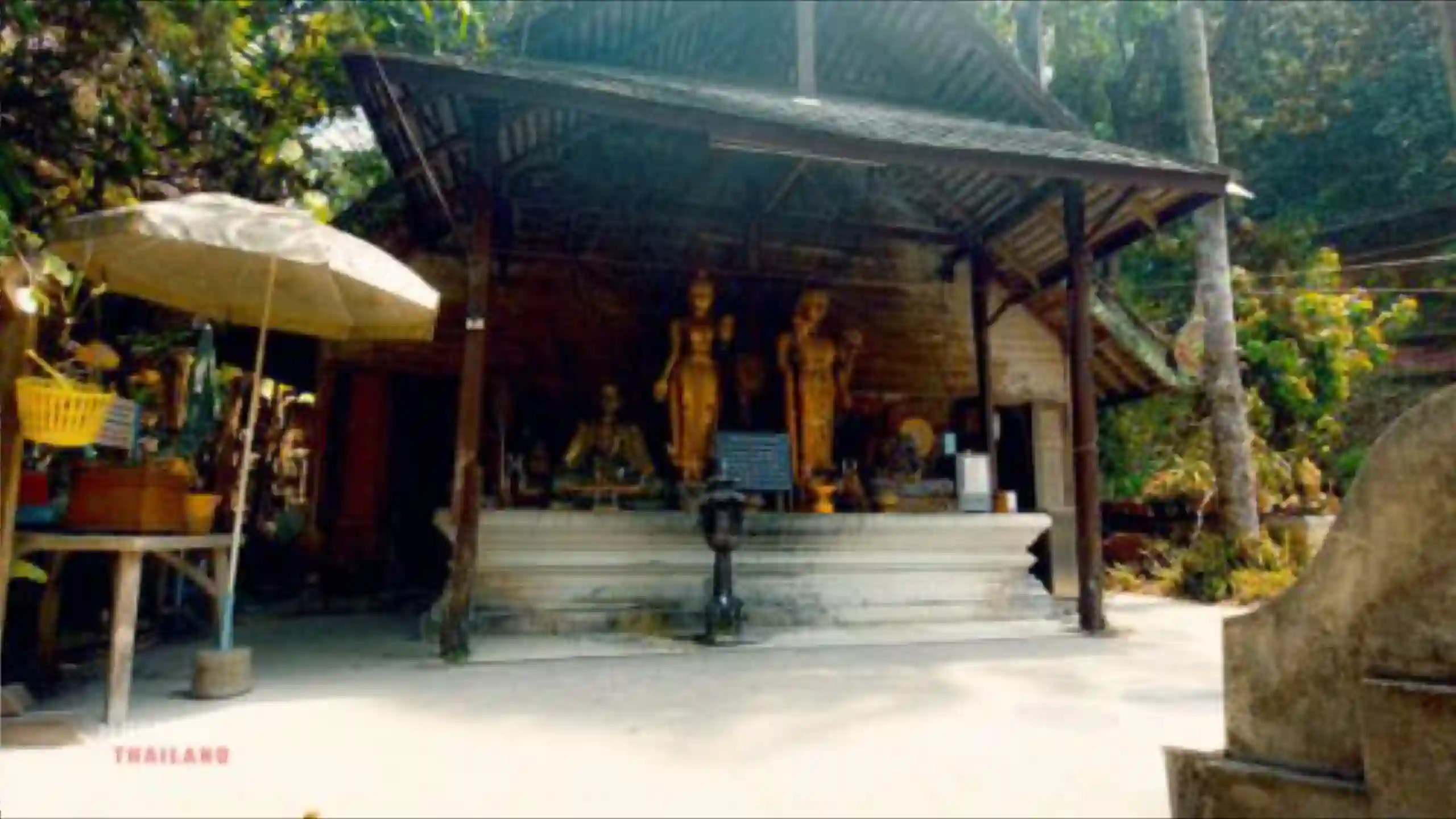
วัดคันธาพฤกษา / Wat Khantha Phueksa, also known as Wat Mae Kampong, is a tranquil Buddhist temple nestled in the lush village of Mae Kampong, in Mae On District. Established around 1925 as a hermitage, it was transformed into a temple in 1930 under the guidance of Kruba Insom Khanthornso.
60 KM
From City
1 Hour
From City
Paved
Twisty / Steep
Wat Khantha Phueksa
Parking and Access:
- Parking: Limited parking in temple grounds.
- Disabled Access: No
Facilities:
- Bathrooms: Basic toilet facilities on-site
- Food/Drinks: A selection of cafes and local eateries are available in Mae Kampong village.
Historical and Cultural Aspects:
Wat Khantha Phueksa was originally established as a hermitage in the early 20th century and became an official temple in 1930. It is a deeply spiritual centre for the local community, reflecting the quiet, slow-paced traditions of Mae Kampong village.
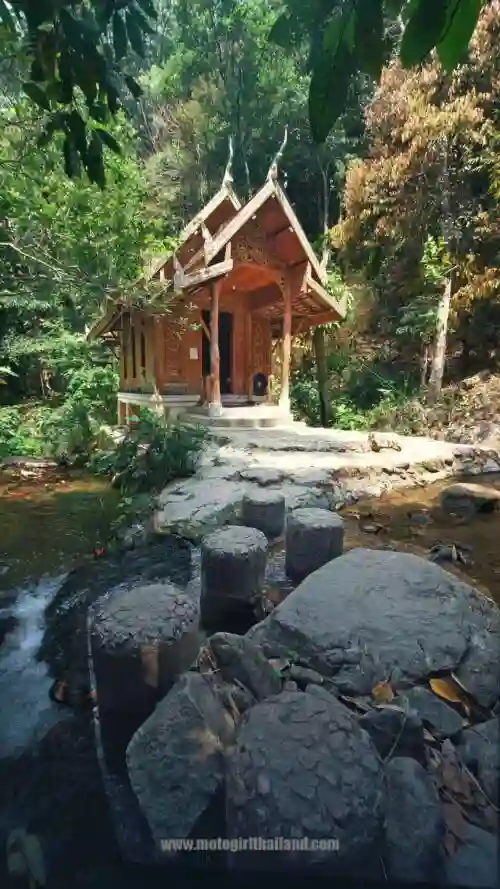
The Viharn (assembly hall) is built from richly carved teak wood, showcasing exquisite traditional Lanna craftsmanship.
Additional Notes:
Visitors to the temple will also go through Mae Kampong village = a quaint mountain village which stands at around 1,300 meters above sea level.
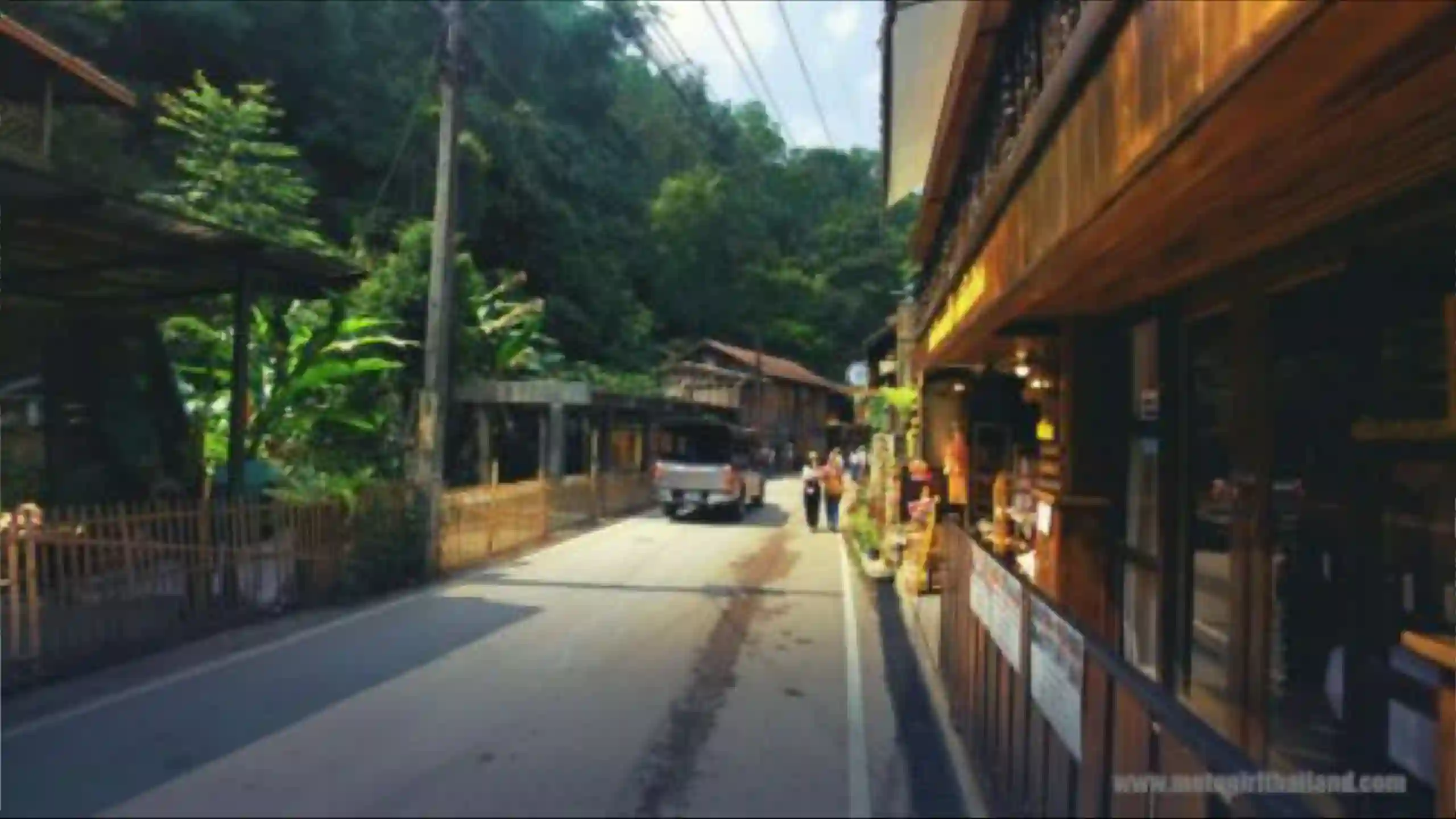
Known for its cool climate, lush forest surroundings, and charming wooden homes, the village offers a glimpse into traditional Northern Thai life.
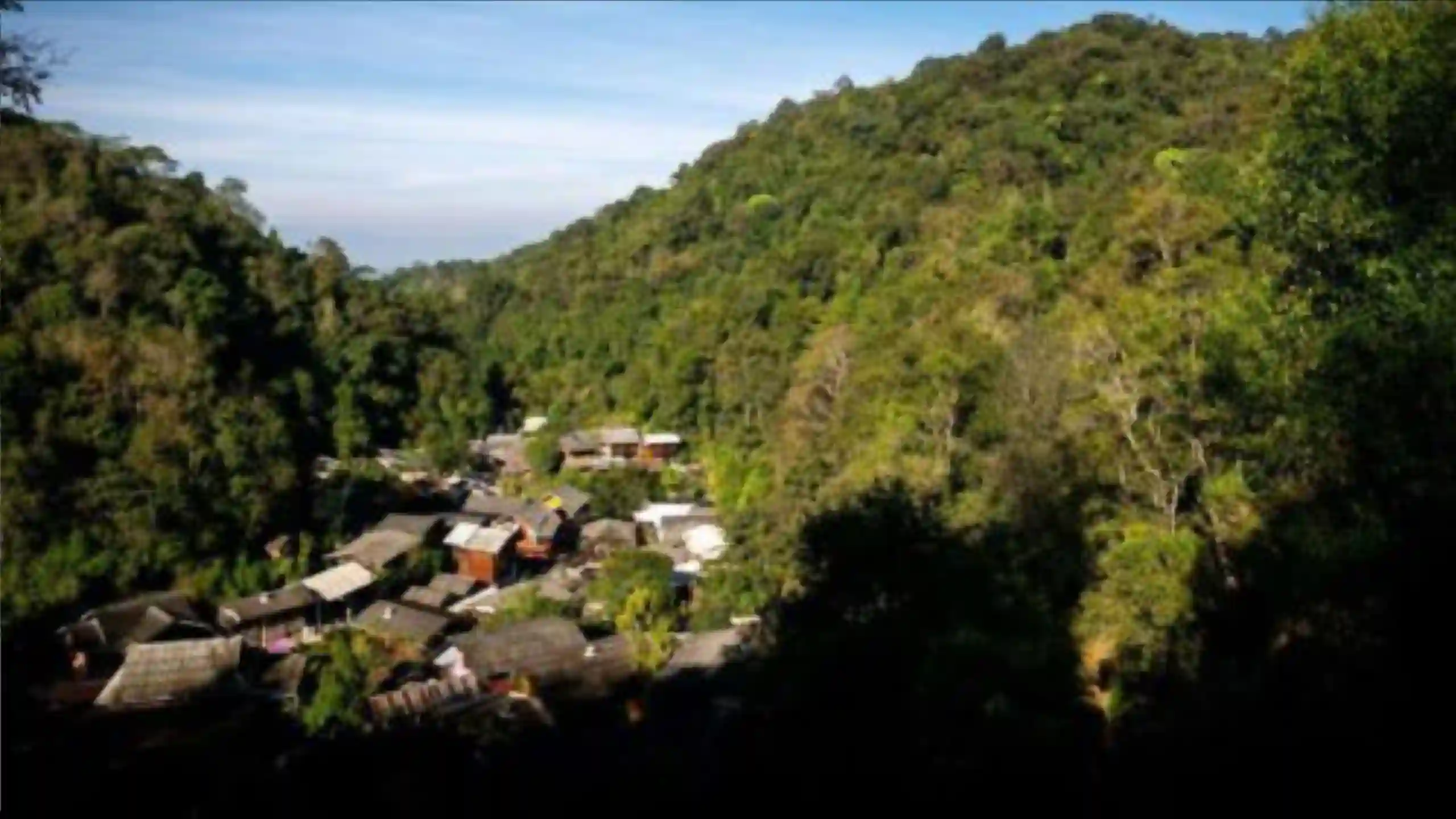
It’s famous for eco-tourism, coffee plantations, homestays, and its peaceful, slow-paced atmosphere — perfect for visitors seeking nature, culture, and authentic local experiences.
This video shows some of the beauty on offer at Mae Kampong, including the stunning Khantha Phueksa temple.
3 – Wat Ban Den
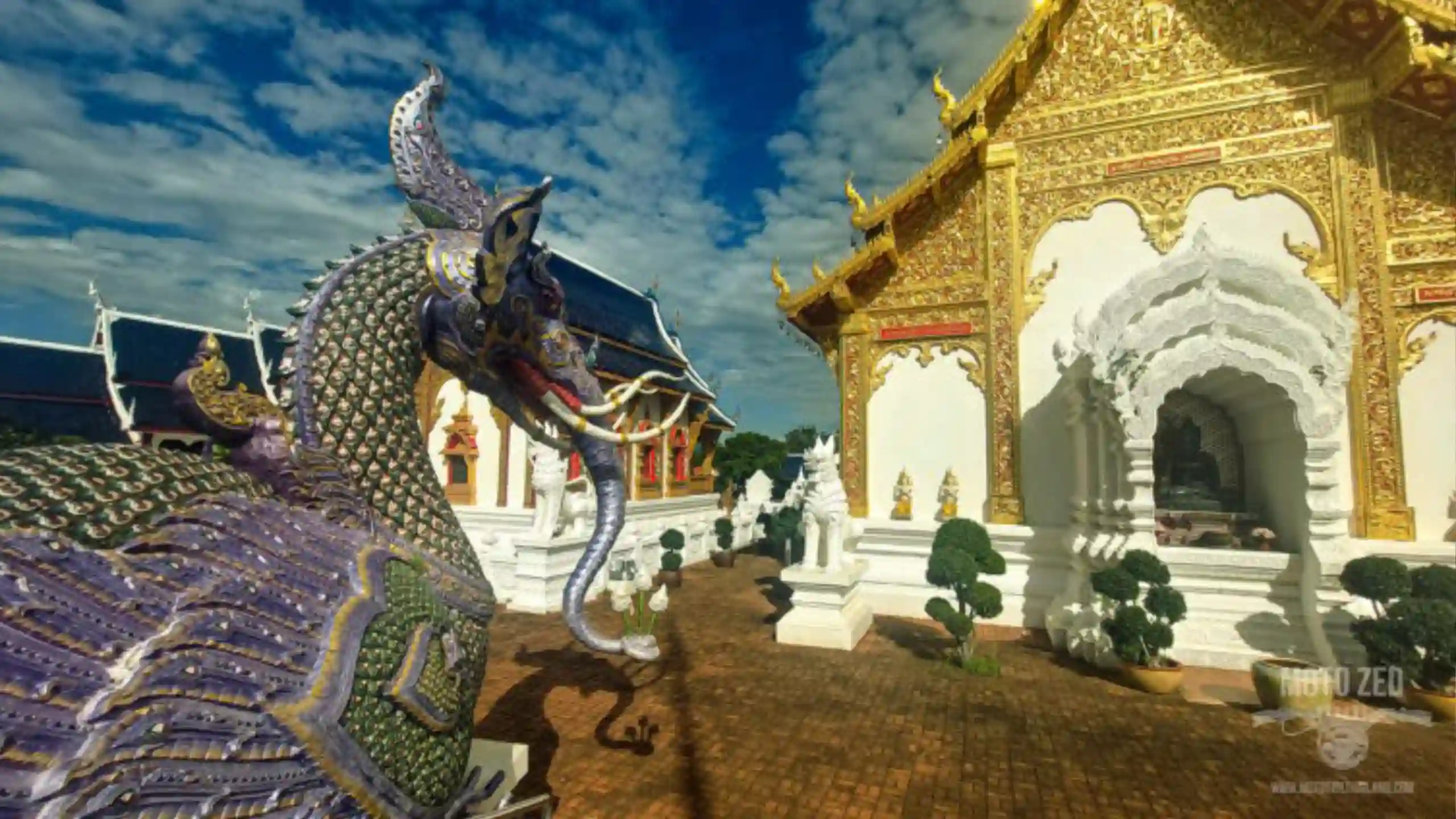
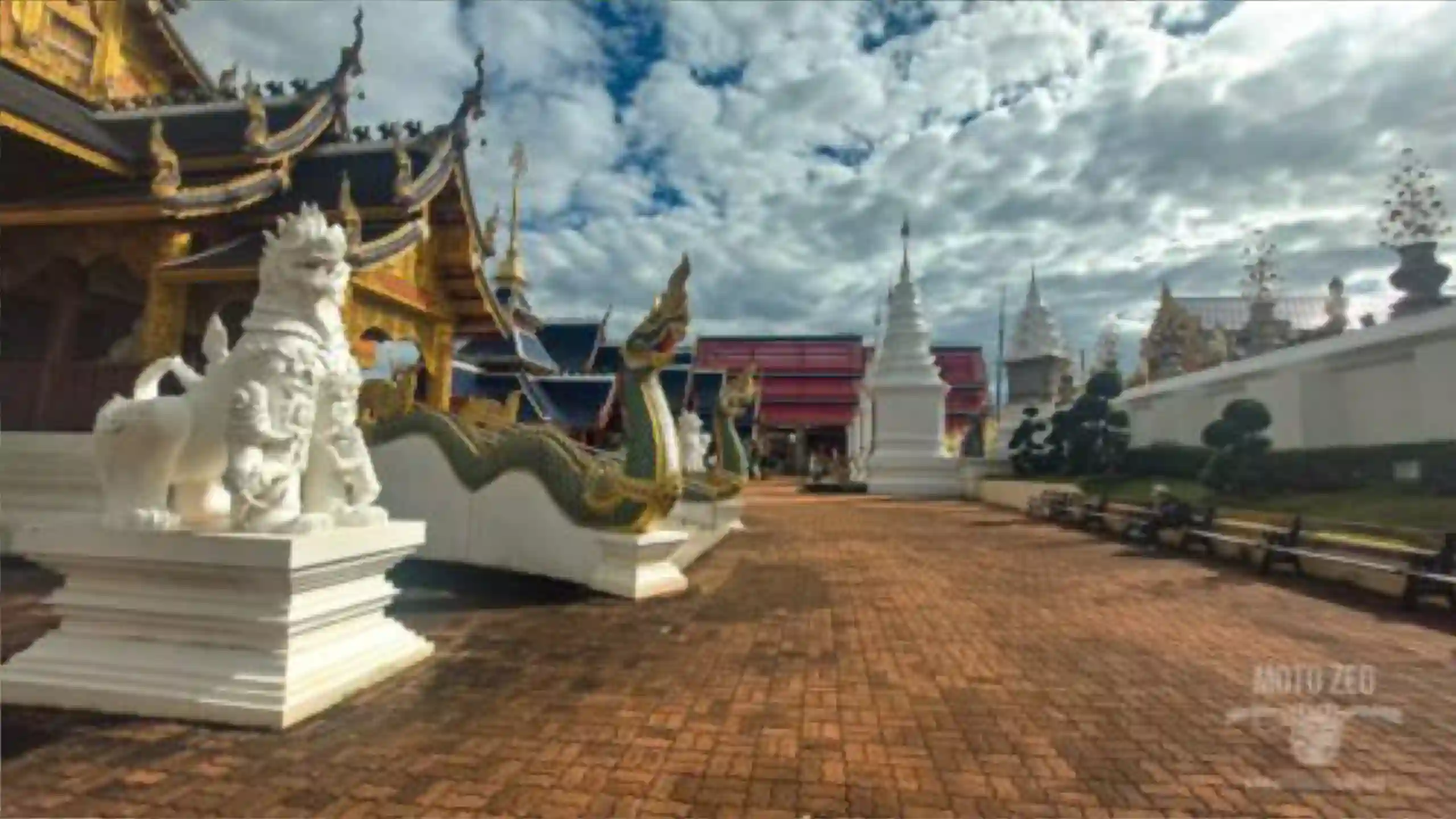
วัดบ้านเด่น / Wat Ban Den, also known as Wat Den Sali Si Mueang Kaen, is a striking Buddhist temple located in the Mae Taeng District. Once a modest village temple, it has transformed into a colourful and expansive temple complex. The temple is renowned for its harmonious blend of traditional Lanna architecture and vibrant, whimsical design elements, earning it the nickname of “the Electric Kool-Aid Acid Temple”!
46 KM
From City
55 Min
From City
Paved
Straight
Wat Ban Den
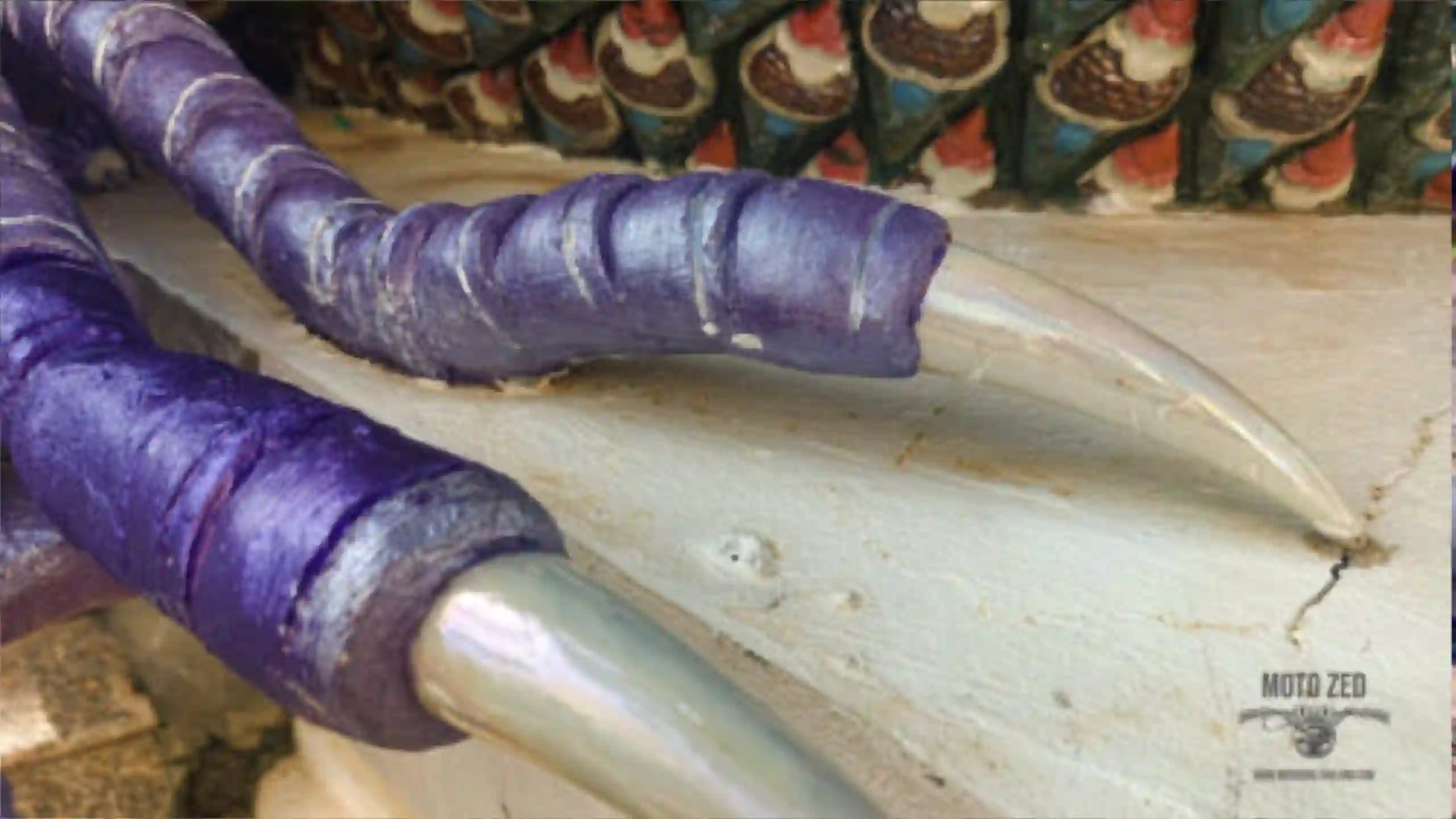
Colourful Eclectic Mix
Established over 500 years ago as a modest village temple, Wat Ban Den underwent significant renovations beginning in 1988 under the guidance of Phra Kru Ba Tuang, a revered abbot. His vision was to create a grand spiritual complex that would attract visitors and serve as a centre for Buddhist practice.
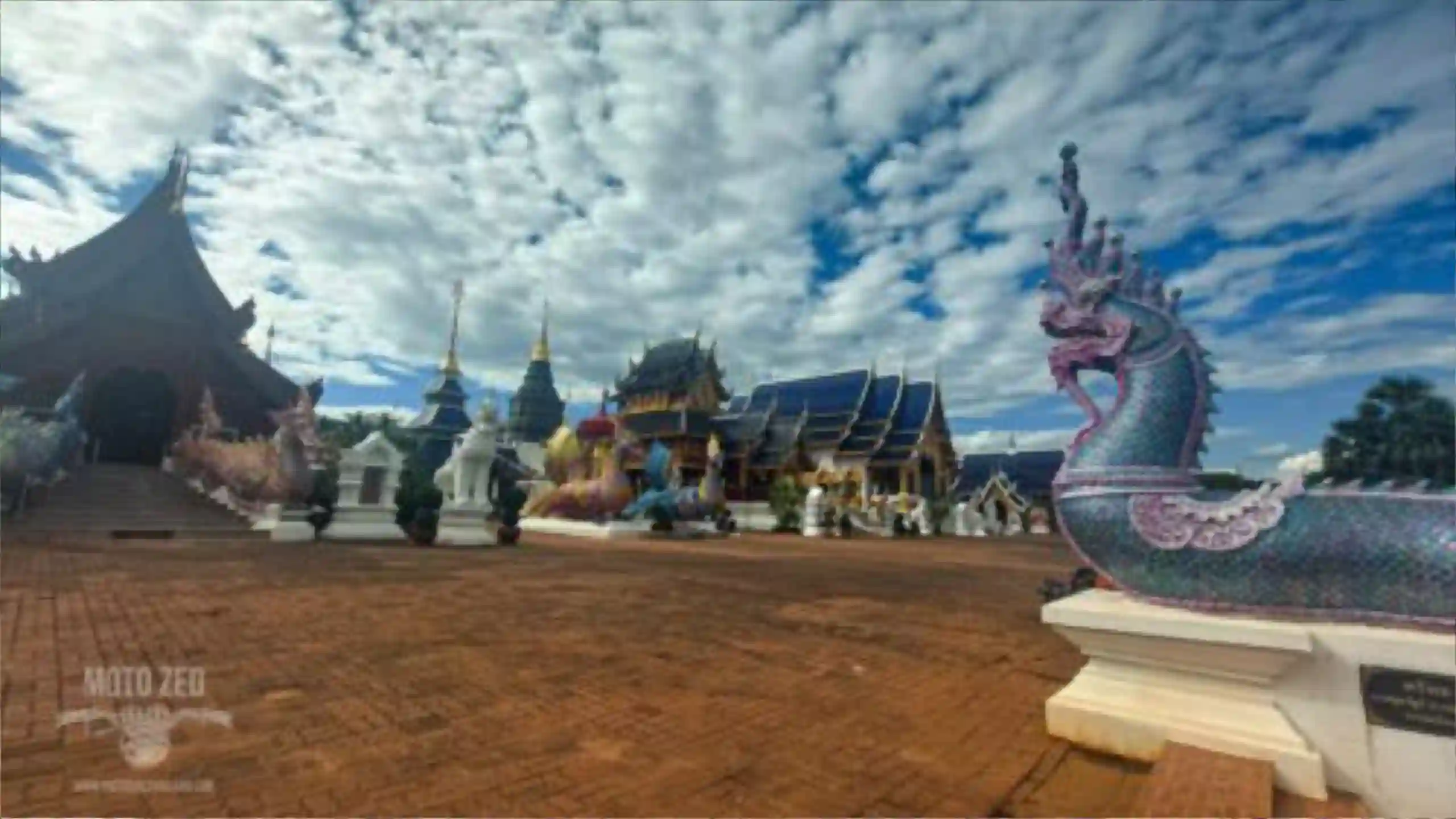
Wat Ban Den is certainly one of the more unusual temples you will ever see in Thailand. Well worth visiting for the experience and visual delights!
Parking and Access:
- Parking: Ample parking is available at the temple grounds
- Disabled Access: Yes
Facilities:
- Bathrooms: Basic toilet facilities on-site
- Food/Drinks: Many local cafes and eateries in the area.
Historical and Cultural Aspects:
Established over 500 years ago as a modest village temple, Wat Ban Den underwent significant renovations beginning in 1988 under the guidance of Phra Kru Ba Tuang, a revered abbot. His vision was to create a grand spiritual complex that would attract visitors and serve as a centre for Buddhist practice.
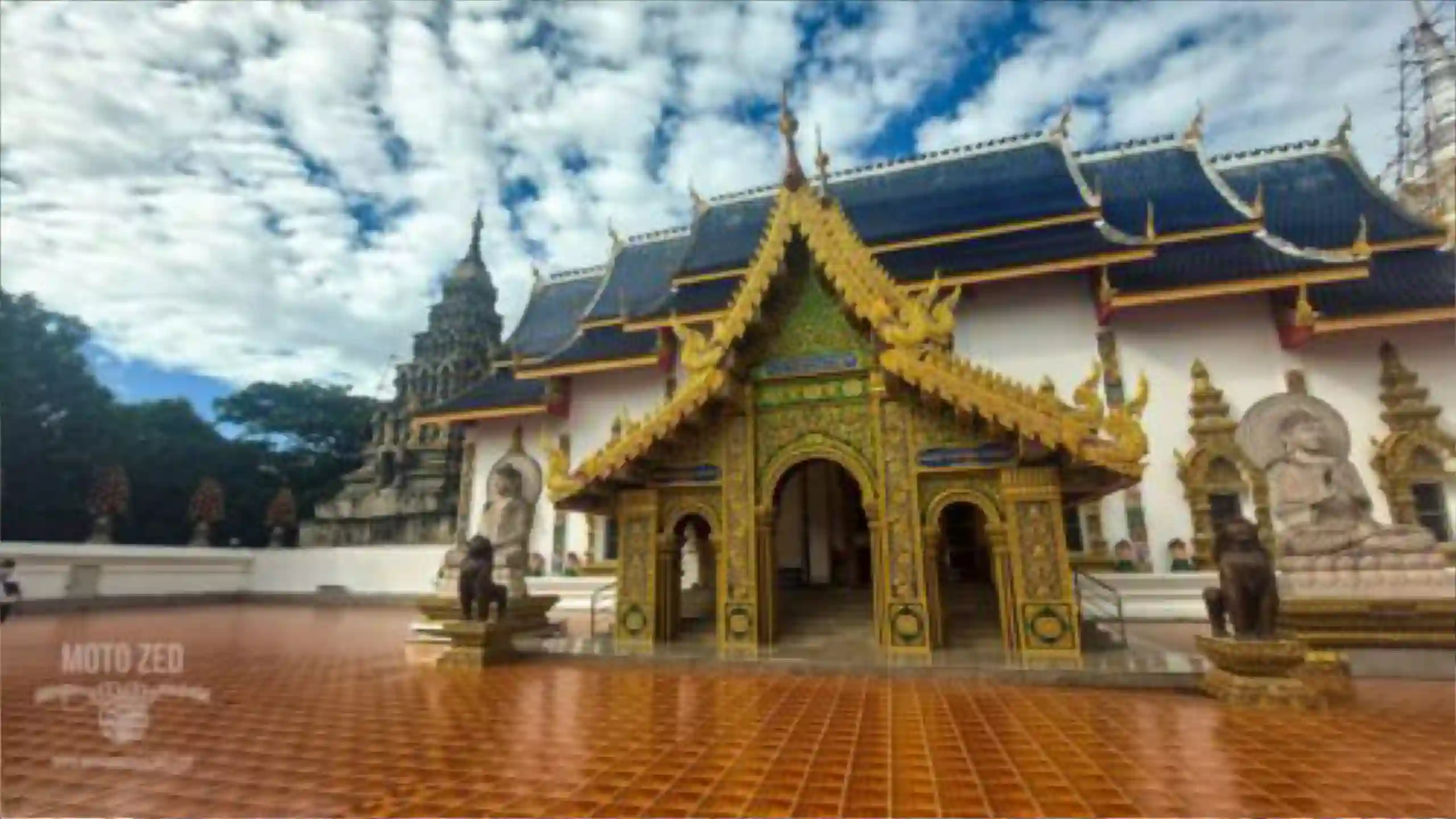
The temple’s transformation was largely funded through donations, including a notable contribution of 39 “money trees” during the abbot’s 39th birthday celebration.
Architectural Features:
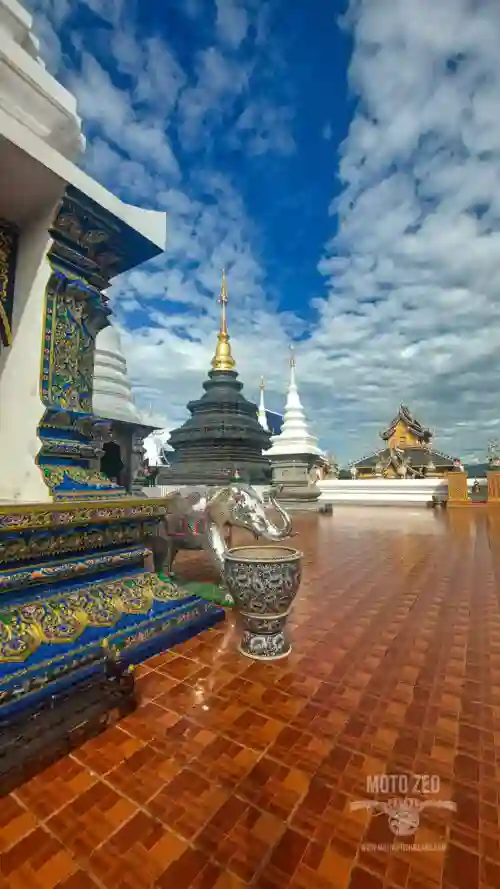
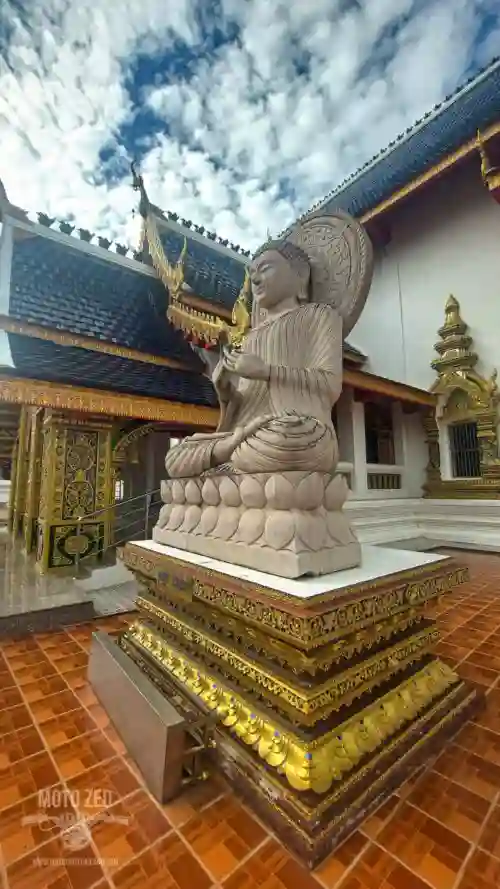
The temple complex at Wat Ban Den blends Lanna, Burmese, and Thai architectural styles, featuring multi-tiered roofs adorned with intricate wood carvings, vibrant stucco work, and colourful details.
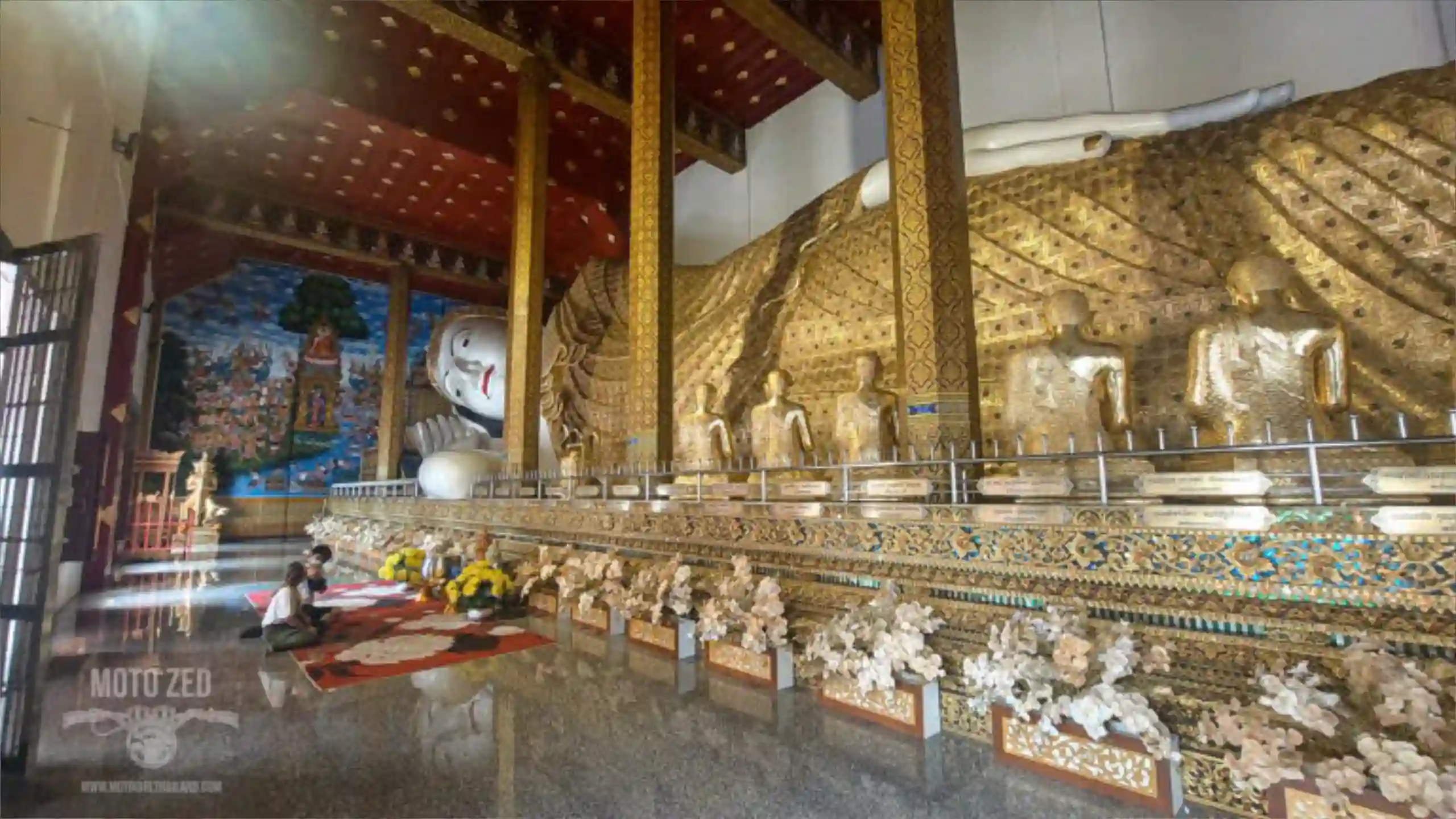
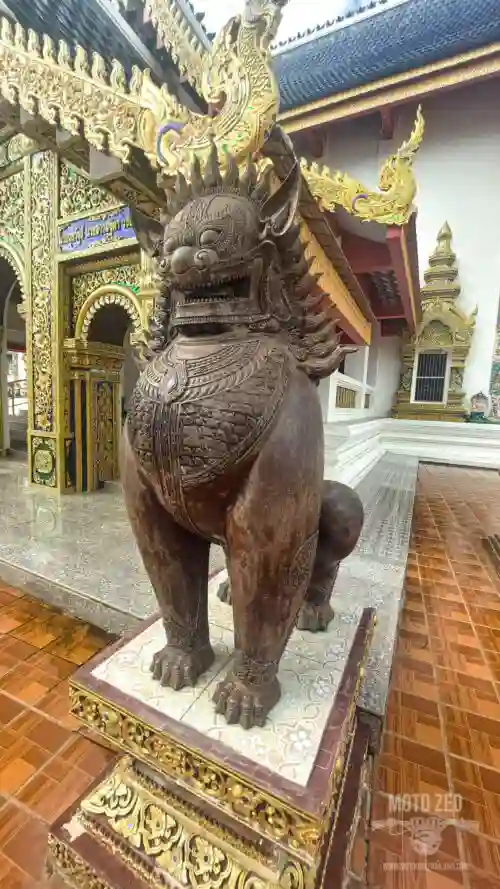
The design includes 12 stupas (chedis) representing the Chinese zodiac, mythical creature sculptures like dragons and lions guarding entrances, and a grand teak viharn with a three-tiered roof, blue tiles, and golden bargeboards.
These elements combine to create a visually stunning and fantastical environment, often compared to a Buddhist theme park.
Additional Notes:
Although playful and vibrant in design, Wat Ban Den is an active place of worship, thus the typical temple rules regarding dress and decorum apply.
If you’re a nature lover and enjoy a more secluded, off-the-beaten-path experience, Wat Phra That Doi Nok provides an opportunity to connect with both the natural world and the spiritual heritage of Chiang Mai.
4 – San Pa Gu Meditation Centre
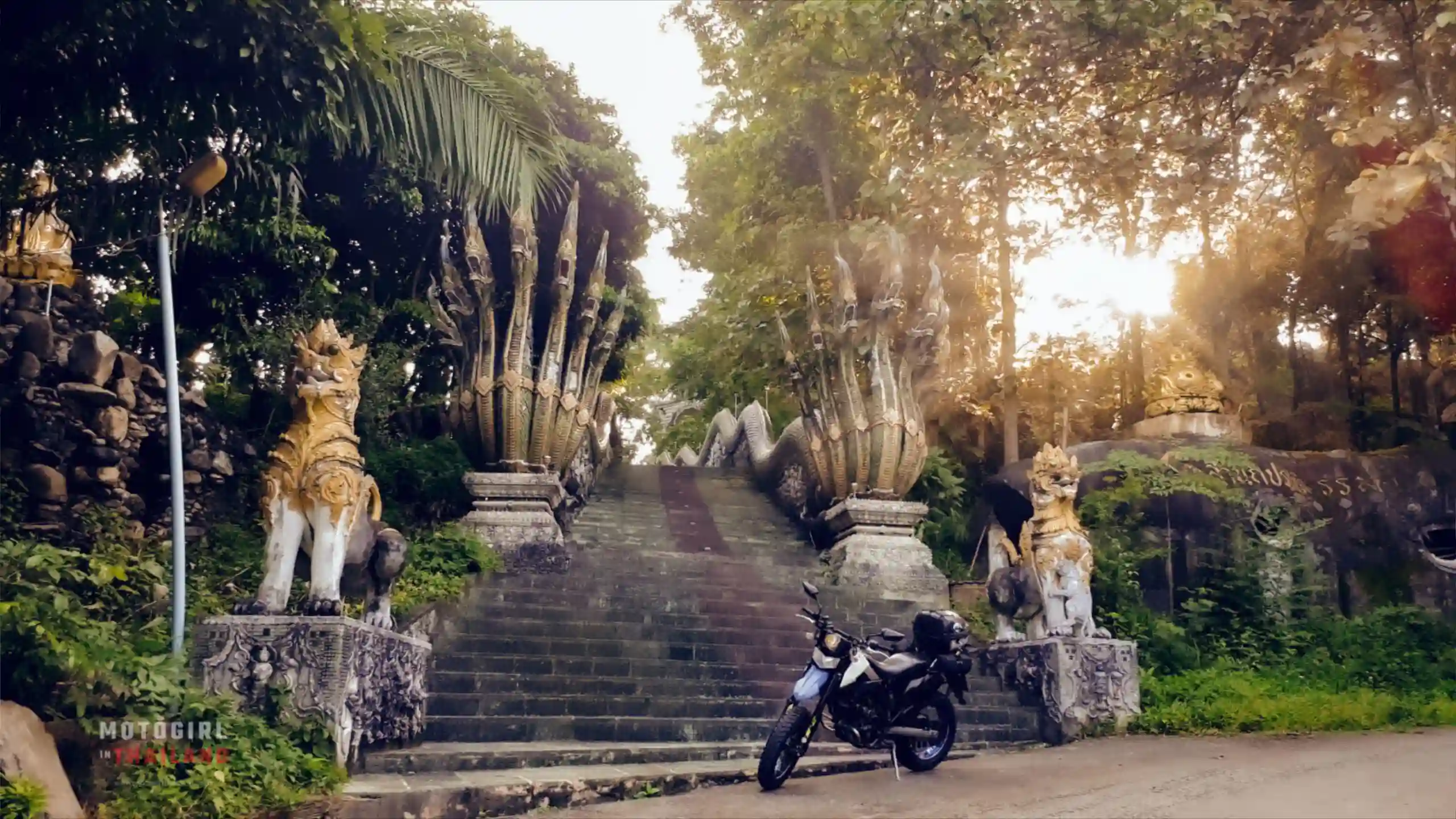
สำนักปฏิบัติธรรมสันกู่ / San Pa Gu Meditation Centre in Mae Rim District stands out for its harmonious blend of natural beauty and spiritual simplicity. Unlike more frequented temples, this peaceful retreat remains largely untouched by tourism, offering visitors a rare chance to experience authentic Thai meditation culture in a serene, undisturbed setting.
20 KM
From City
28 Min
From City
Paved
Straight
San Pa Gu Meditation Centre
Calm & Meditative
The serene San Pa Gu Meditation Centre is located in the tranquil outskirts of Chiang Mai city, offering a peaceful retreat for those seeking spiritual solace. It remains a lesser-known sanctuary for both locals and visitors and is ideal for quiet reflection and mindfulness practice.
Parking and Access:
- Parking: The parking area is at the top of the retreat (not at the base of the stairs). Stairway Location. / Main Entrance
- Disabled Access: (To be confirmed)
Facilities:
- Bathrooms: Basic toilet facilities on-site
- Food/Drinks: Nothing on-site for visitors, but there are local eateries close by.
Architectural Features:
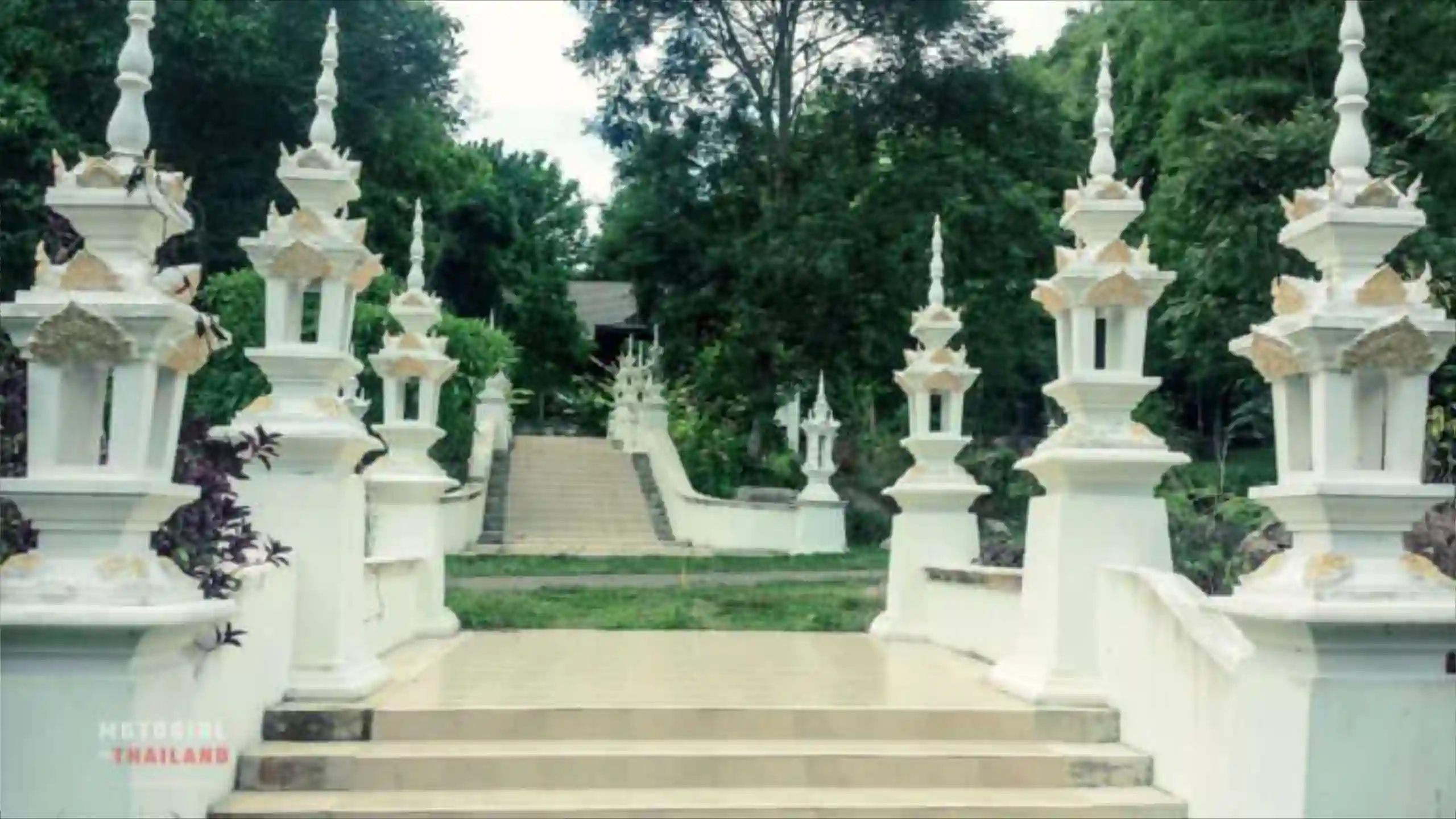
One of its most iconic elements is the long stairway lined with colourful Buddhist flags, leading upward toward the main meditation area. This symbolic ascent represents the path to spiritual elevation and mindfulness.
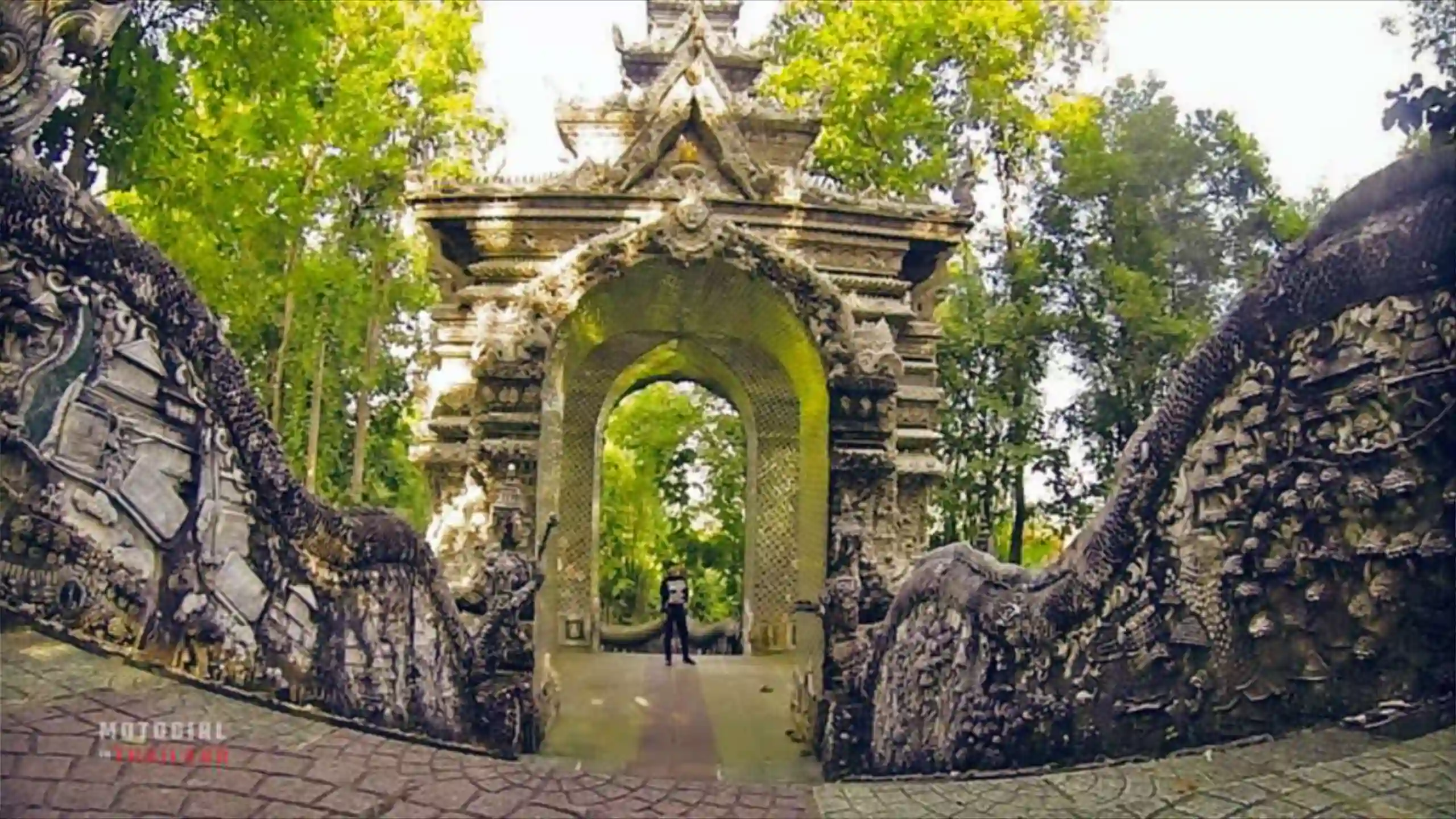
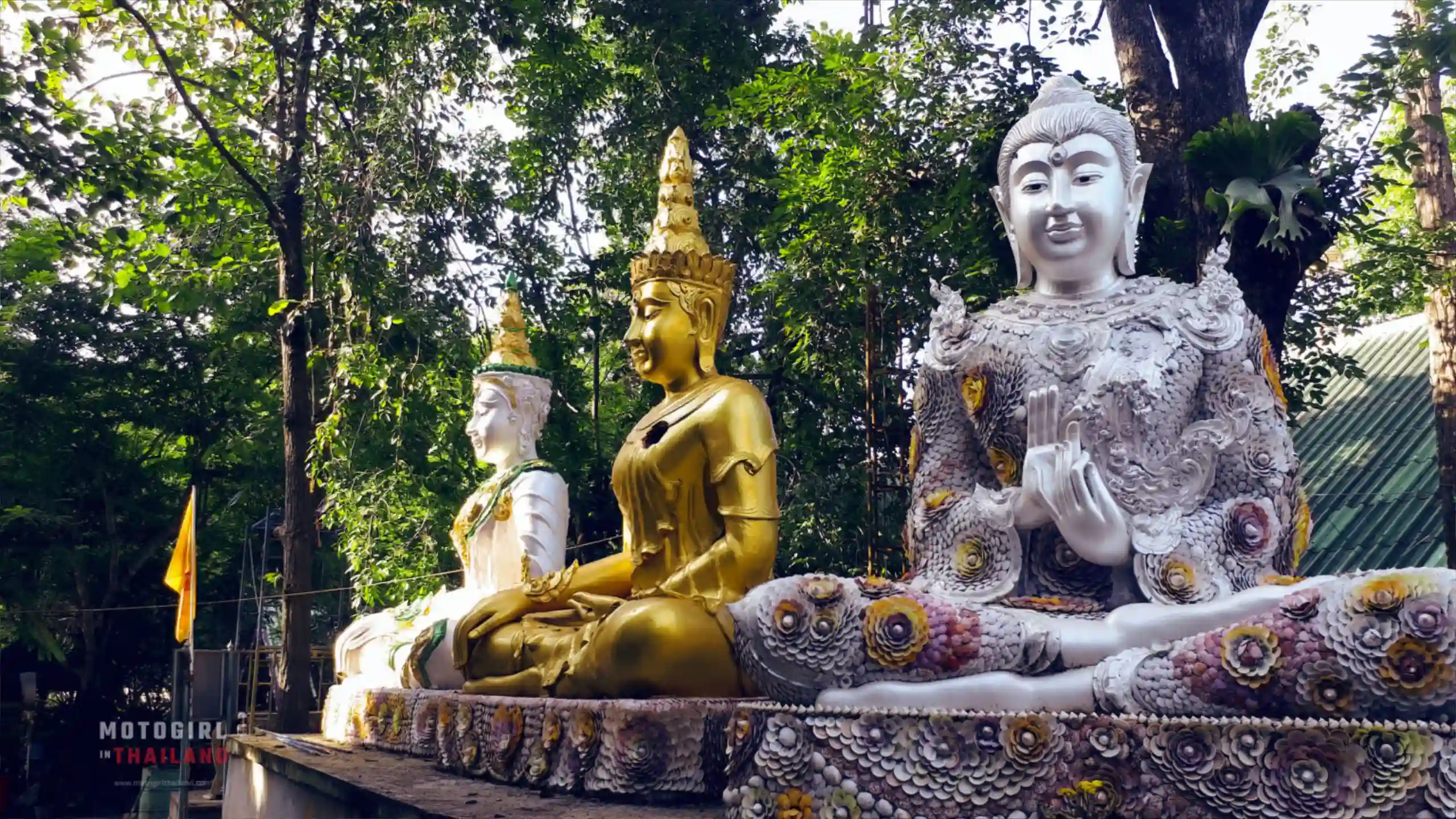
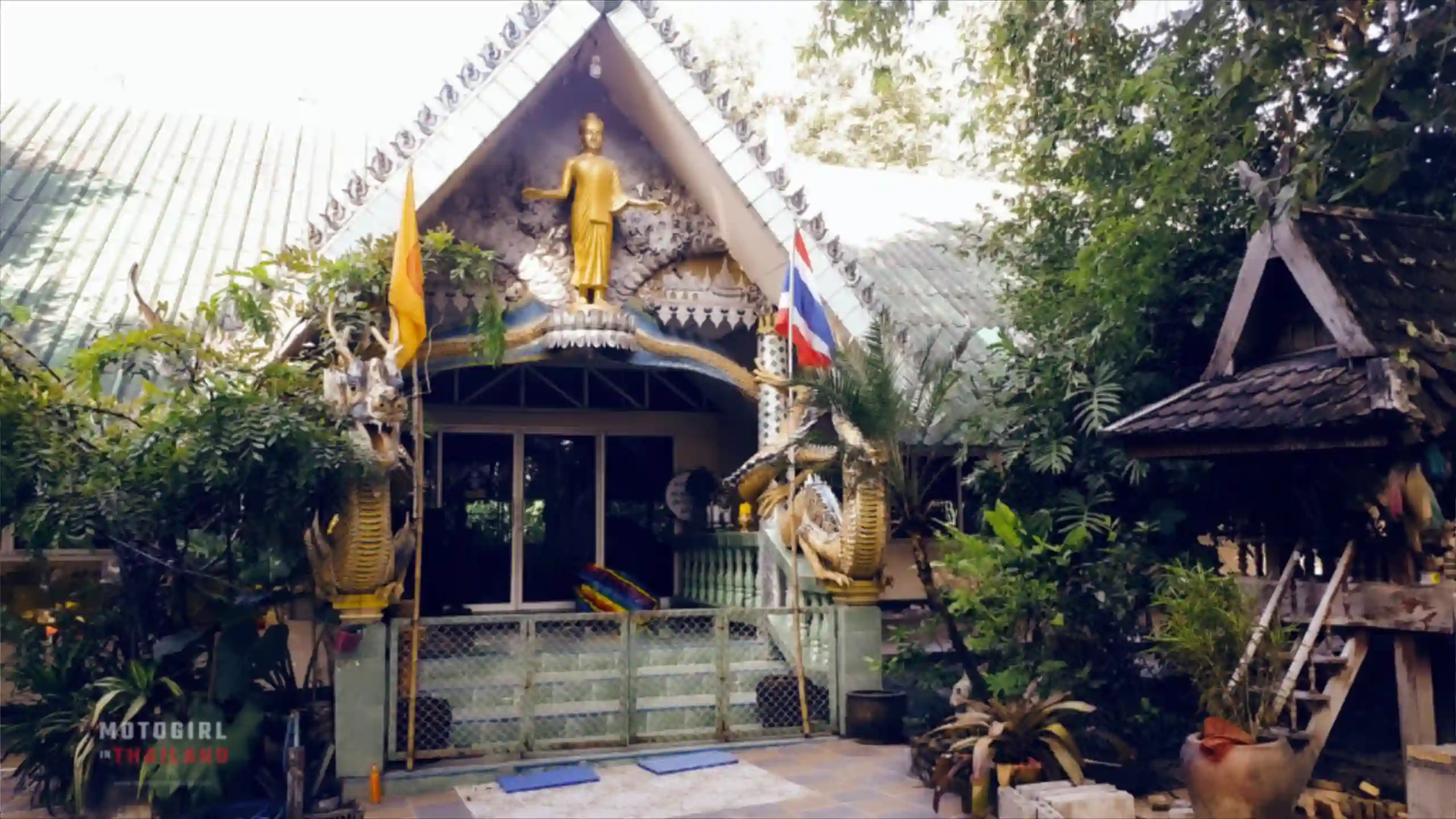
At the top of the stairs, you’ll find a simple meditation venue, built in a minimalist yet traditional northern Thai style. In the garden there are many Buddha statues, depicting various stages of the Buddha’s life and teachings.
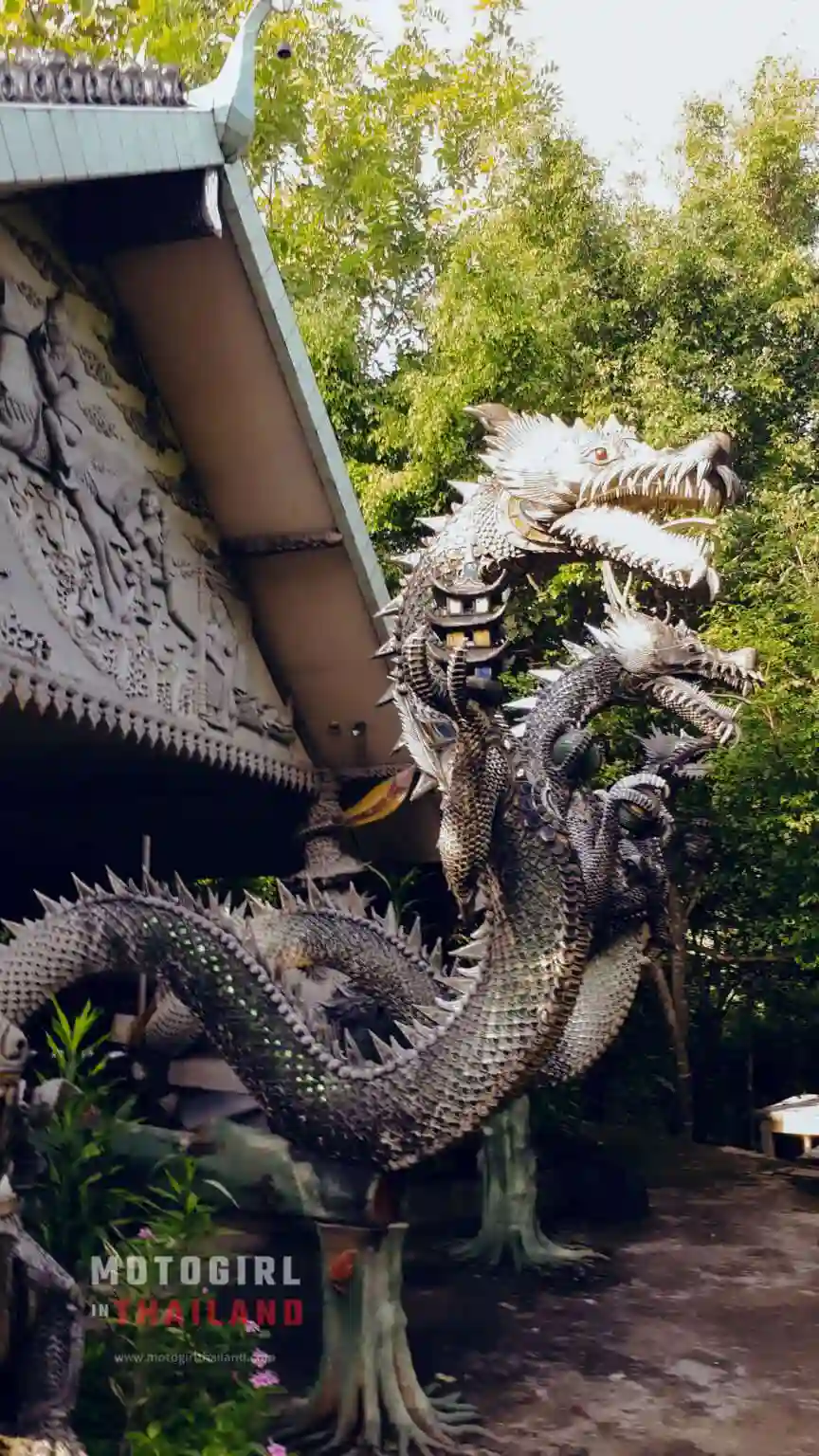
Small thatched-roof pavilions and shaded seating areas are scattered throughout the gardens, offering ideal spots for walking meditation or silent contemplation. The entire complex is designed to foster stillness, spiritual discipline, and a deep connection with the natural world.
Additional Notes:
The route to San Pa Gu eventually leads you through lush rice paddy fields lined with amazing cafes and eateries.
If you’re seeking a serene, off-the-beaten-path experience, San Pa Gu Meditation Centre offers a unique opportunity to connect with nature and the spiritual traditions of Chiang Mai.
5 – Wat Pha Thamachart
วัดป่าธรรมชาติ / Wat Pha Thamachart in Hang Dong District, is a hidden forest sanctuary amidst nature. This secluded temple, enveloped by lush forests and serene landscapes, provides an ideal setting for meditation and introspection.
23 KM
From City
28 Min
From City
Paved
Curvy
Wat Phra Thamachart
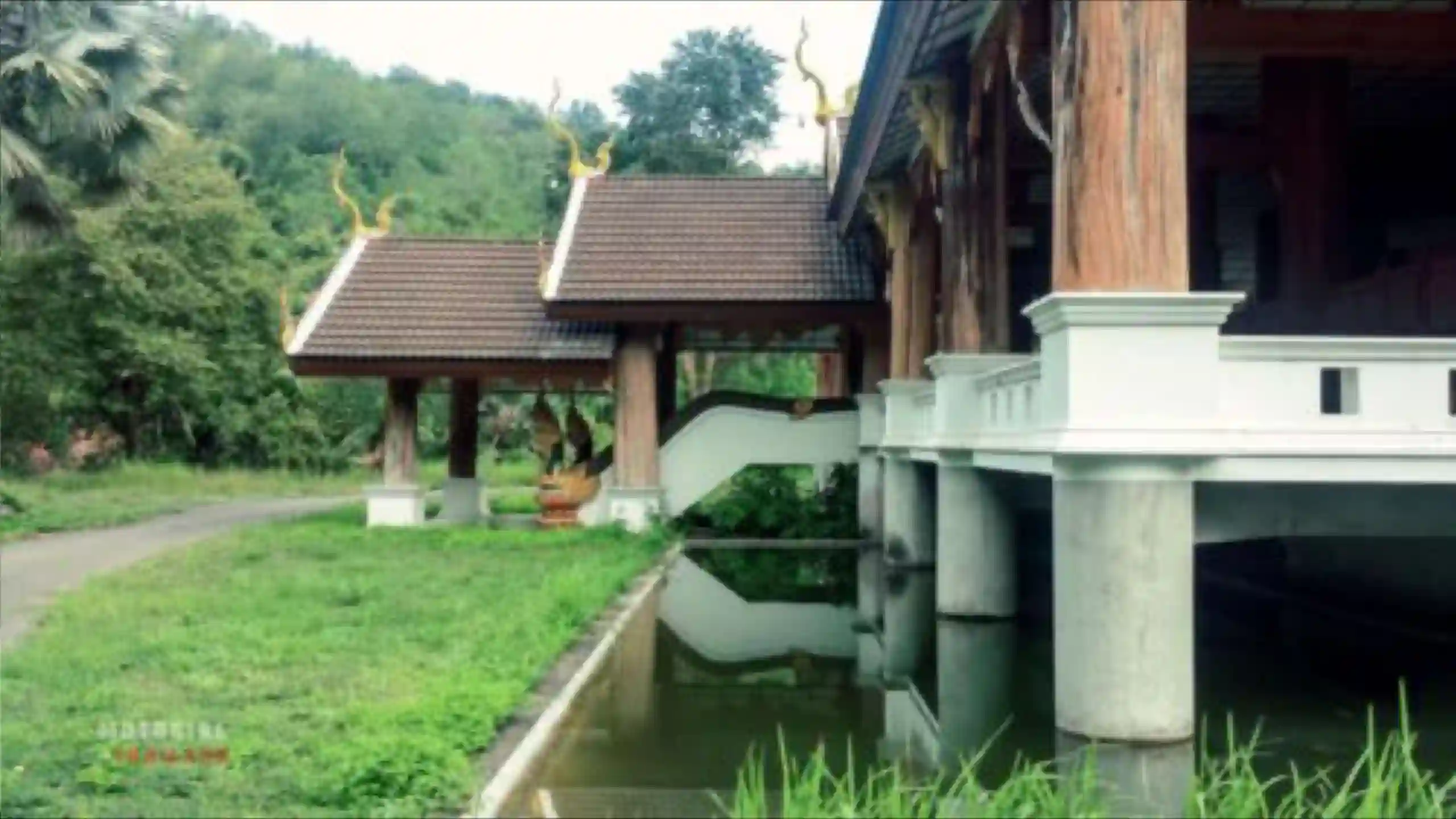
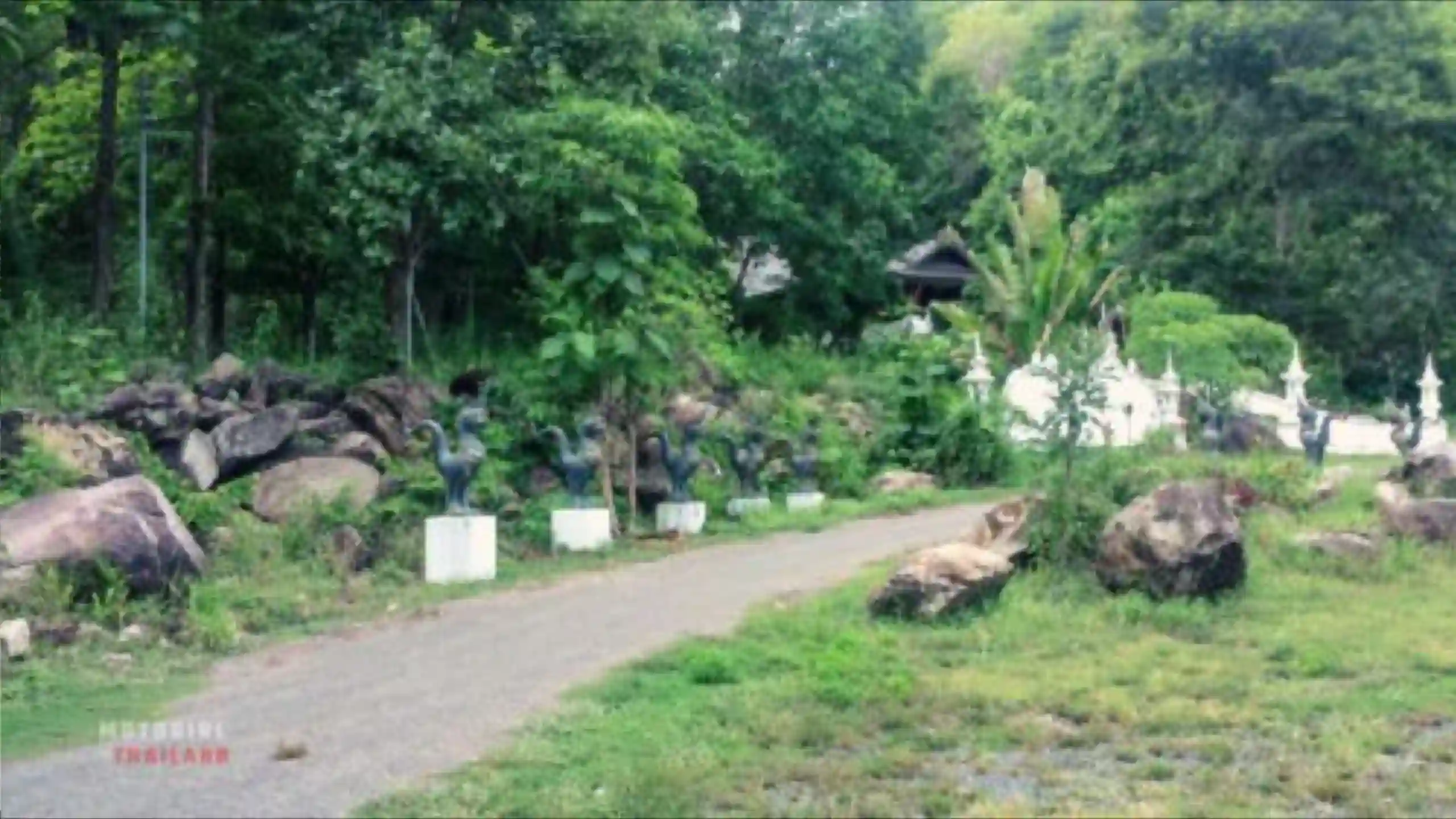
Wat Pha Thamachart, meaning “Temple of the Natural Cliff,” is renowned for its integration with the surrounding natural environment.
Parking and Access:
- Available on-site
- Disabled Access: Surrounding grounds only. I need to re-check if there is access into the temple itself.
Facilities:
- Bathrooms: Basic toilet facilities on-site
- Food/Drinks: Nothing is available at the temple, but eateries are dotted around en route.
Historical and Cultural Aspects:
The temple serves as a center for Buddhist practice, emphasising harmony between spiritual development and nature. Monks and visitors alike engage in meditation and mindfulness practices, drawing inspiration from the serene surroundings.
Architectural Features:
The temple’s architecture harmoniously blends traditional Thai design with the natural landscape. Structures are thoughtfully positioned to complement the contours of the land, with meditation halls and living quarters nestled among trees and rock formations. Natural materials are used extensively, reinforcing the temple’s commitment to simplicity and environmental harmony.
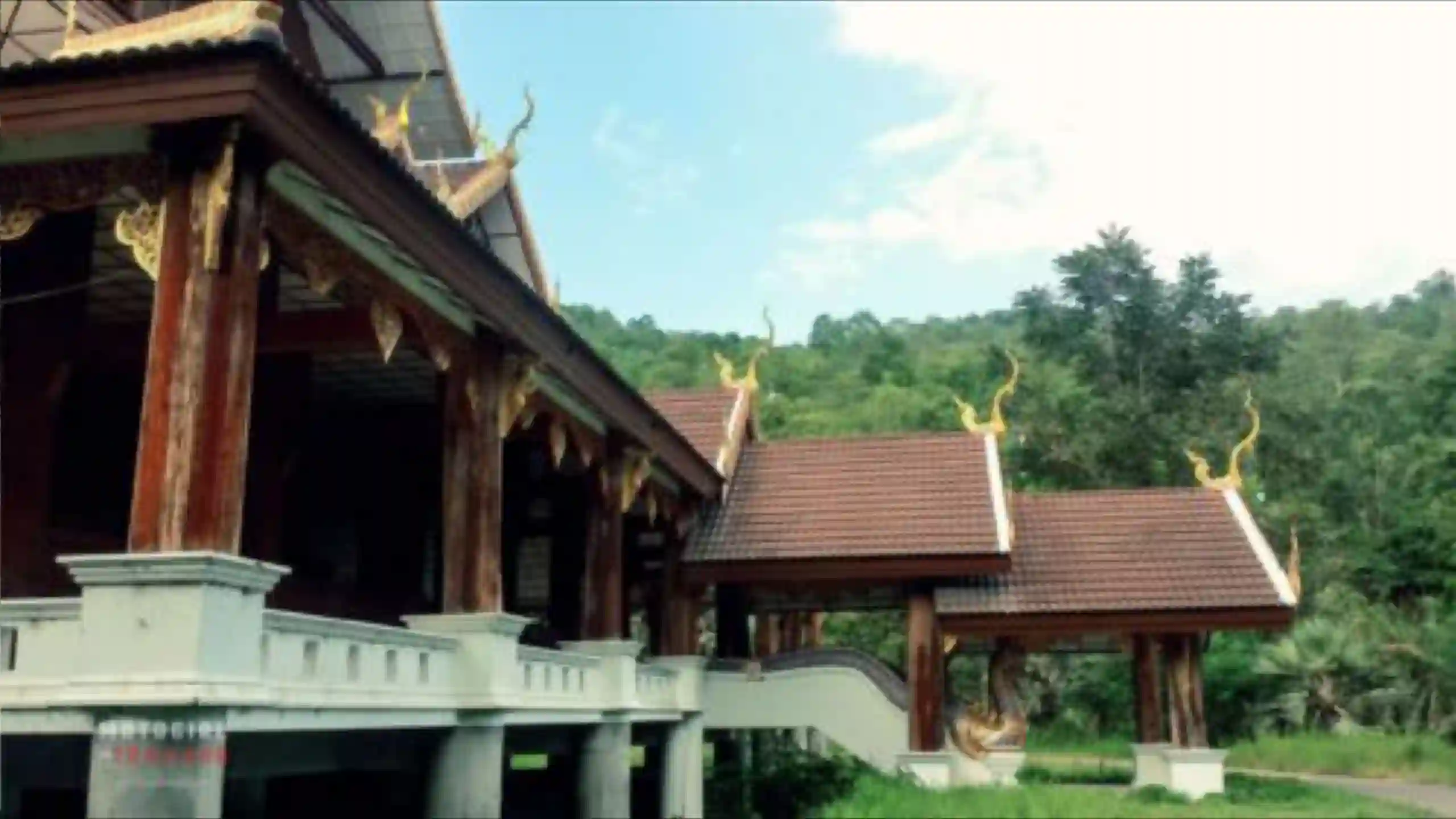
The temple grounds are characterized by quiet walking paths, shaded areas for contemplation, and spaces designed for communal practice.
Guide for this zone
6 – Wat Hua Dong Samakkhitham
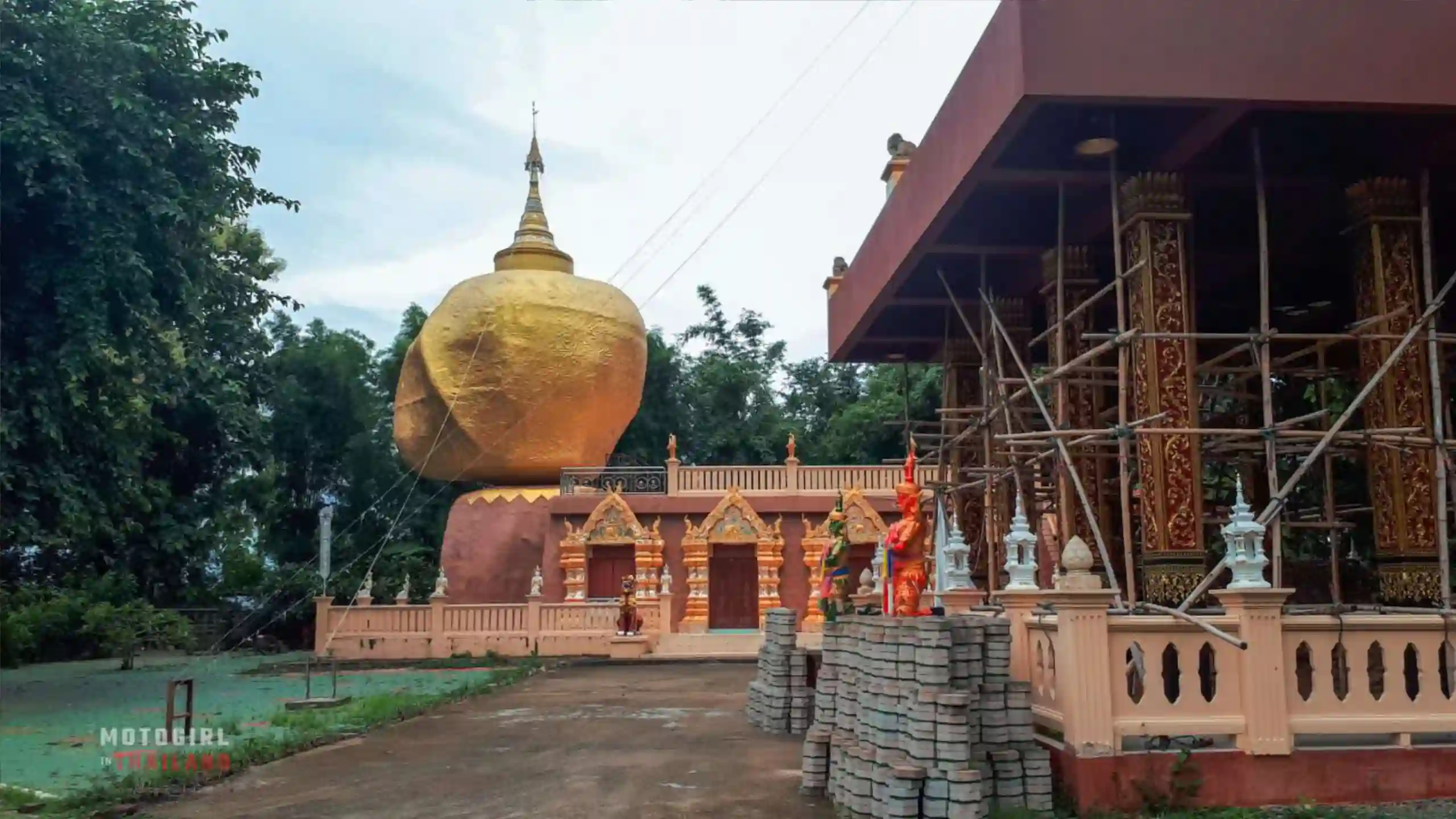
วัดหัวดงสามัคคีธรรม / Wat Hua Dong Samakkhitham in Mae Rim District, serves as a community temple for local residents. While not particularly spectacular compared to the other temples mentioned, what makes this temple interesting, is the unexpected Kyaiktiyo (Golden Rock) replica. Other “Golden Rock” temples in the region include Wat Phrathat In Khwaen, in Lampang, and Phra That Inkhang, in Phrae.
18 KM
From City
26 Min
From City
Paved
Straight
Wat Hua Dong Samakkhitham
Historical and Cultural Aspects:
According to local elders, the area where Wat Hua Dong Samakkhitham now stands was once a dense forest adjacent to a cemetery, characterised by tall trees and a quiet, somewhat mysterious atmosphere.
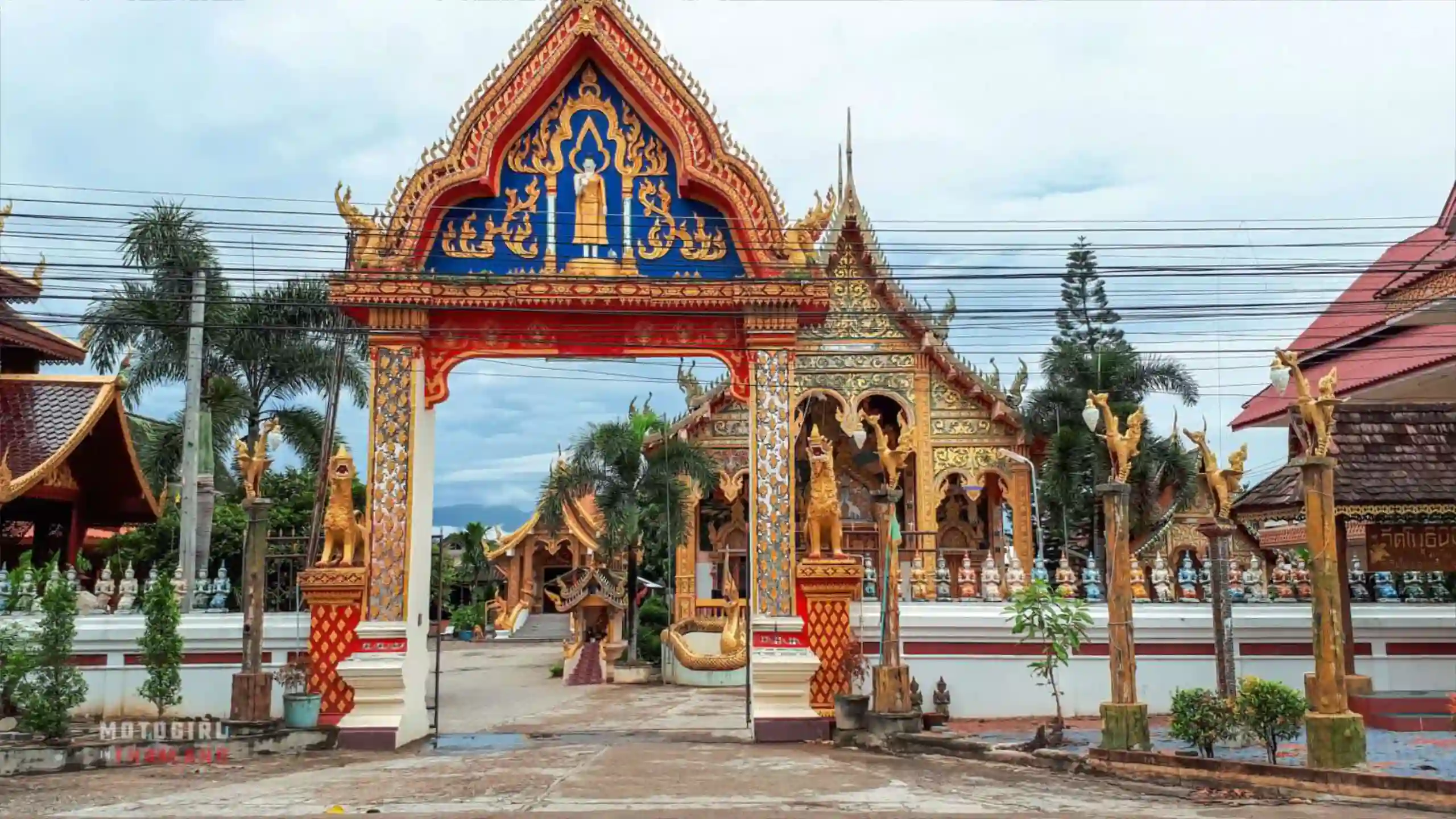
Over time, villagers began to use the temple space for spiritual gatherings, and a small shrine was built. Through local dedication and community effort, the temple evolved into a full-fledged monastery. The word “Samakkhitham”, (meaning religious fellowship), reflects the spirit of unity and harmony that shaped its founding.
Parking and Access:
- Parking: Available on-site
- Disabled Access: Yes
Facilities:
- Bathrooms: Basic toilet facilities on-site
- Food/Drinks: Nothing is available at the temple, but eateries are dotted around en route.
What makes this temple special is the Golden Rock, modelled after the famous Kyaiktiyo Pagoda in Myanmar – one of the most revered Buddhist pilgrimage sites in Southeast Asia. The Golden Rock is believed to be miraculously balanced on the edge of a cliff by a strand of the Buddha’s hair.
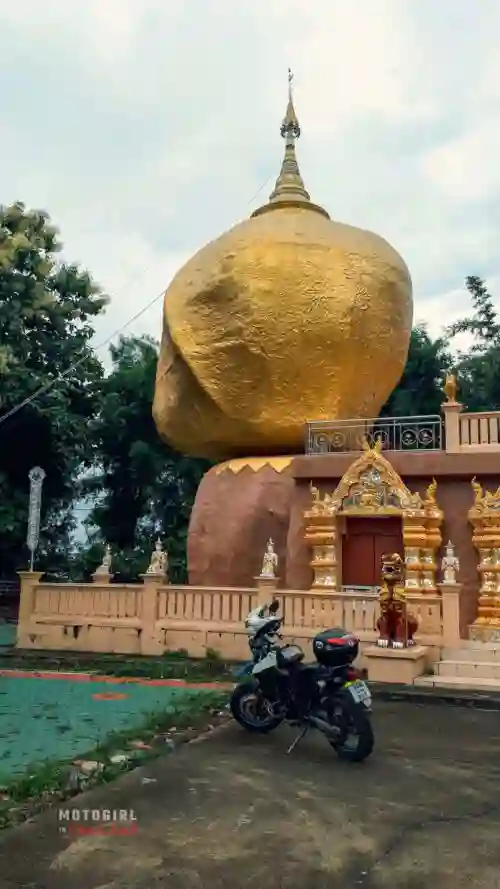
Temples in Thailand and other neighboring countries often build replicas as acts of devotion or to bring the same sacred energy and merit to their communities.
Architectural Features:
Wat Hua Dong Samakkhitham features a mix of modest Lanna-style architecture and modern additions. The main viharn (ordination hall) is adorned with traditional northern Thai roof tiers, while colorful murals and Buddha statues reflect local artistic influences.
A newly built ubosot (ordination hall) serves as the heart of religious ceremonies. Surrounding structures include monk living quarters, a community kitchen, and an open-air pavilion often used for dhamma talks and communal meals. The setting—surrounded by farmland and gently rolling hills—enhances the temple’s peaceful ambiance. A quintessential Thai community temple.
7 – Wat Phra Borommathat
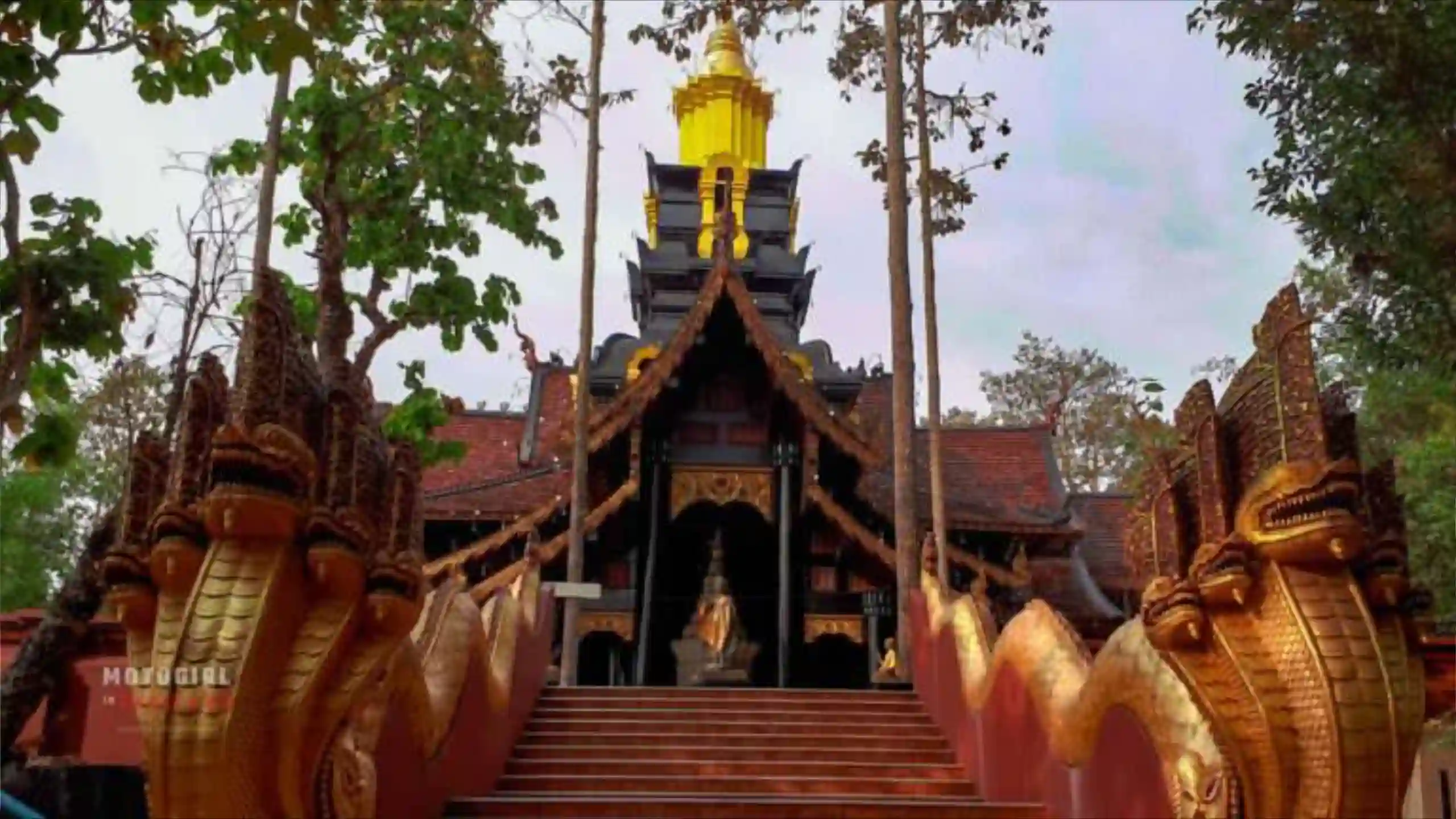
วัดพระบรมธาตุดอยผาส้ม / Wat Phra Borommathat Doi Pha Som is a temple sanctuary that harmoniously blends spiritual devotion with environmental stewardship. The temple offers visitors a peaceful Buddhist retreat and a glimpse into the integration of sustainable living principles.
80 KM
From City
1.5 Hour
From City
Paved
Twisty / Steep
Wat Phra Borommathat
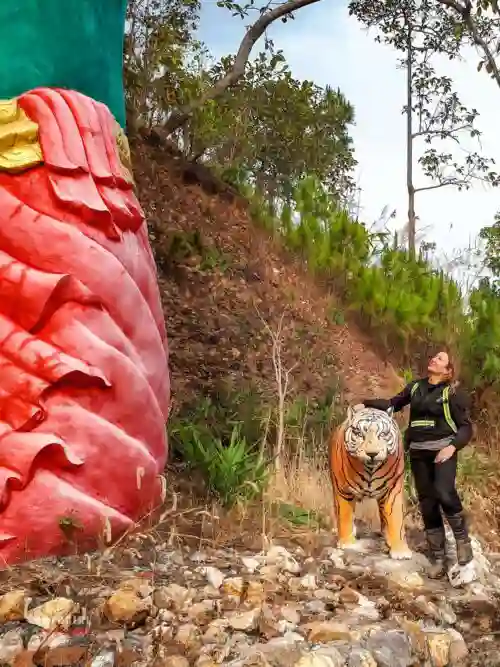
Wat Phra Borommathat Doi Pha Som is home to eco-issues and spiritual serenity, and also a fun surprise—a giant yak guardian!
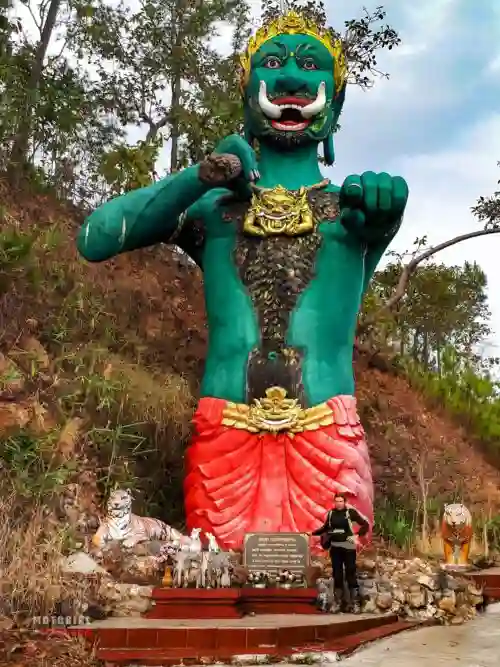
This towering, colourful giant watches over the temple with a fierce expression, making it an iconic, imposing feature..
Parking and Access:
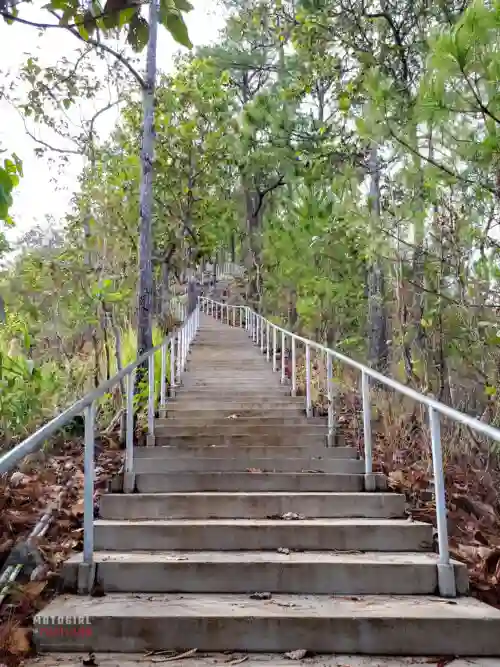
- Limited parking is available on the temple grounds via a short, narrow, and steep route. From the base of the temple route, follow the steep road to find a parking spot. Alternatively, drivers and riders can park at the base of the hill and climb 1,297 steps to the pagoda.
- Disabled Access: Whilst not specifically designed with disabilities in mind, most could probably manage if parking at the top of the temple.
Facilities:
- Bathrooms: Basic toilet facilities on-site
- Food/Drinks: Nothing is available at the temple, but eateries are dotted around en route.
Historical and Cultural Aspects:
Wat Phra Borommathat Doi Pha Som is believed to house sacred relics of the Buddha, making it a revered site for local devotees. However, beyond its religious significance, the temple serves as a model for sustainable living, embodying the late King Bhumibol Adulyadej‘s philosophy of sufficiency economy.
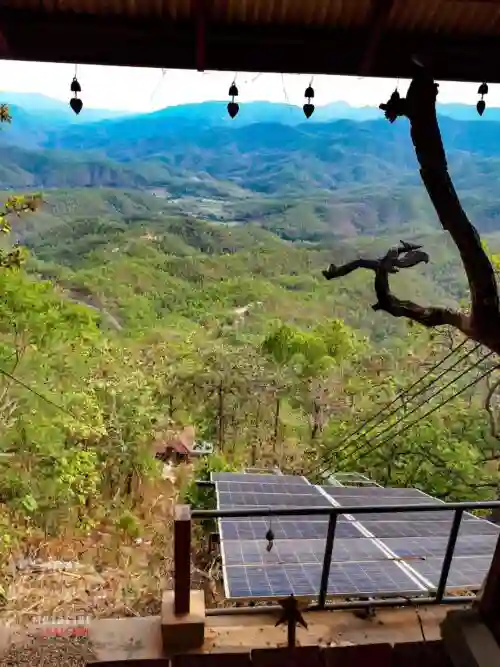
Since 2008, under the guidance of Abbot Phra Sorayut Chaiyapanyo, the temple has implemented initiatives such as forest conservation, water resource management, and community education programs, fostering a self-reliant and environmentally conscious community.
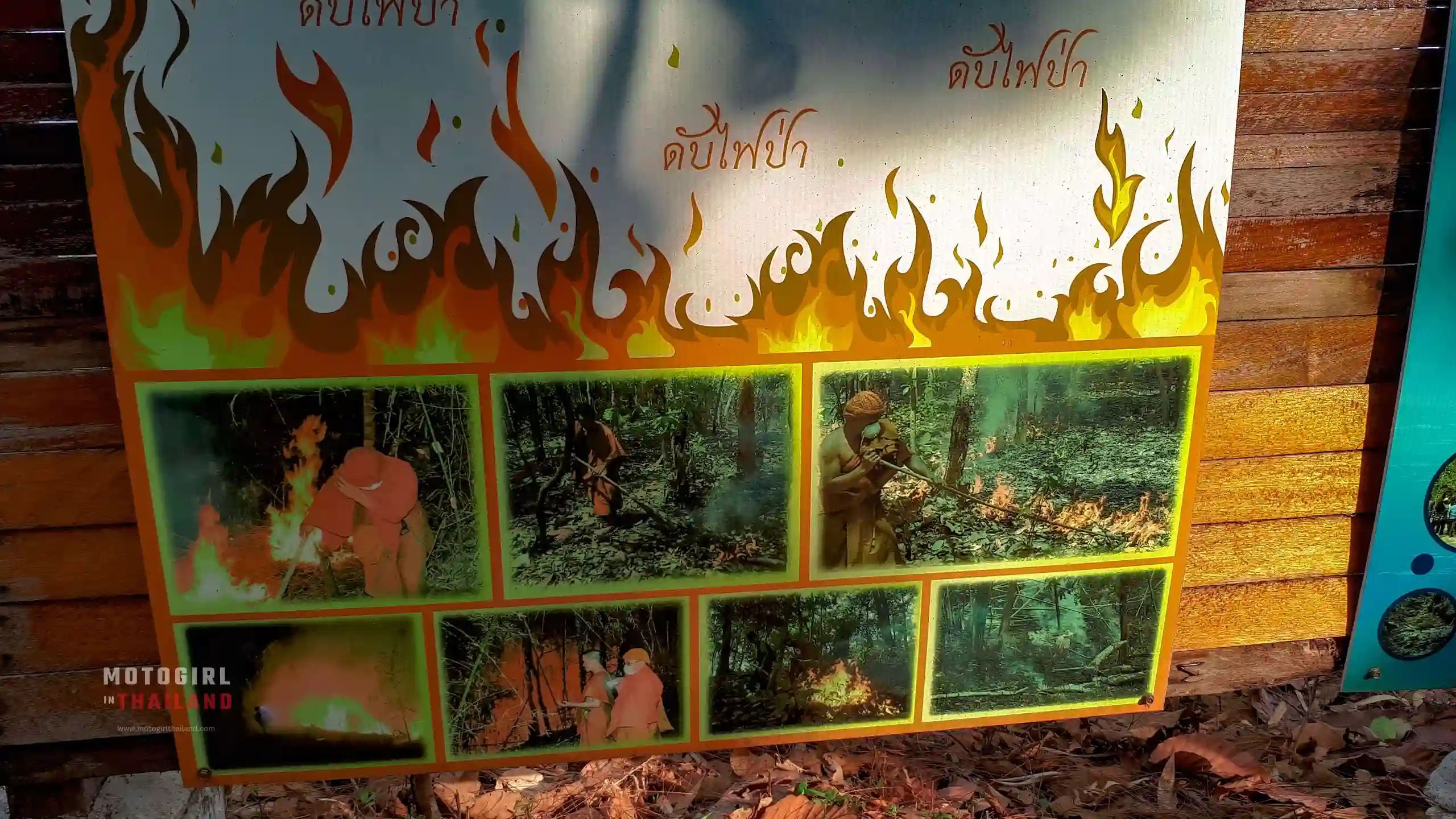
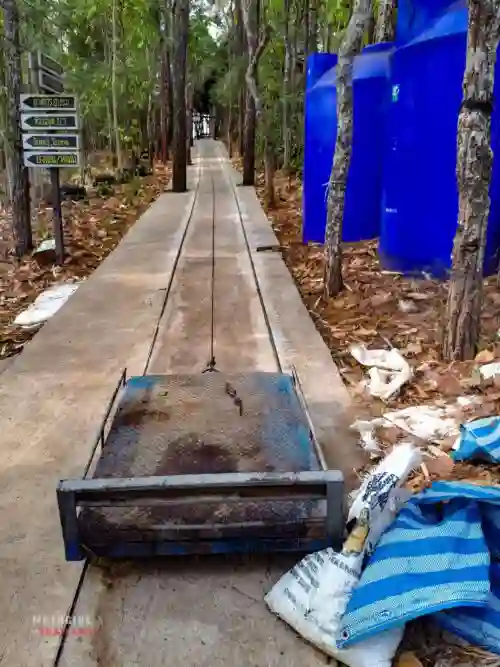
Dotted around the temple grounds is evidence of sustainability education and practices.
Architectural Features:
The temple grounds are thoughtfully integrated with the natural landscape, featuring check dams, terraced gardens, and areas designated for environmental education, all exemplifying the harmonious coexistence of spiritual practice and ecological mindfulness.
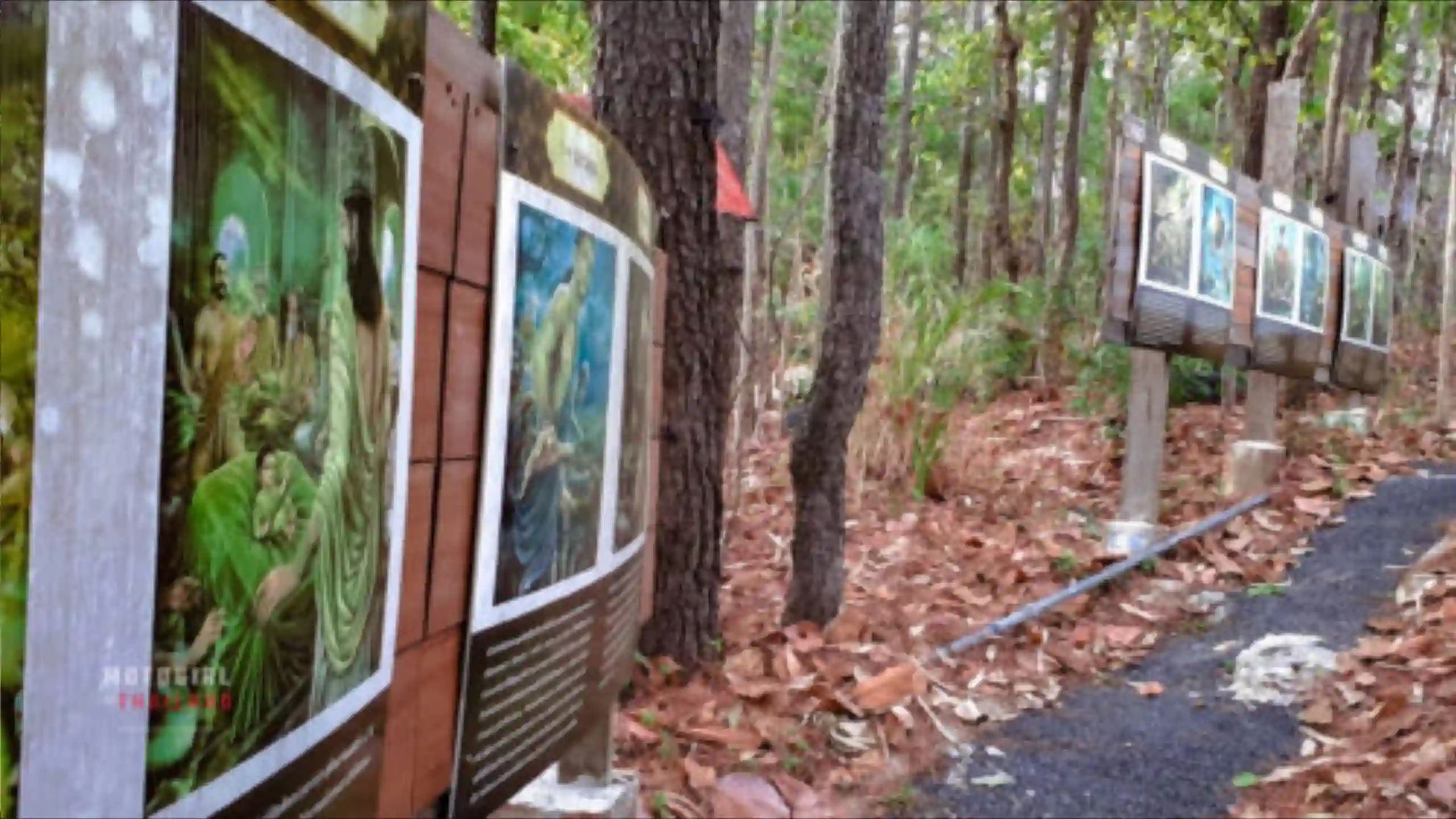
It is an interesting mix of both sustainability and Buddhist art, making it a unique and interesting local community temple.
Additional Notes:
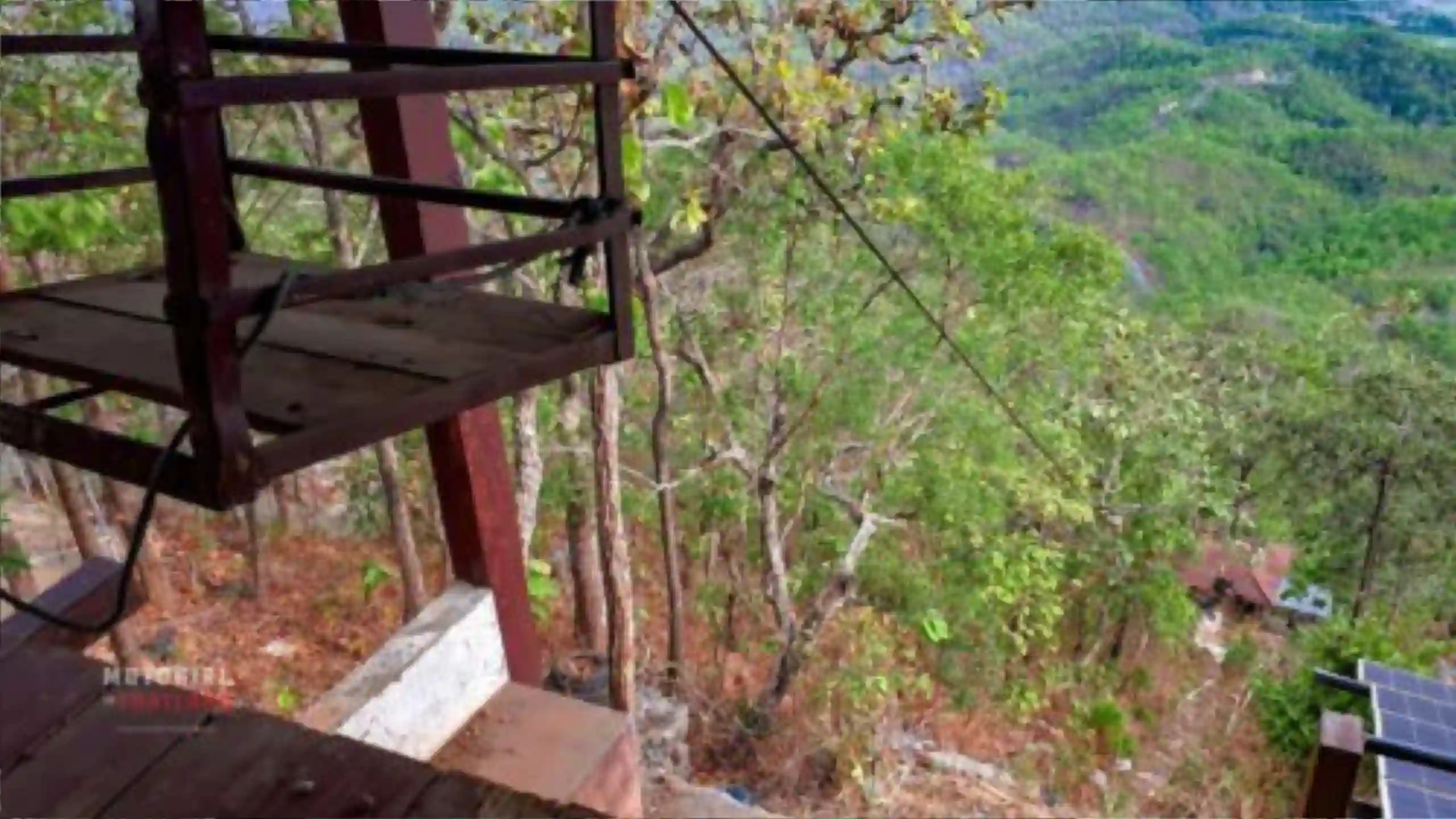
It is a long walk up to the top of the temple grounds, so keep that in mind if visiting. Take water! However, there does seem to be a pulley system set up – although I am unsure if it is suitable for transporting people!
If you’re a nature lover and enjoy a more secluded, off-the-beaten-path experience, Wat Phra That Doi Nok provides an opportunity to connect with both the natural world and the spiritual heritage of Chiang Mai.
8 – Kuan Im Chokchai
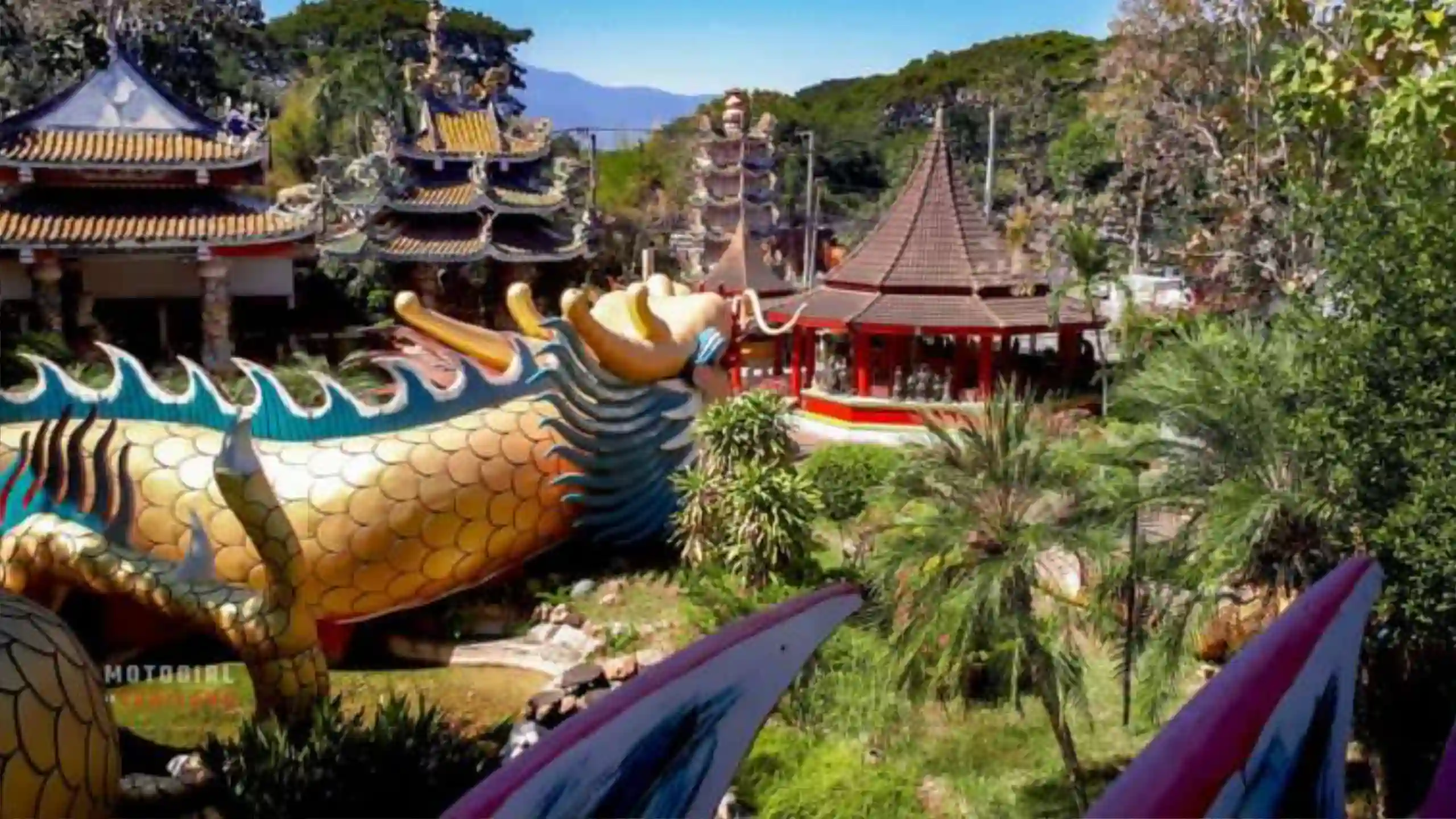
พระแม่กวนอิมมหาโพธิสัตว์ / Kuan Im Chokchai (also known as Phra Mae Guan Yin Maha Pothisat, is a Chinese temple surrounded by serene gardens and traditional Chinese-style architecture, which includes an interesting giant dragon statue.
6 KM
From City
11 Min
From City
Paved
Straight
Kuan Im Chokchai
Chinese Temple
Surrounded by lush gardens and traditional Chinese architecture, this unique and interesting temple is an interesting alternative to Lanna temples. .
Parking and Access:
- Parking: Available streetside.
- Disabled Access: Yes (although, there is a turnstile entrance with an adjacent gate. So, you would need to have someone open the gate. )
Facilities:
- Bathrooms: Basic toilet facilities on-site
- Food/Drinks: Nothing is available at the temple, but eateries are dotted around en route.
Historical and Cultural Aspects:
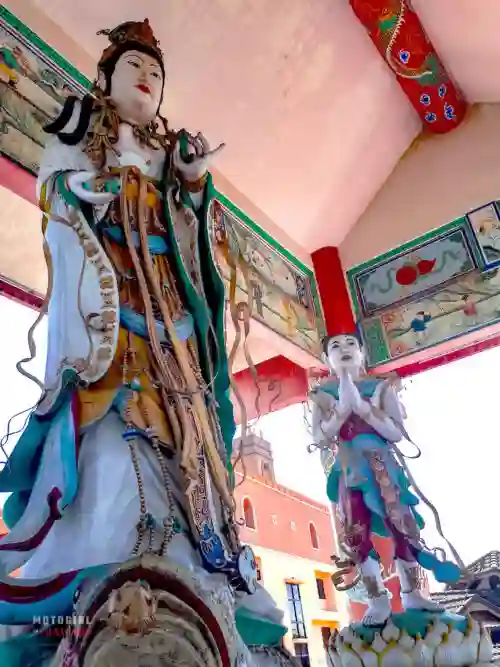
While not ancient, Kuan Im Chokchai reflects the strong cultural influence of Chinese Buddhism in Thailand. It serves as a centre for worshippers who seek blessings, peace, and healing under the compassion of Guan Yin.
Architectural Features:
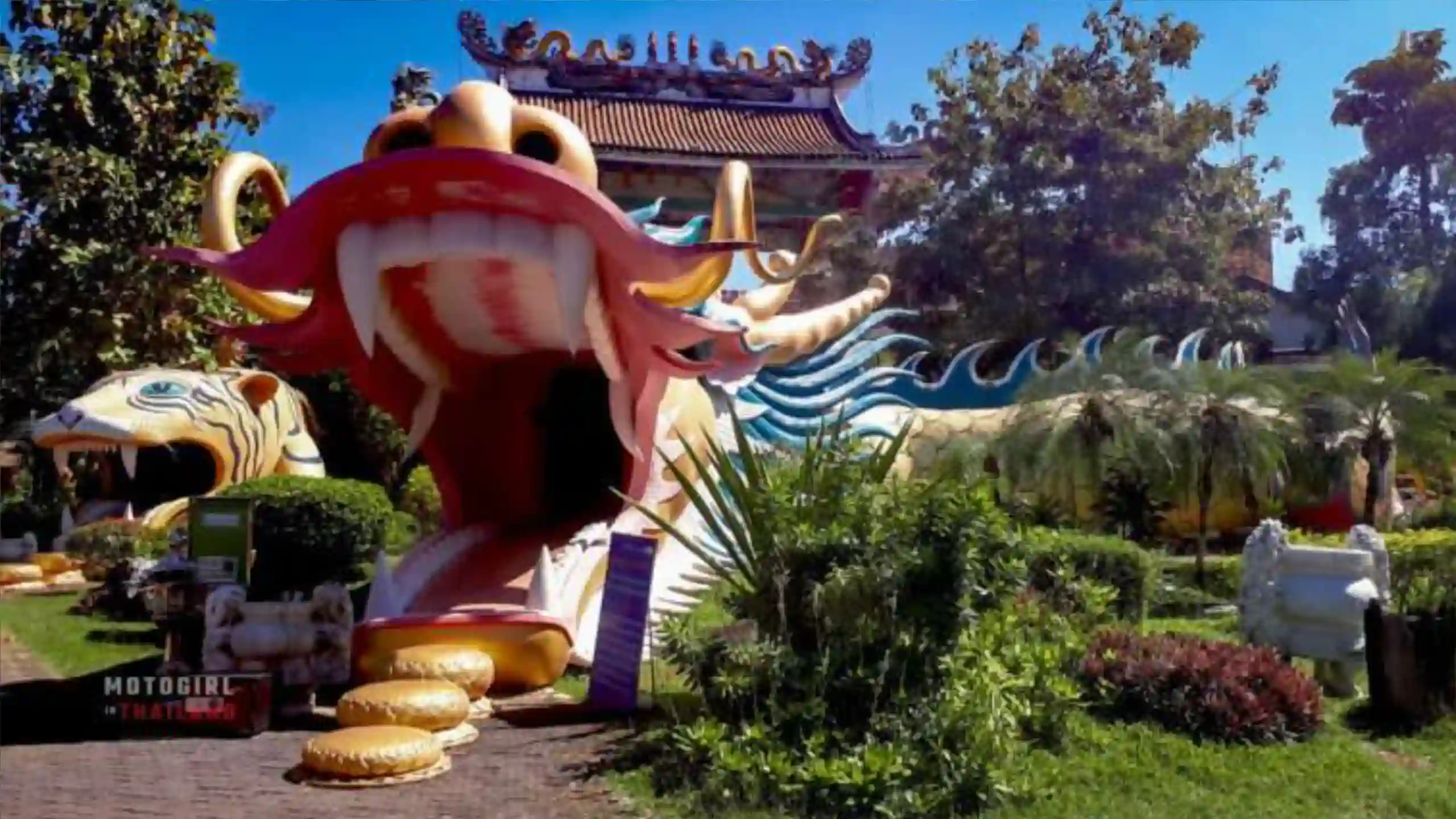
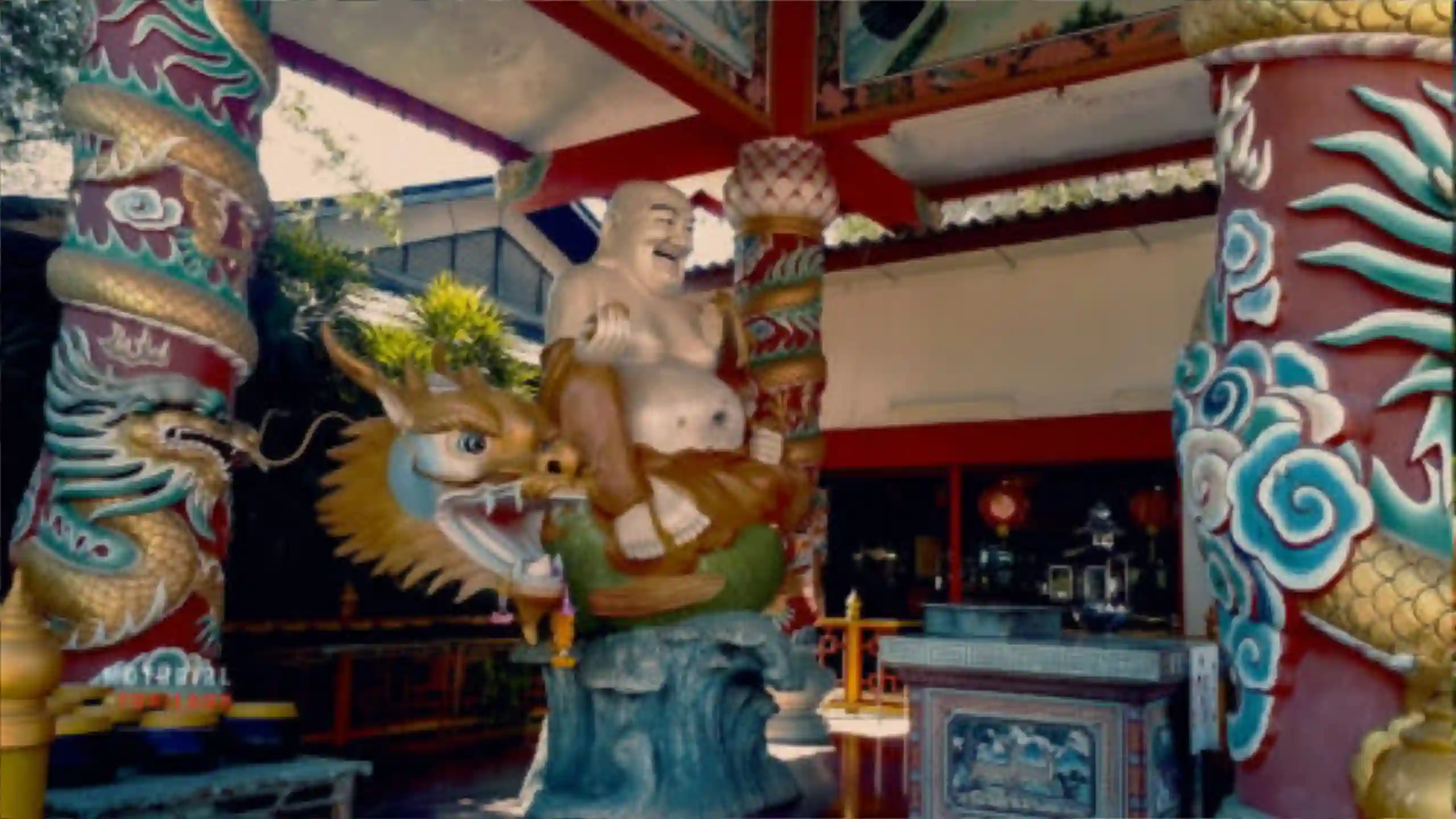
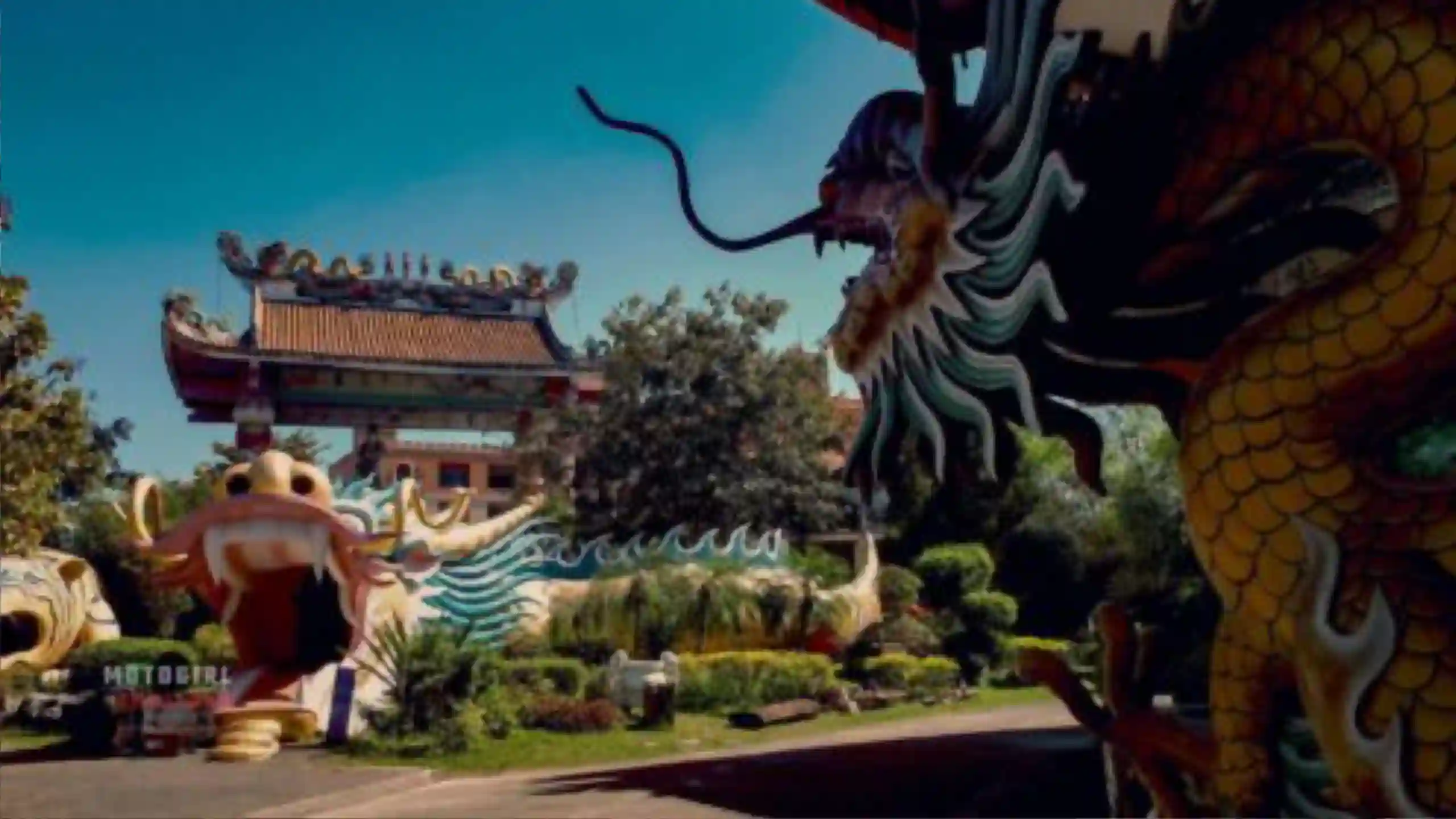
Traditional Chinese motifs such as lotus flowers, colourful pavilions and large interesting statues can be found in the temple, including a large dragon statue with detailed murals inside its body.
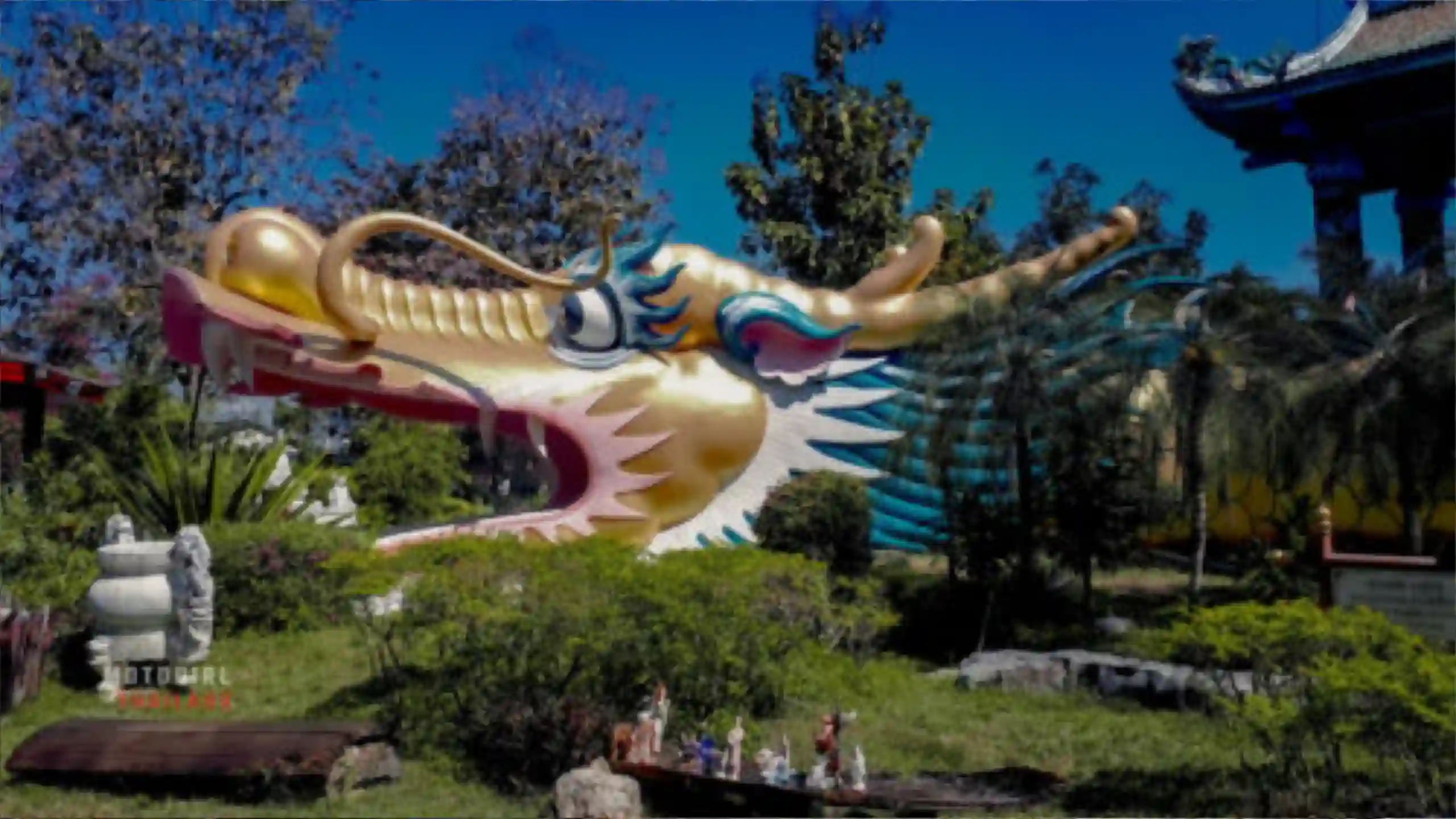
In fact, you can walk through the body of the dragon to enjoy the colourful murals, depicting a story within.
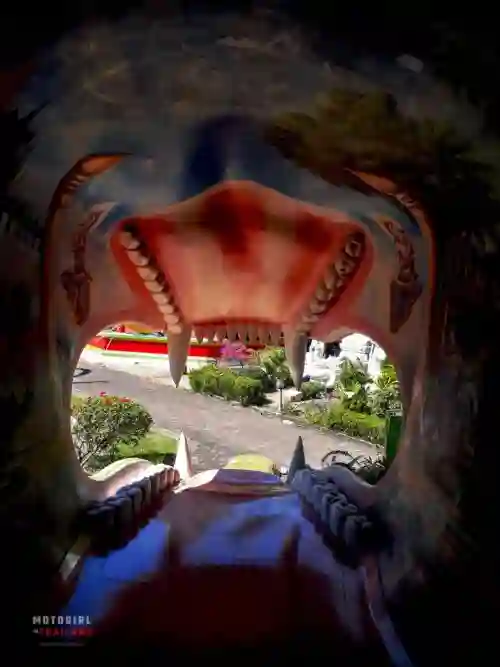
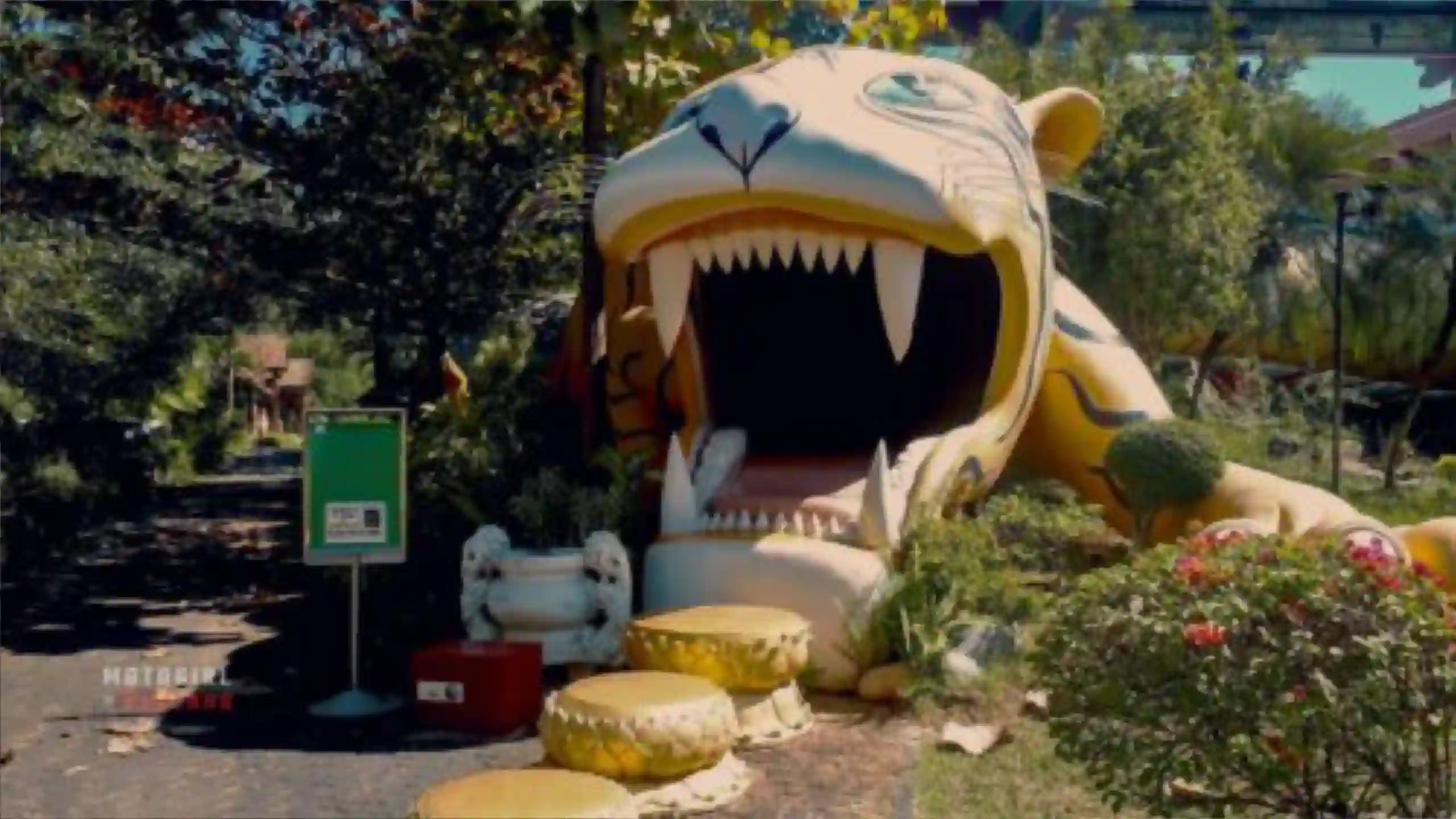
There is also an additional tiger statue that you can enter.
The careful landscaping, including small ponds and flowering plants, adds to the tranquil atmosphere, inviting visitors to slow down and reflect.
10+ More EXCLUSIVE extra-secret Temples!