
Honda Safety Riding Park – Dirt Course Guide
If you’re thinking about learning to ride off-road in Thailand, or you want to build confidence on gravel, mud, and uneven surfaces, Honda Safety Riding Park is a very good place to start.
This guide is based on my experience of taking both the Basic Dirt and Experienced Dirt courses. It is designed as a practical overview of what the day is like, what you learn, and what you should know before booking.
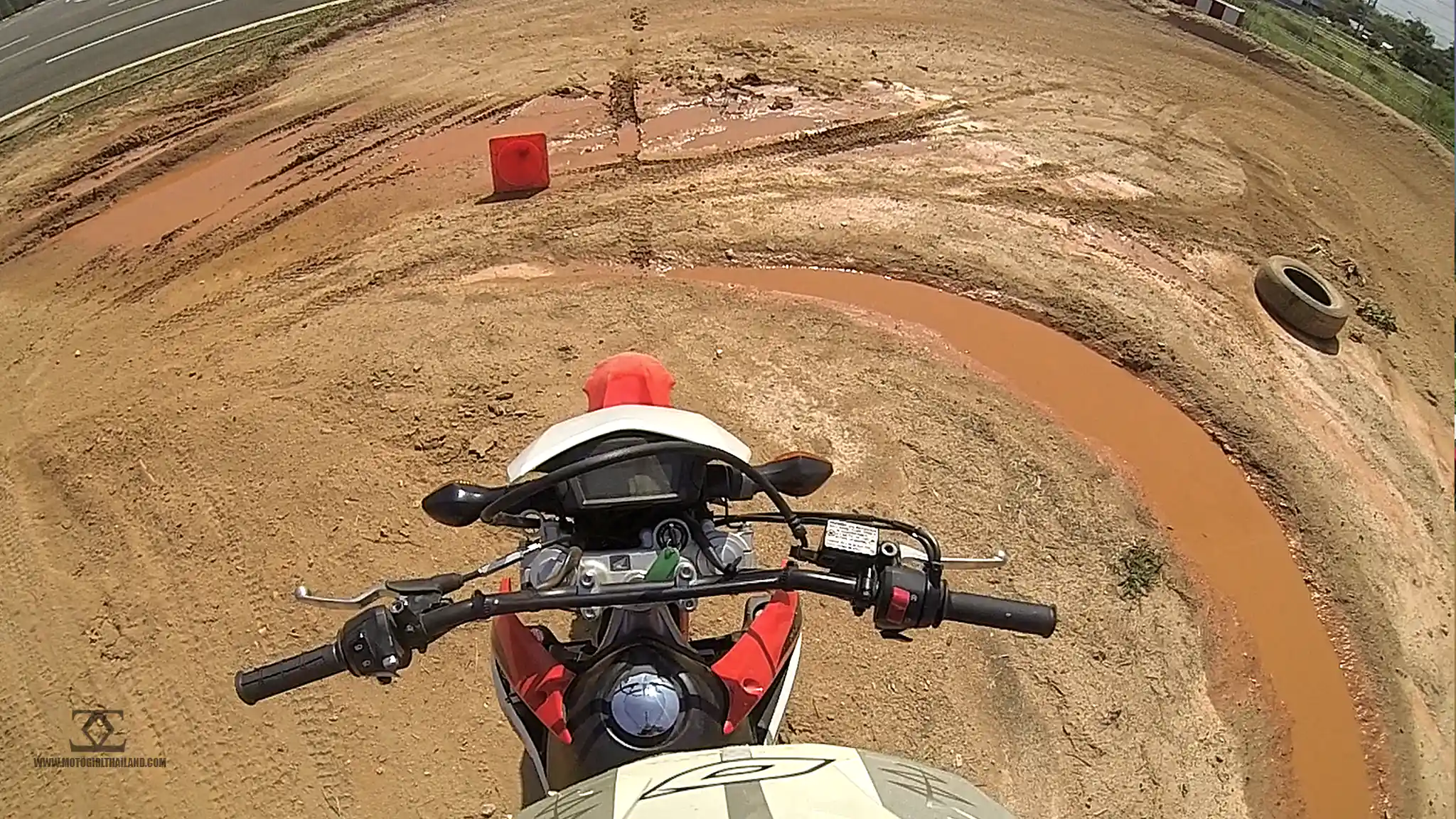
Why Take A Dirt Riding Course?
Whether you plan to ride off-road regularly or simply want to feel more confident on gravel, mud, and rough roads, a dirt riding course is a worthwhile investment. Riding on loose surfaces requires very different techniques to riding on tarmac, with greater emphasis on body position, balance, and bike control.
What to Expect
Expect a full day of practical riding with very little classroom time. Both courses combine instructor demonstrations with hands-on practice, gradually building your confidence before progressing onto Honda’s purpose-built dirt training area. Bikes, protective gear, insurance, and drinking water are all included.
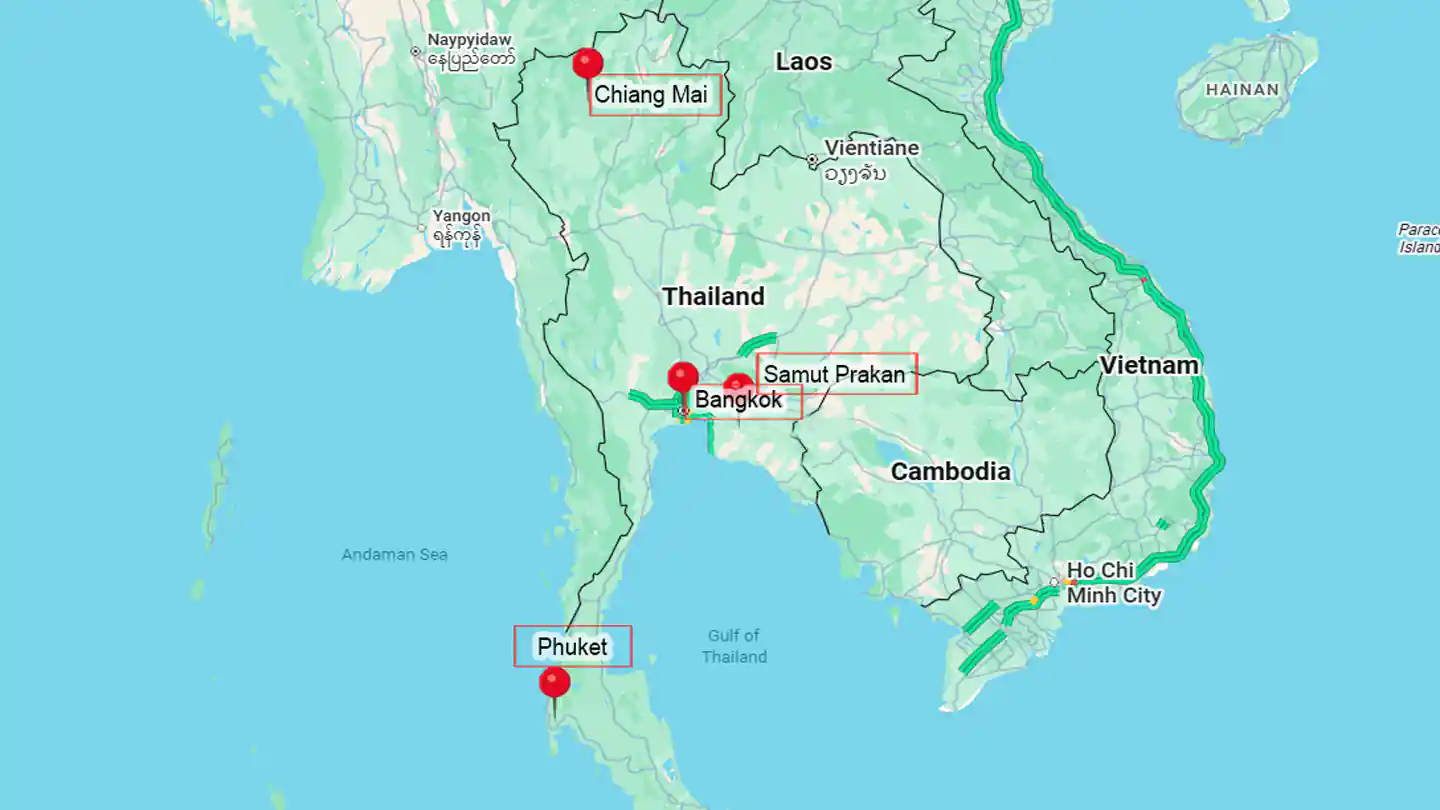
Key Details: Where? When? How Much?
Contents
Do I need any off-road riding experience?
No. The Beginner Dirt Course is designed for riders with little or no off-road experience. Even if you’ve been riding on the road for years, you’ll learn techniques that are very different from riding on tarmac.
Can complete beginners join?
Yes, provided you’re already confident riding a manual motorcycle. These courses teach off-road riding skills, not how to ride a motorcycle from scratch.
Is riding gear included?
Yes. Honda provides a helmet, boots, body armour, gloves, and the motorcycle. Insurance is also included in the course fee.
Are the courses taught in English?
English-speaking staff and instructors are often available, but this isn’t guaranteed. Some courses may be taught mainly in Thai, although demonstrations make the exercises easy to follow.
How physically demanding are the courses?
More than you might expect! Riding off-road requires a lot of standing, balancing, and moving around on the bike. During Thailand’s hot season, the heat can make the day particularly tiring.
What should I wear?
Wear comfortable clothing that you don’t mind getting dusty or muddy. Bring a change of clothes if you plan to use the showers afterwards.
Is lunch included?
No. Drinks and light snacks are available at the café on-site, but lunch isn’t included. There are several local restaurants just across the road from the riding park.
Is it family-friendly?
Yes, this is a family-friendly festivals, with open space, food stalls, play areas, and a relaxed atmosphere.
Do I have to complete the Beginner Course first?
Yes. Honda requires riders to complete the Beginner Dirt Course before progressing to the Experienced Dirt Course, even if you already have off-road experience.
Is Honda Safety Riding Park worth it?
In my opinion, yes. The courses are professionally run, excellent value for money, and teach skills that can improve both your off-road ability and your confidence when riding on gravel or rough roads.
Does Honda offer discounts on the courses?
Yes. Honda frequently runs promotional offers, sometimes with significant discounts on course fees. It’s worth checking their website or social media before booking.
Facilities
Facilities at Honda Riding Park
Honda Safety Riding Park is extremely well set up and the course fee includes almost everything you’ll need.
- Honda dirt bike provided (CFR 250/300L & CRF125F)
- Protective riding gear: Helmet, boots and armour
- Insurance
- Lockers
- Showers (bring your own towel)
- Drinking water
- Coffee shop
- Snack shop
- AlpineStars store
Things Worth Knowing
- You can use your own motorcycle, but it must be a Honda.
- You must complete the Beginner Dirt Course before progressing to the Experienced Dirt Course.
- English-speaking instructors are often available, although this depends on the day’s staff.
- Honda regularly runs promotional discounts, so it’s worth checking before booking.
- You’ll receive a certificate after completing the course.
Beginners Course
Beginner Dirt Course
The Beginner Dirt Course is designed for riders with little or no off-road experience. Even if you have been riding motorcycles for several years before taking this course, dirt riding is a completely different discipline to riding on tarmac. Many of the habits I’d developed on the road simply didn’t work once the surface became loose.
The course runs from 9:00am until around 4:30pm and combines practical demonstrations with plenty of time on the bike. Don’t expect to spend the day sitting in a classroom, you’ll be riding for most of it.
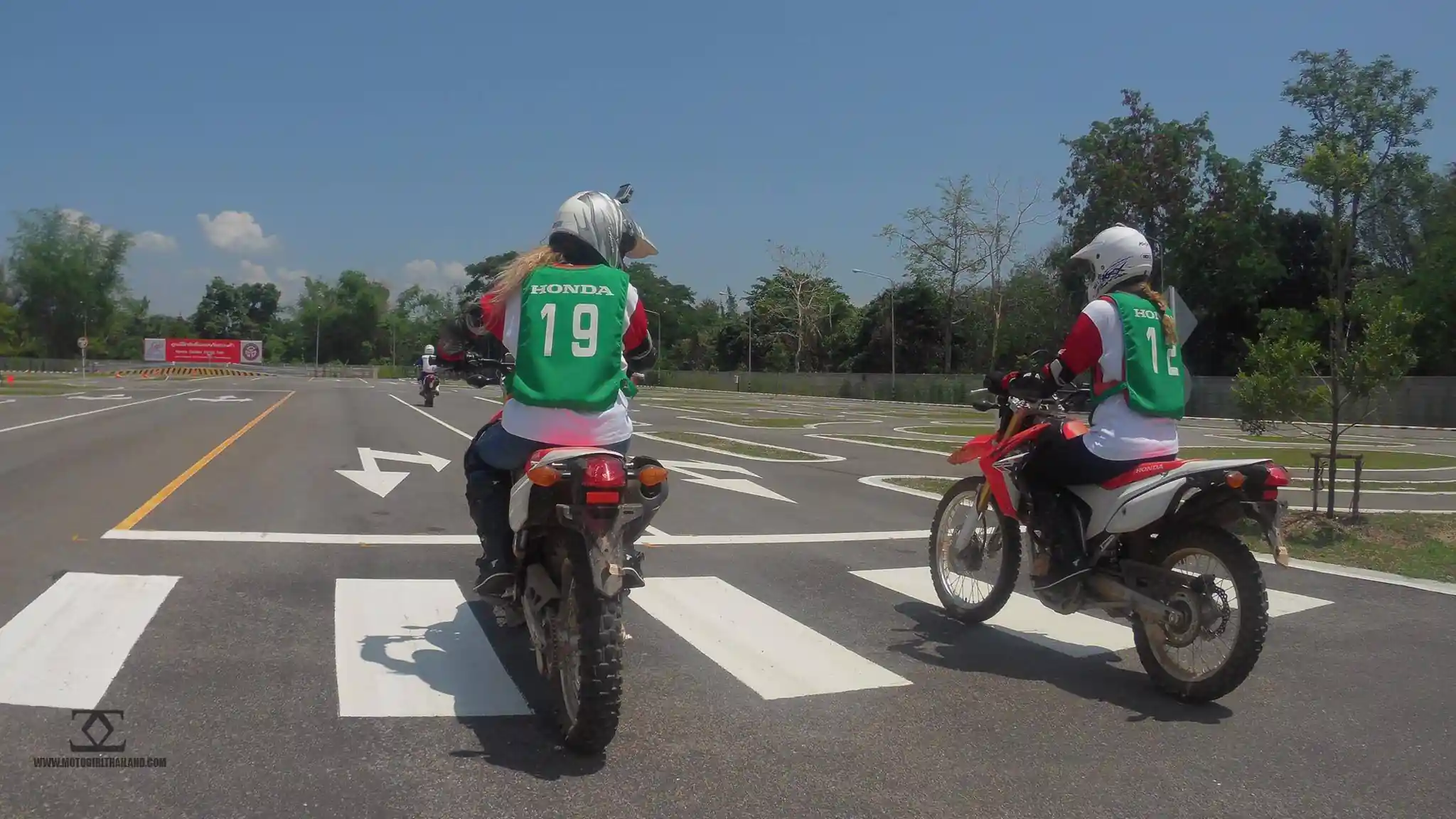
What Happens on The Day
Stage 1 – Learning the Basics
The morning starts on the asphalt training area rather than straight onto the dirt. This allows everyone to become familiar with the bike while learning the correct body position, balance and slow-speed control.
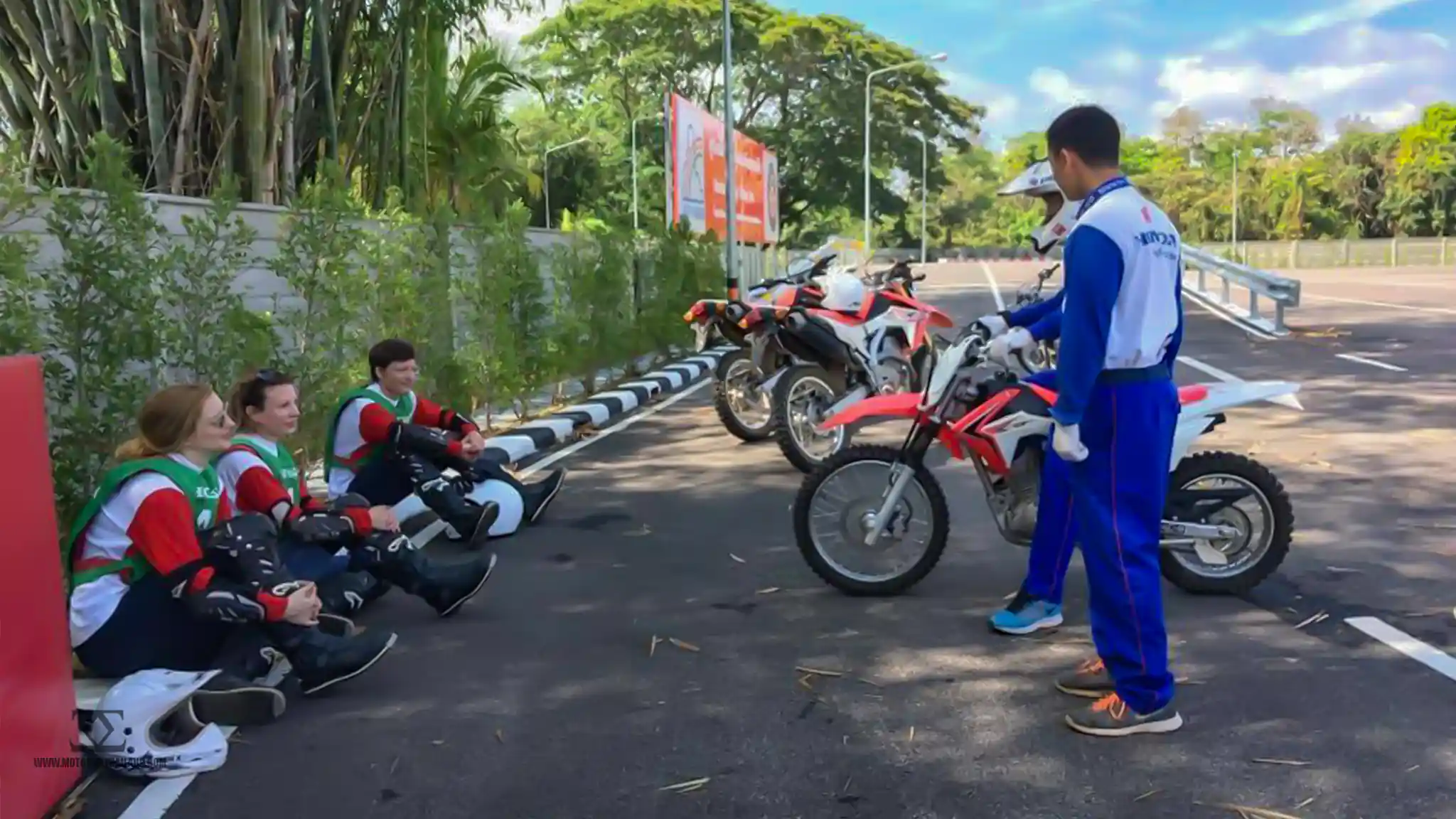
Exercises include cone weaving, tight turns, balance drills, correct standing position, and body positioning.
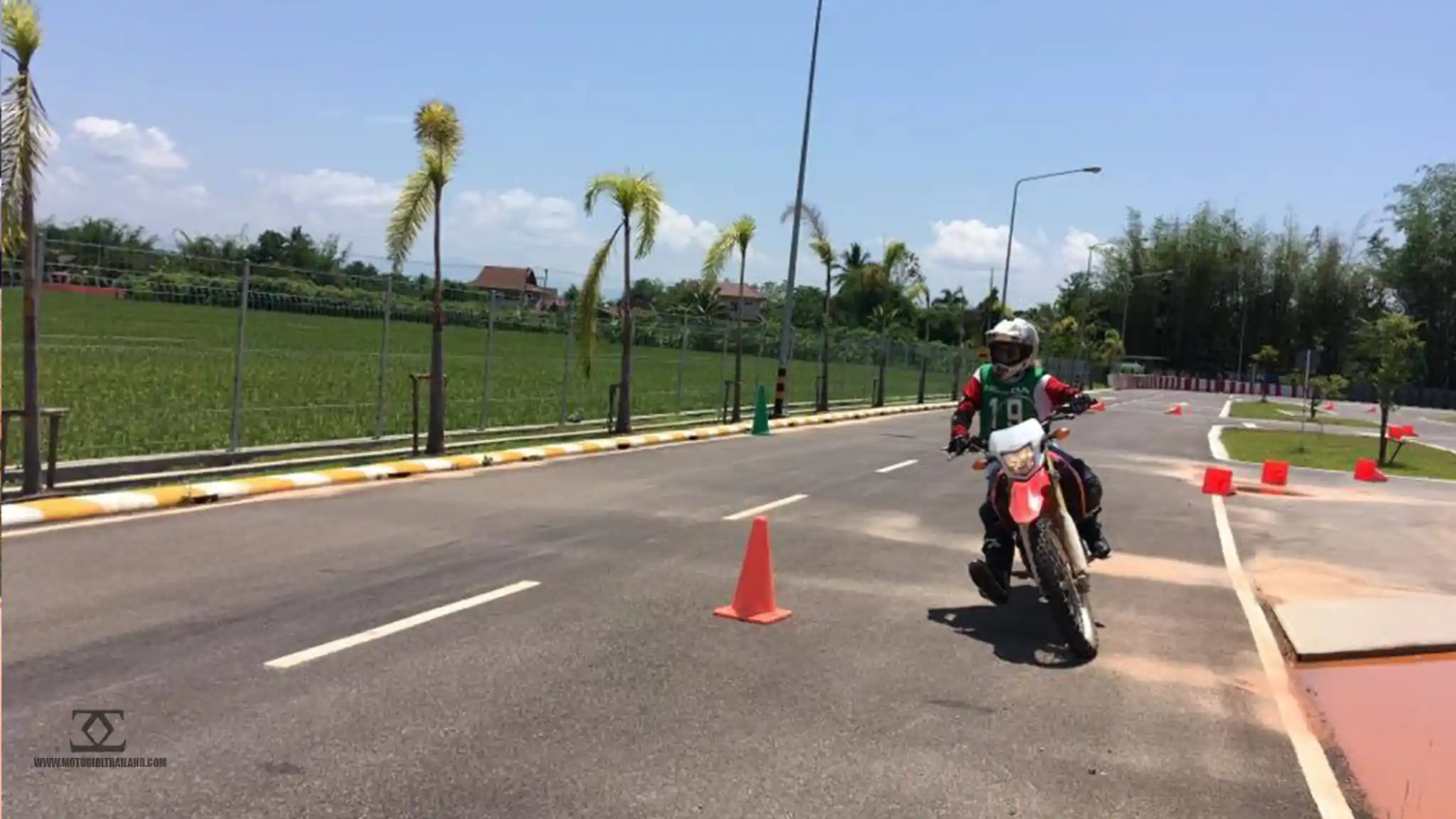
One of the biggest surprises for me was just how different dirt riding techniques are compared to road riding. The instructors spent a lot of time correcting our posture and teaching us to let the bike move naturally beneath us instead of fighting it.
Lunch Break
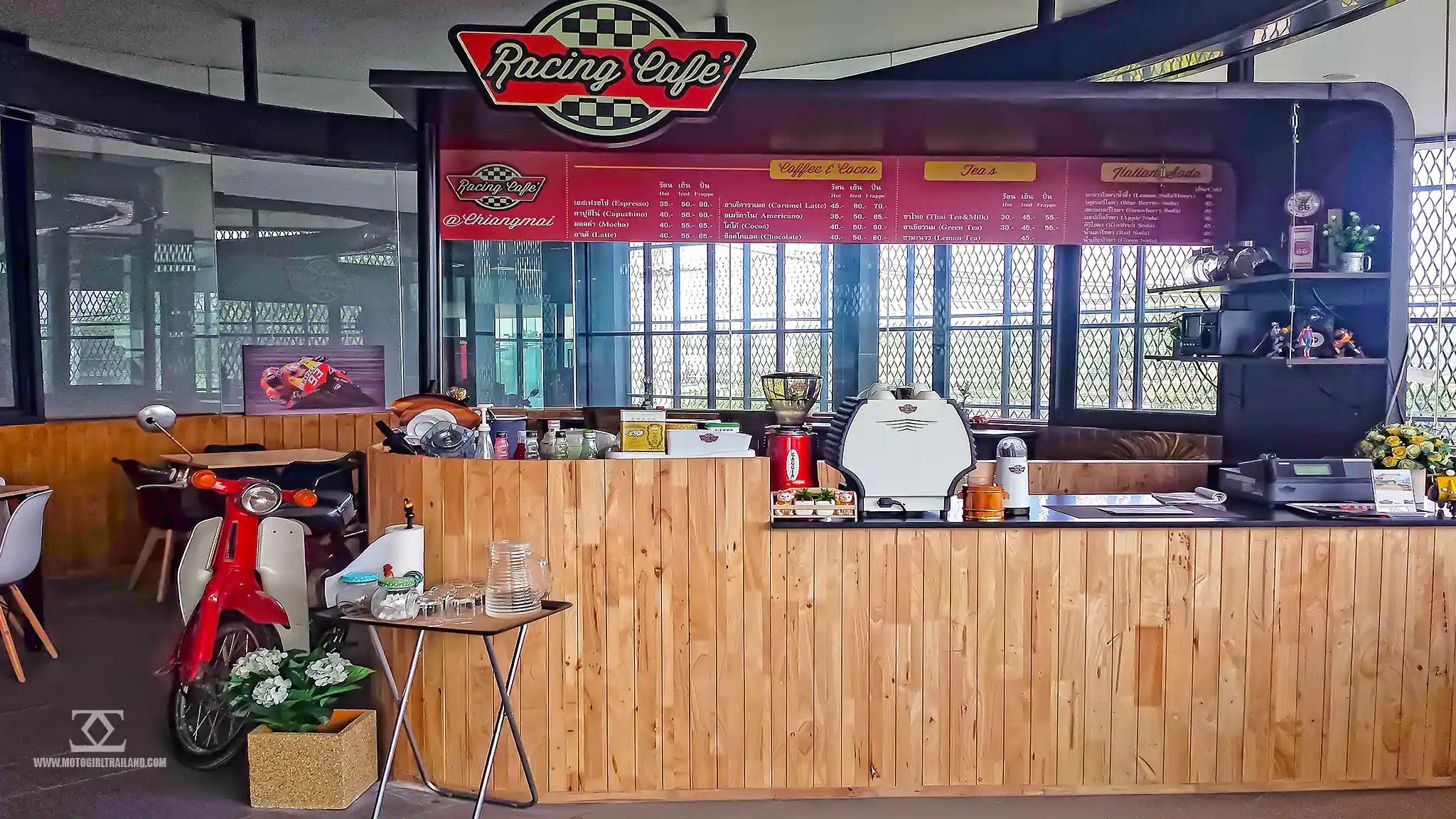
Around midday there’s approximately an hour for lunch. The Honda Park has a small coffee shop and snack shop. You can pre-order a lunch meal during registration, which is served in the cafeteria at lunchtime. Alternatively, head across the main highway to one of the nearby local restaurants.
Stage 2 – Onto the Dirt
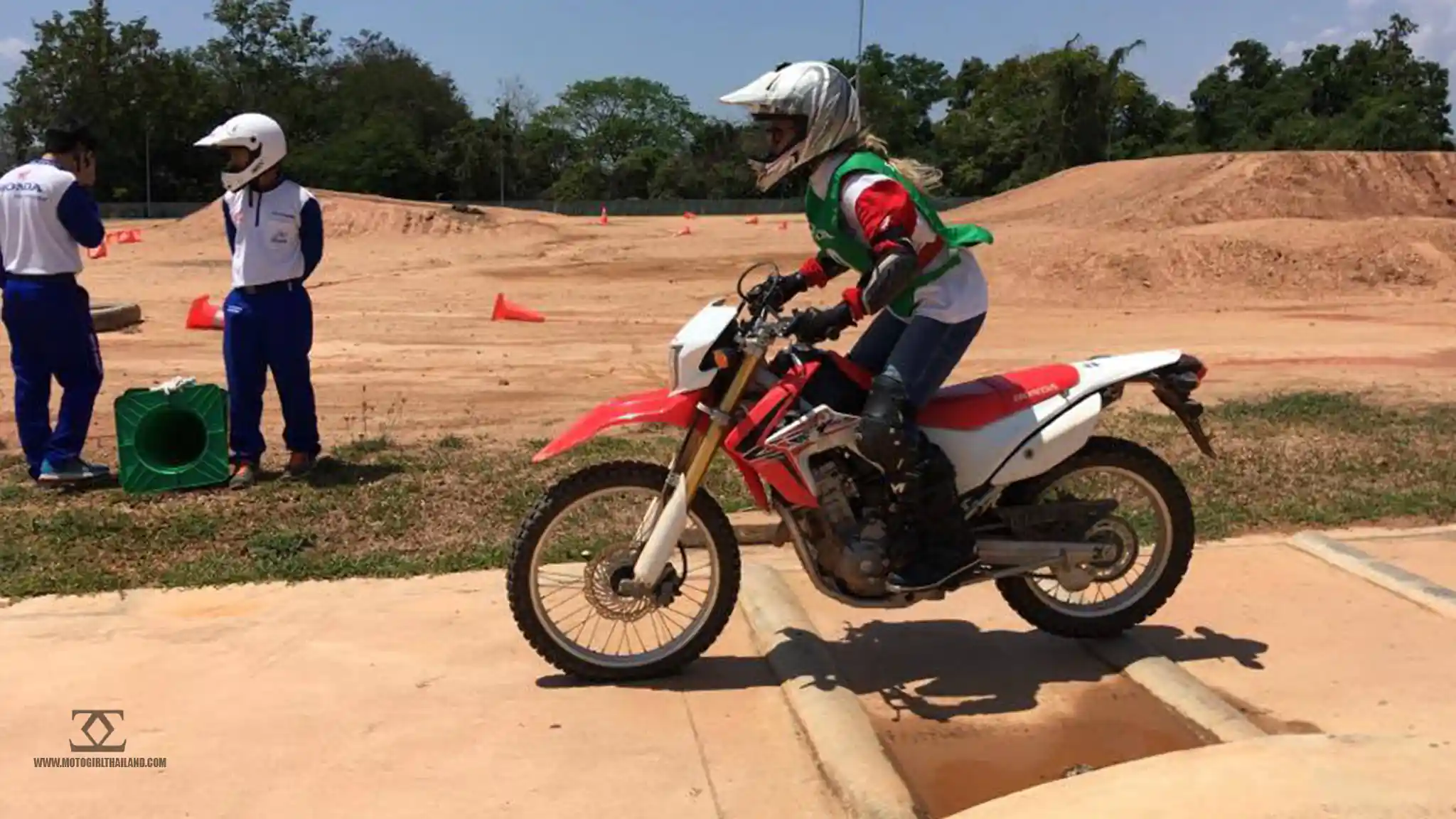
After lunch the course continues on Honda’s purpose-built dirt training area.
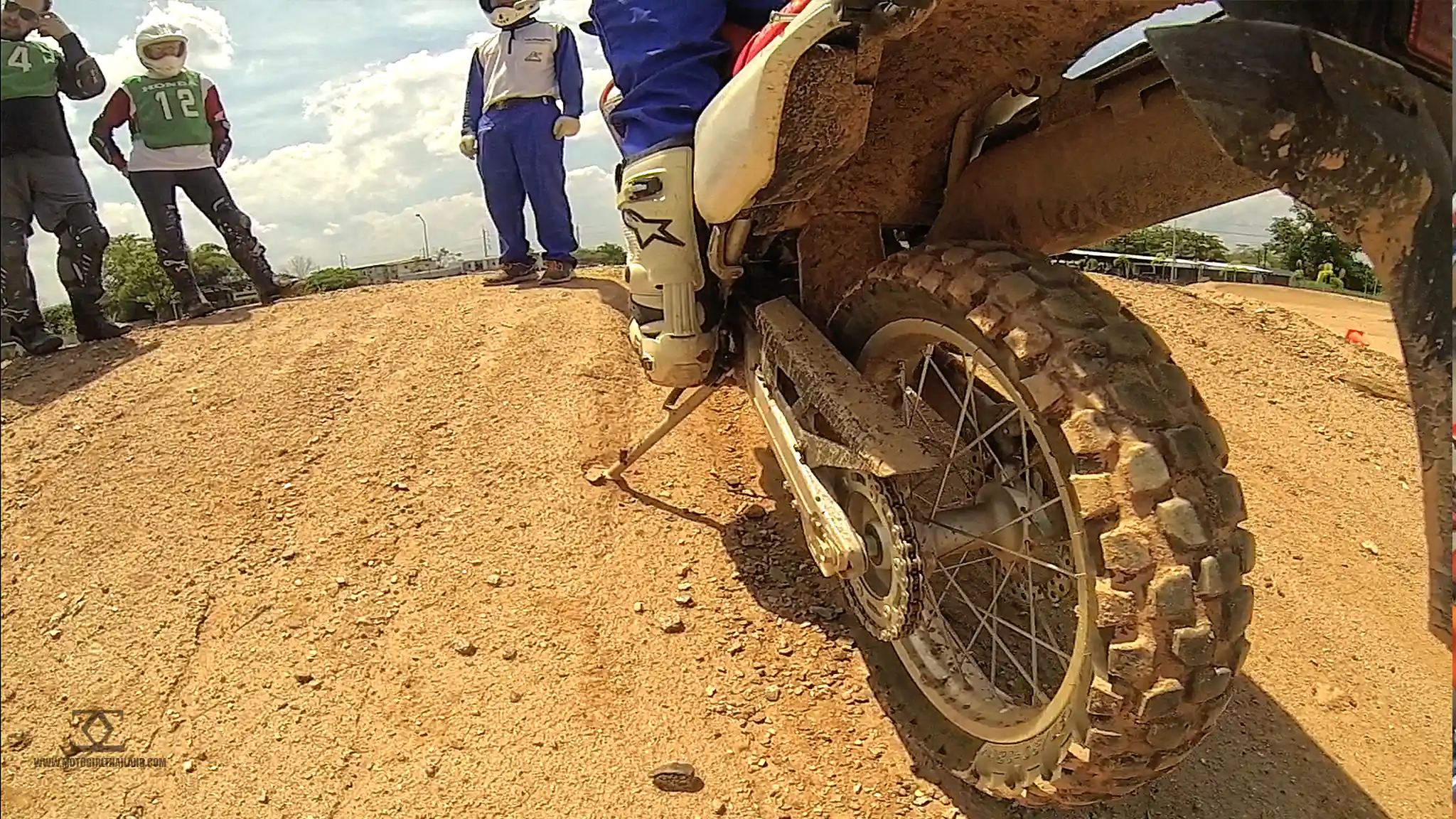
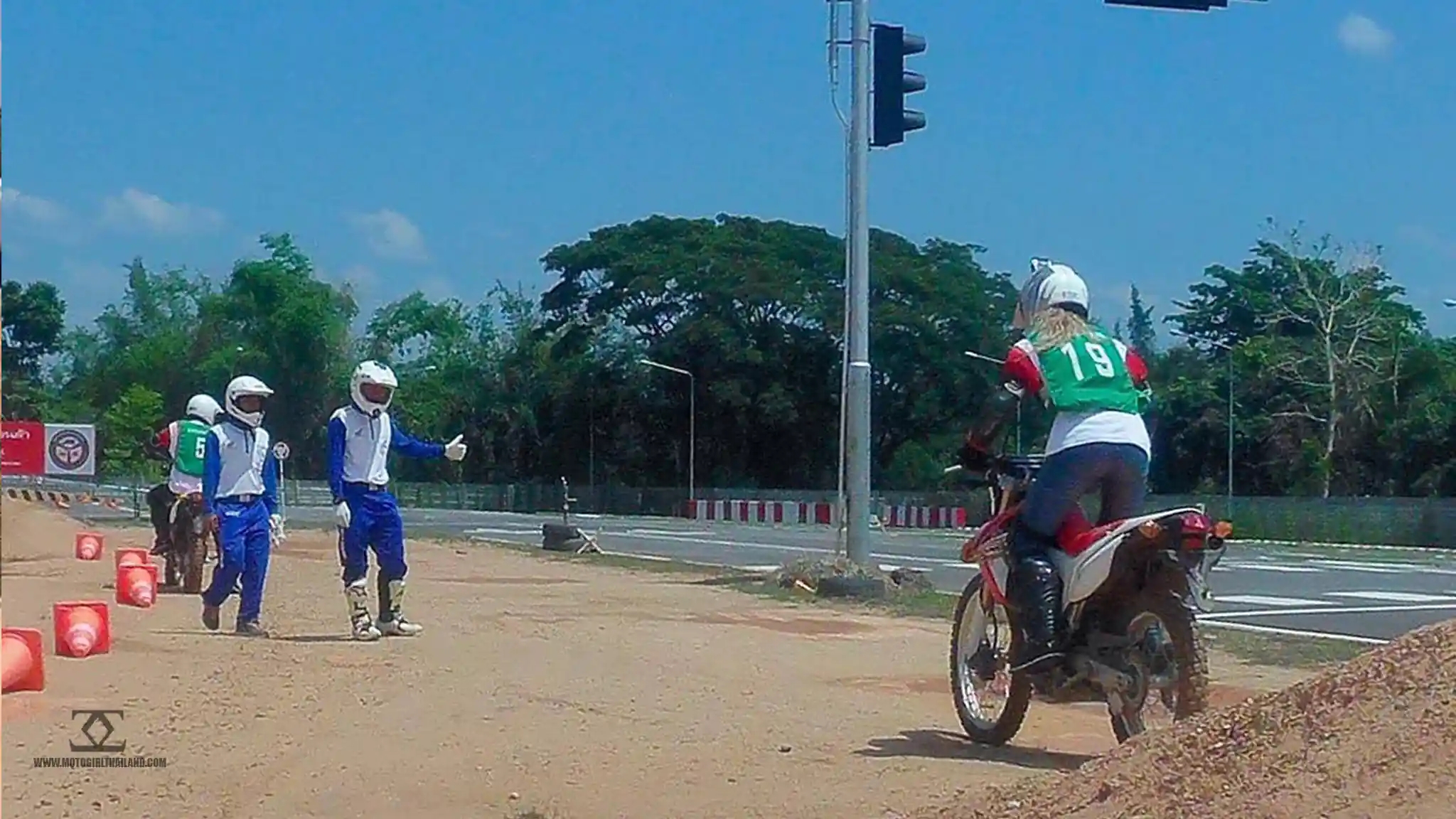
The instructors gradually introduce more riding techniques, focusing on slow-speed balance and body positioning. Parts of the track are even watered down throughout the day to simulate muddy conditions.
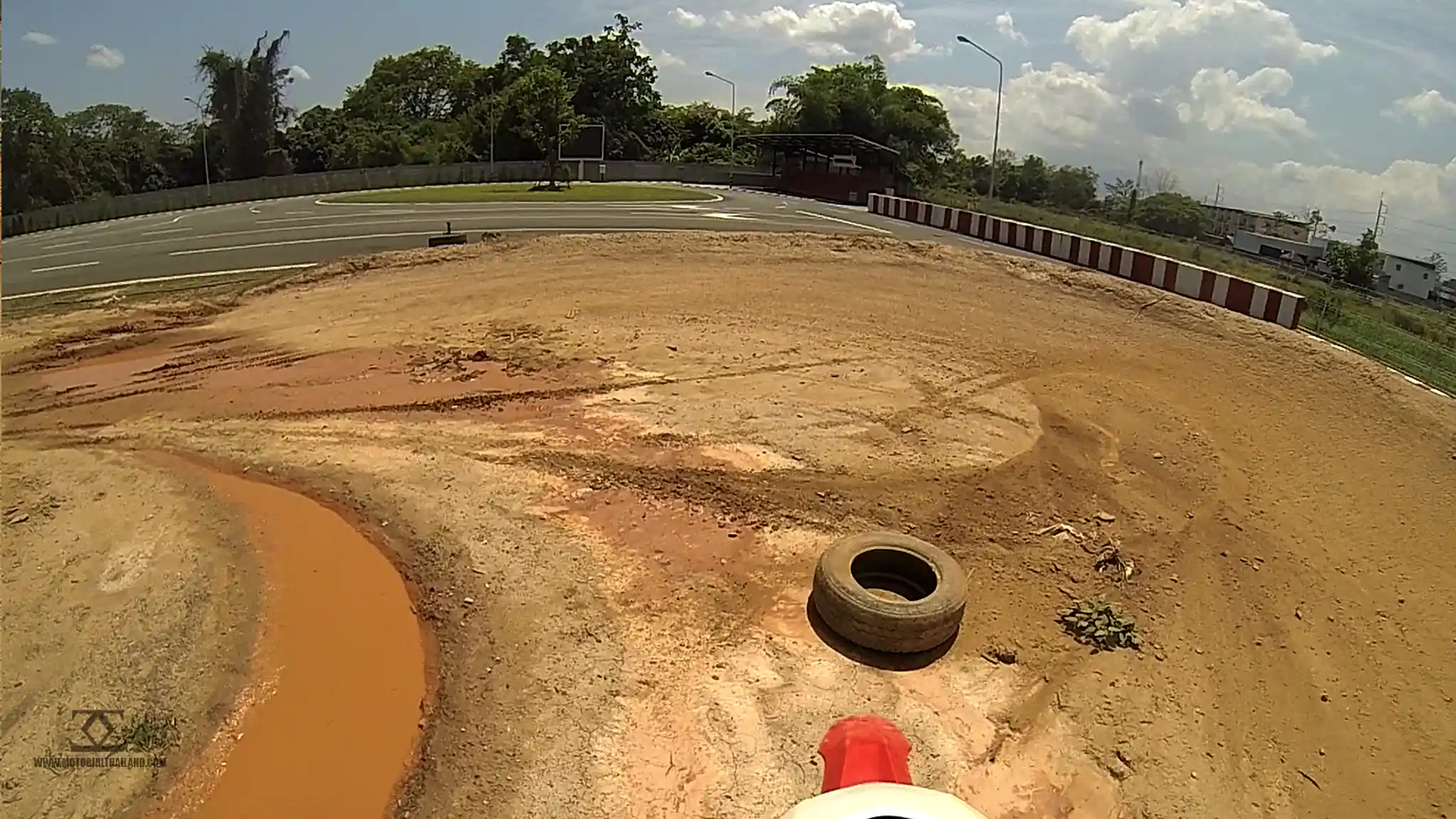
Towards the end of the afternoon you’ll have the chance to practise independently, putting everything together over several laps of the course.
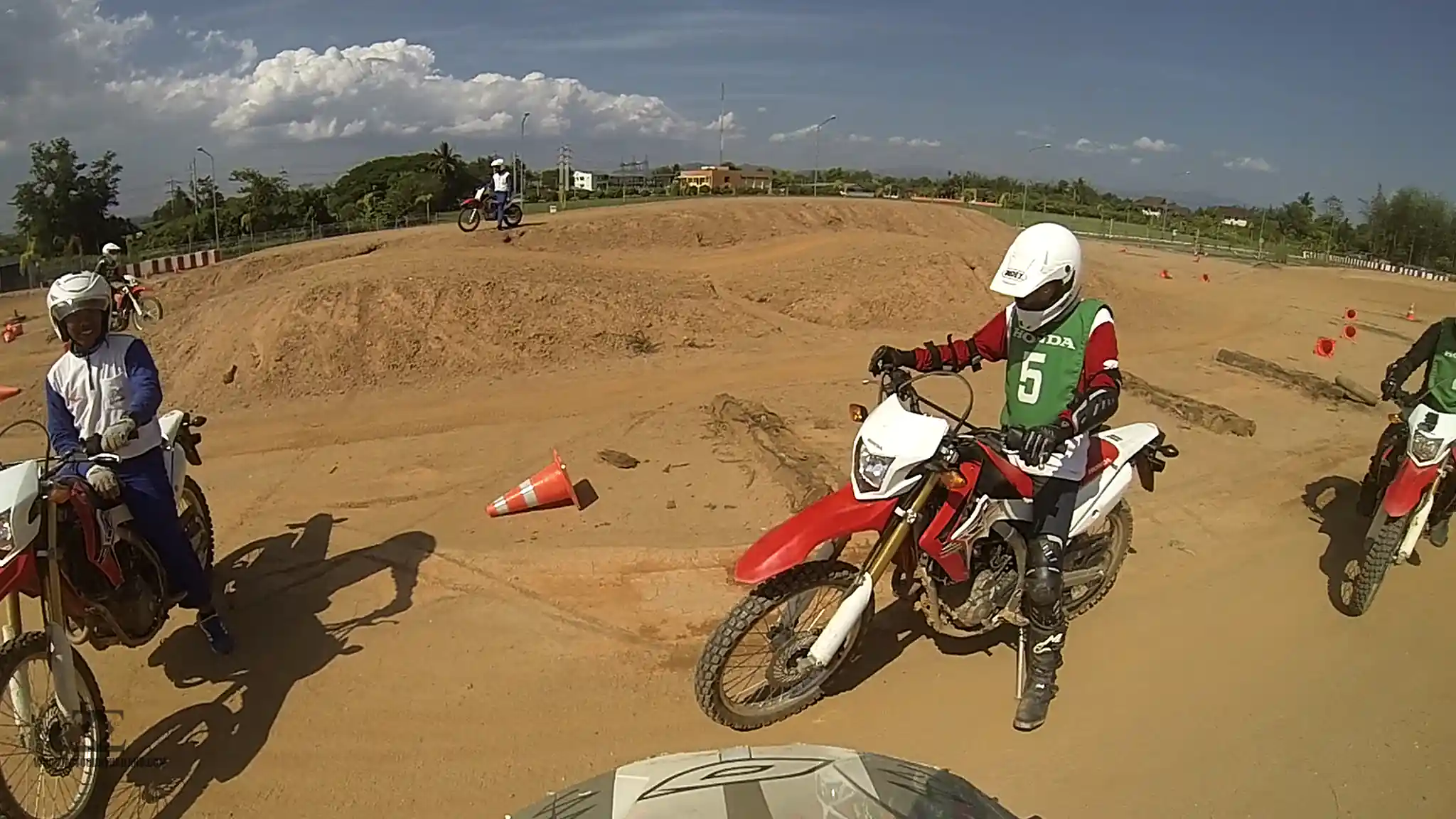
– End of course.
Beginners Course – Video
My Experience of “Beginners Dirt”
My Personal Experience of Beginners Dirt
I have completed the beginners course on a couple of occasions. It’s an excellent refresher, even after you’ve gained more off-road experience.
When I first took the course, my instructor pushed me to focus on my elbow placement, which kept dropping down. He took me aside and physically repositioned my arms and body on the bike, which helped dramatically.
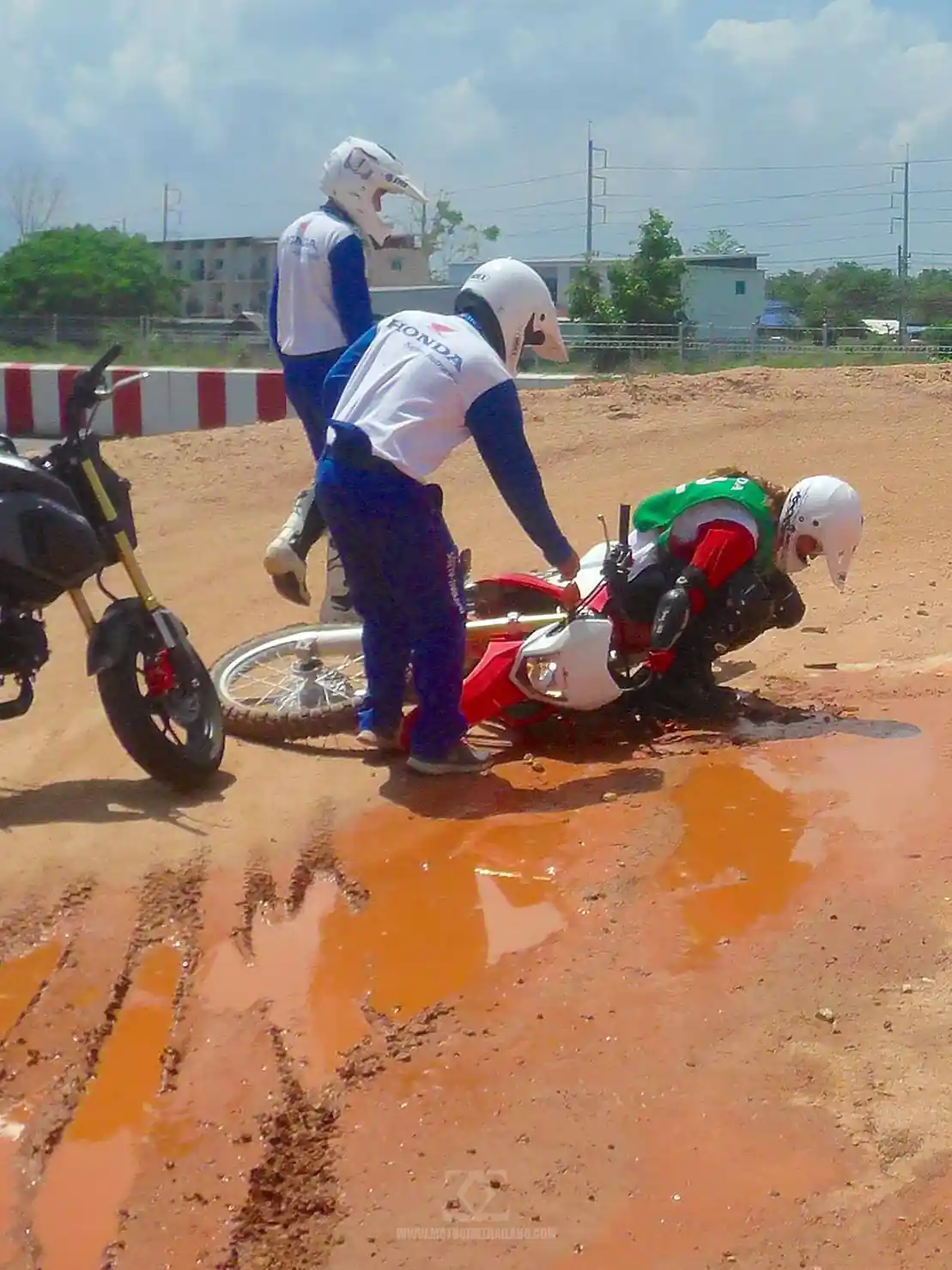
The instructor was professional and encouraging throughout the entire experience, offering invaluable advice peppered with fun moments and laughter.
Experienced Course
Experienced Dirt Course
Once you’ve completed the Beginner Dirt Course, you’re eligible to move on to the Experienced Dirt Course. While it builds upon the same core techniques, this course introduces more technical obstacles and focuses on developing slow-speed precision, balance, momentum, and confidence over challenging terrain.
Don’t let the word Experienced fool you, though. The emphasis isn’t on riding fast, it’s actually quite the opposite. Many of the exercises require careful clutch control, balance, and smooth inputs rather than speed or power.
The course runs from 9:00am until around 4:00pm, with a lunch break around midday.
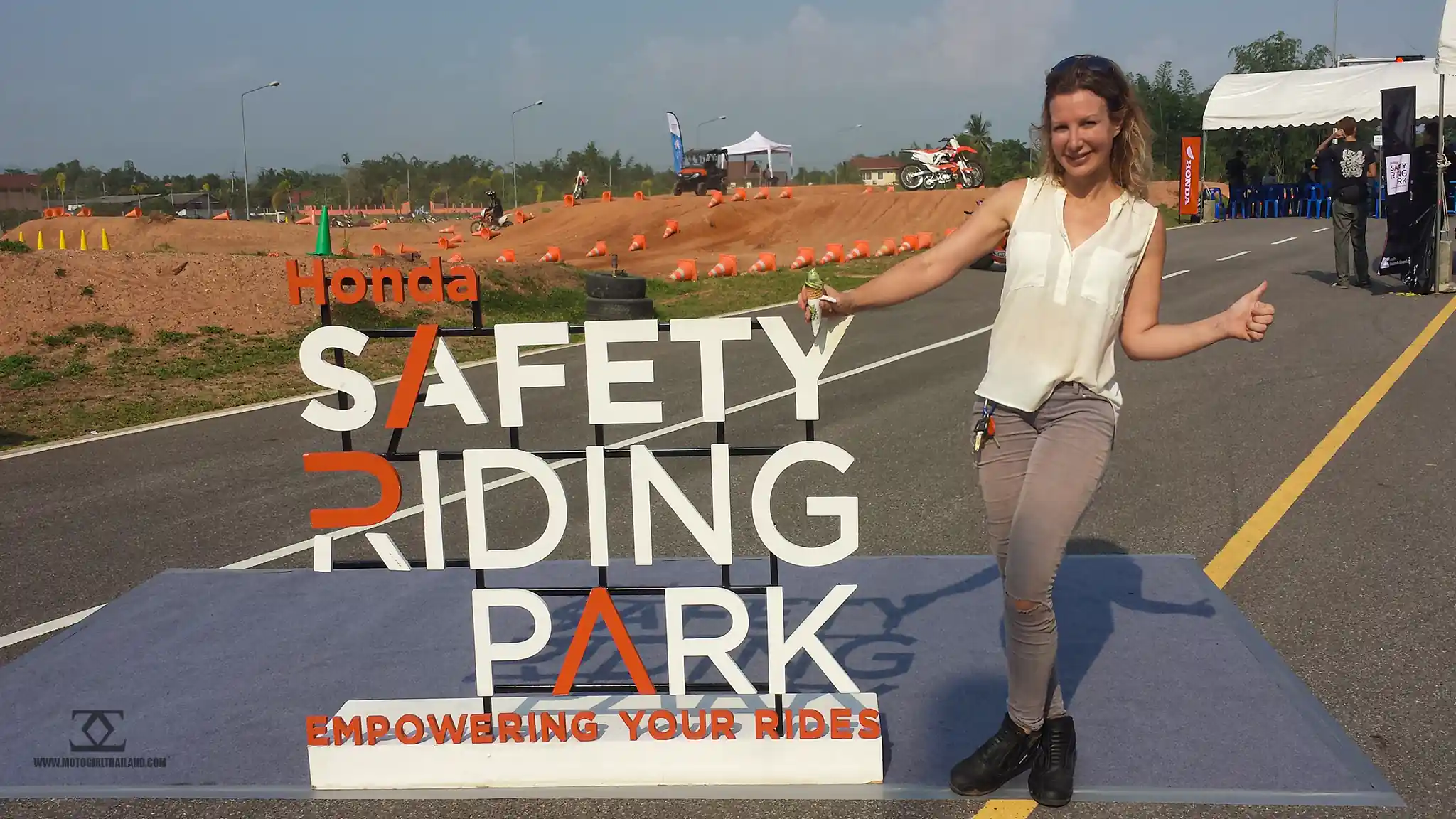
What Happens on The Day
Stage 1 – Slow Speed Control
The morning begins with a refresher of the techniques learned on the Beginner course before moving onto more technical riding exercises.
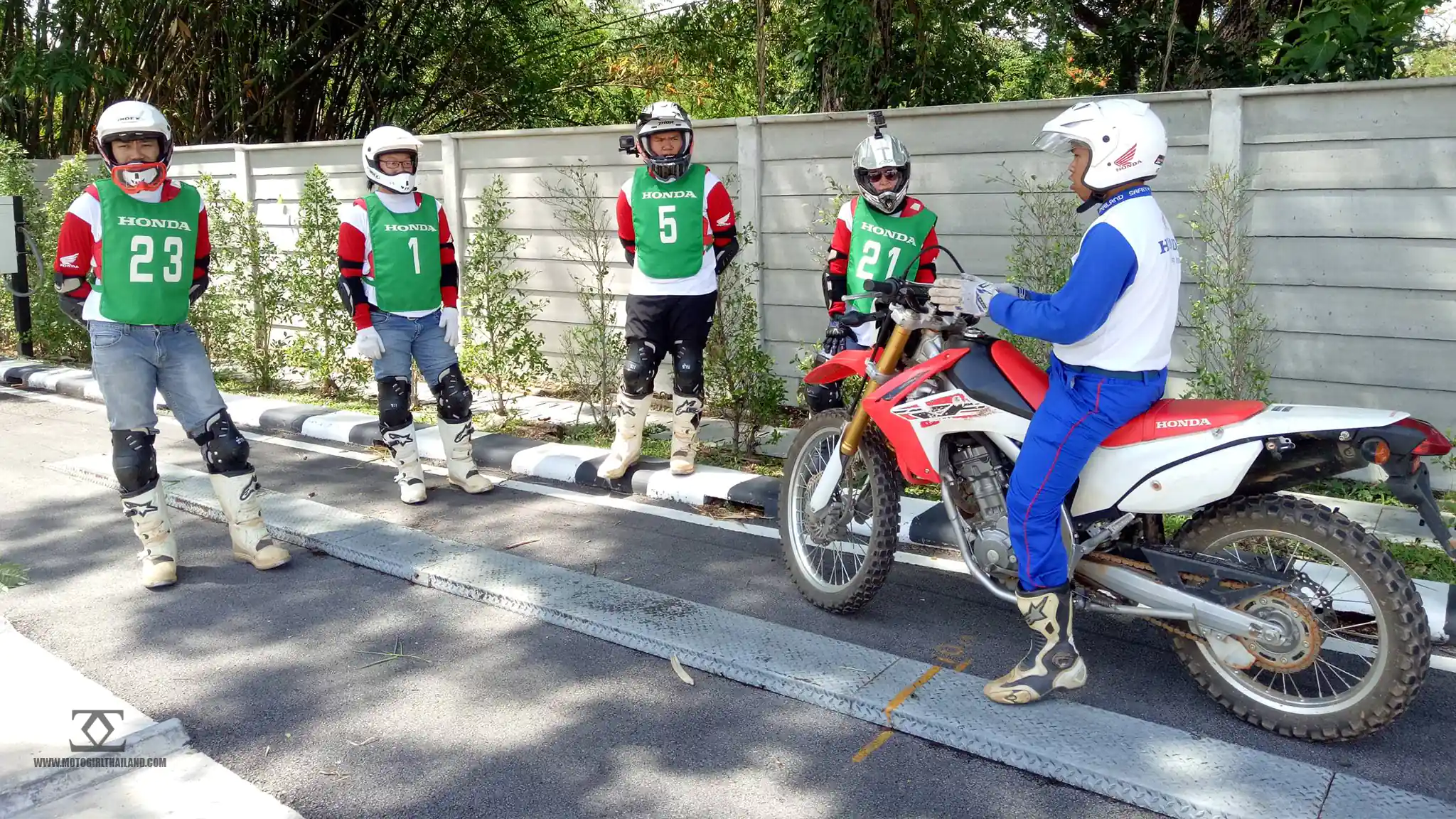
Rather than focusing on speed, the instructors encourage slow, controlled riding while standing on the pegs. The focus is on balancing over narrow ramps, maintaining momentum at walking pace, and negotiating uneven terrain without relying on speed to carry you through.
One exercise simulated riding through a rocky riverbed. The aim is to keep the bike moving slowly and smoothly in first gear while carefully choosing a line through the obstacles.
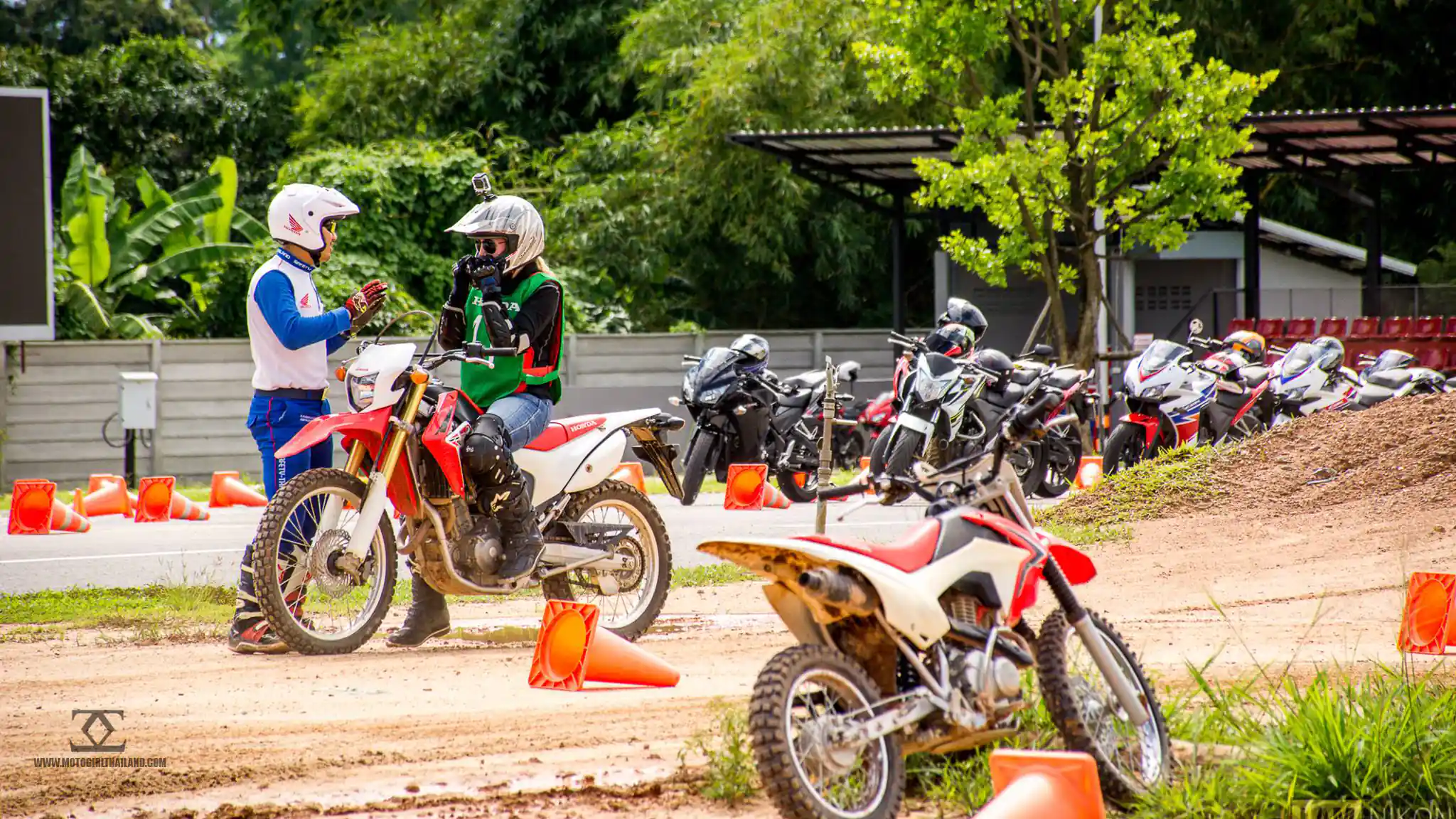
Working at such slow speeds sounds easy on paper, but under the midday Thai sun it can be demanding.
Lunch Break
Around midday there’s approximately an hour for lunch. The Honda Park has a small coffee shop and snack shop. You have an option to pre-order meals in the morning, which will be handed out to you in the Honda Park cafeteria. Alternatively, head across the main highway to one of the nearby local restaurants.
Stage 2 – Technical Obstacles
The afternoon focuses on tackling more challenging terrain.
This includes hill climbs, riding over larger rocks, angled descents, slippery sections, and learning how to carry momentum without simply relying on more throttle.
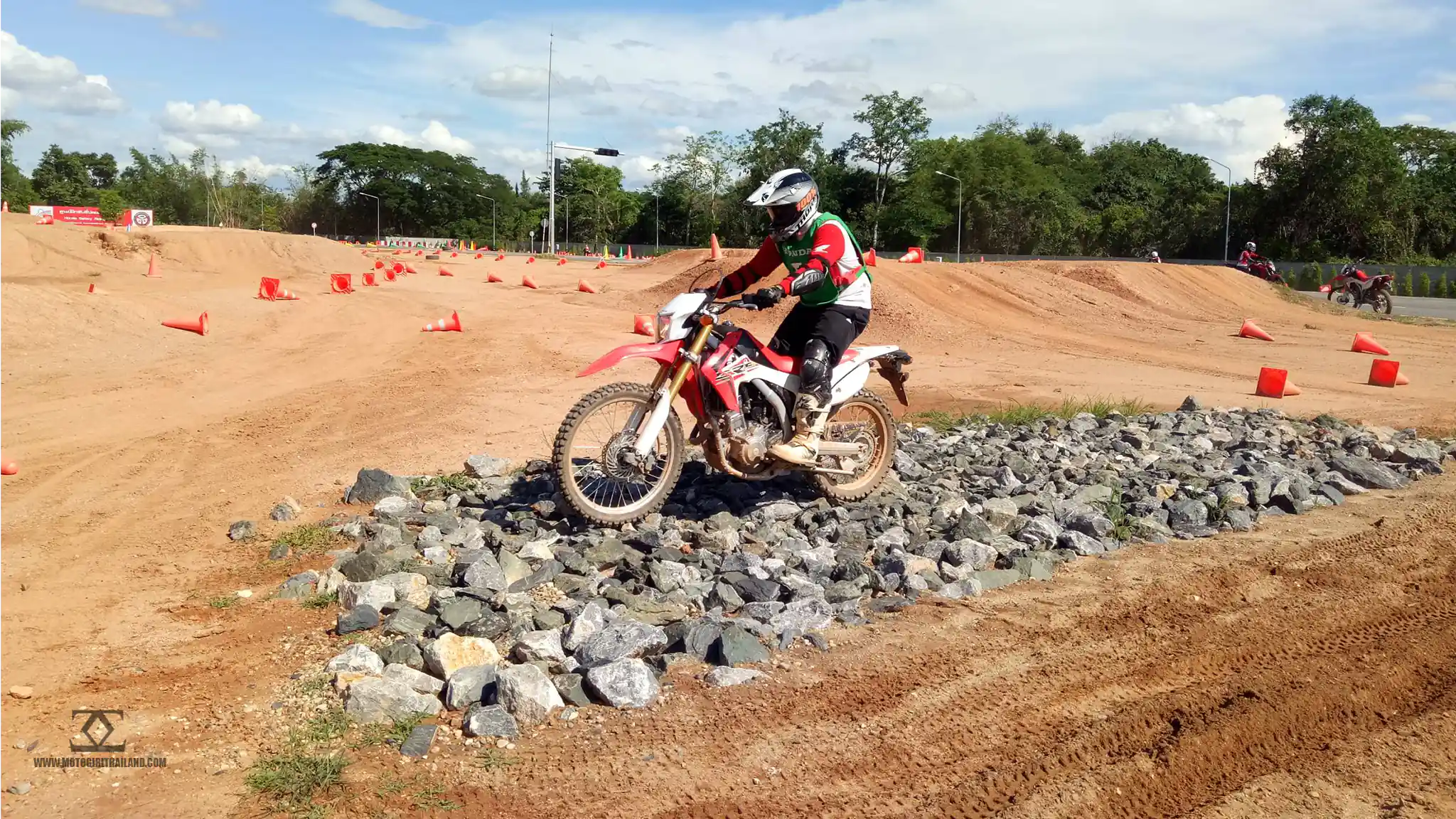
One of the biggest lessons for me personally, was hill climbing. I assumed the answer was simply to accelerate harder, but the instructors were teaching something very different. The goal is to build smooth, controlled momentum in first gear, carefully selecting a line and allowing the bike to climb steadily rather than attacking the hill with speed.
Doing this in first gear only, is quite challenging.
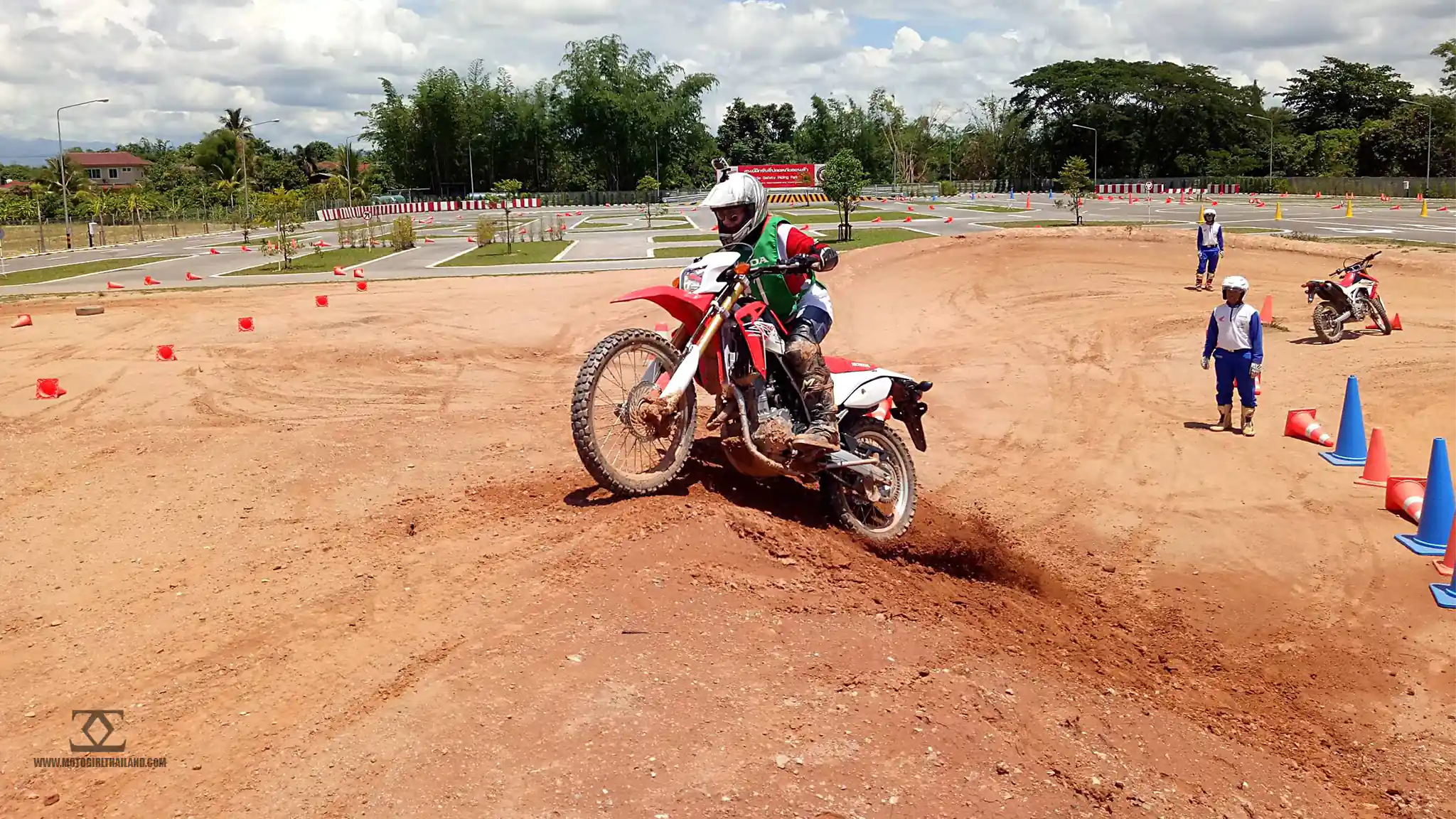
Towards the latter part of the afternoon, students complete several laps of the course under the watchful eye of the instructors, who periodically hose down sections of the track to simulate muddy conditions.
– End of course.
Experienced Course – Video
My Experience of “Experienced Dirt”
My Personal Experience of Experienced Dirt
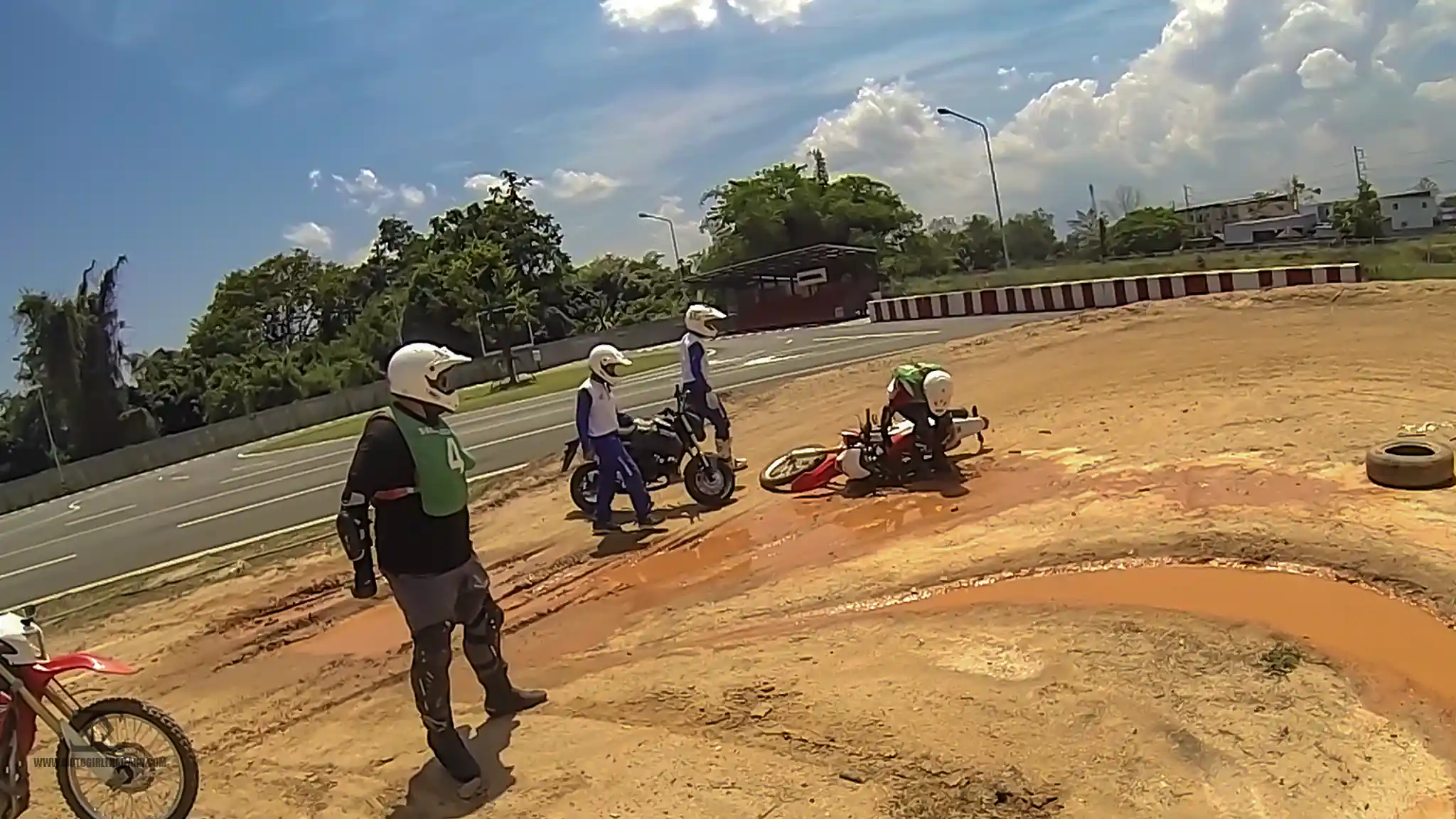
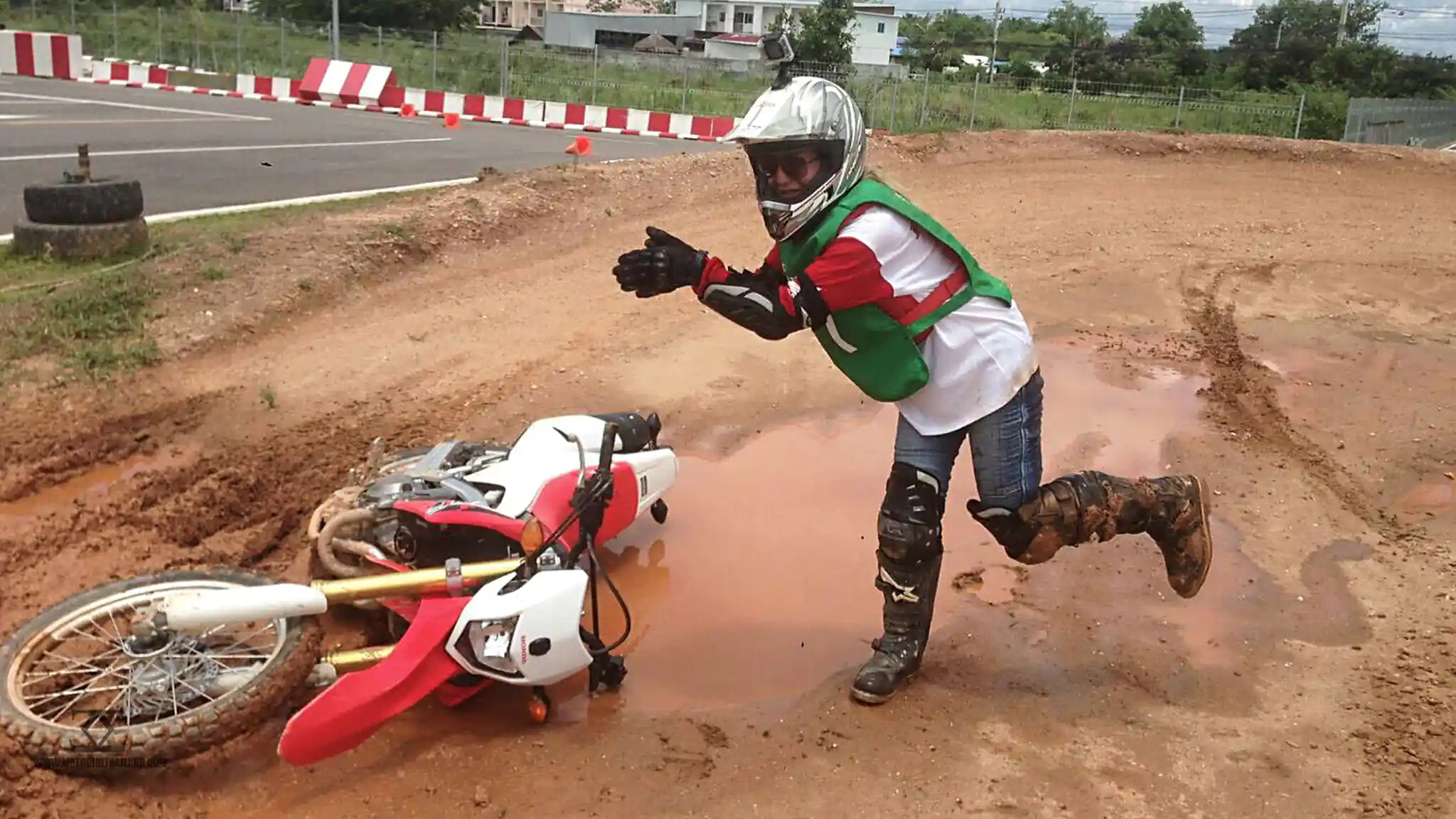
If I’m being completely honest… the course humbled me. I spent a fair amount of the day picking my bike up off the ground.
I recall one particular muddy corner became my nemesis. After slipping over there for the second time, landing squarely in a large muddy puddle, one of the instructors came running over to check I was alright before jokingly asking me in Thai, “Why do you want to go swimming?”. Thankfully, I could laugh about it.
The hill climbing section proved to be my biggest challenge. I struggled to trust the technique we were being taught, and my instinct was always to add more throttle. When I later shared the video online, lots of people commented that I simply needed to ride faster.
The reality was quite different.
The instructors were deliberately teaching slow-speed technical riding using first gear. This wasn’t about blasting up a hill with power, it was about learning balance, body position, choosing the correct line, and building just enough momentum to let the bike do the work.
As the afternoon wore on, the combination of repeated falls, the intense heat, and the physical effort began to catch up with me. By the time we reached the final exercises, riding over larger rocks and descending angled slopes. I had simply run out of energy.

Rather than pushing on and risking a mistake through fatigue, I decided to call it a day and watched the remaining exercises from the sidelines. So, if you find yourself exhausted and unable to continue, do not be embarrassed. It is a challenging ride day, especially if the weather is hot.
Knowing when to stop is just as important as knowing when to keep going. I’d learned a huge amount, and there was no shame in recognising my limits.
The Experienced Dirt Course is a noticeable step up from the Beginner course. It’s physically demanding, technically challenging, and occasionally frustrating, but that’s exactly what makes it so rewarding.
Final Personal Thoughts
My Experience as a Woman Taking These Courses
One thing that really stood out throughout the day was the atmosphere. I was often the only woman on the course, yet I never once felt out of place. My fellow students were incredibly supportive, always encouraging each other after a fall or celebrating when someone finally nailed a difficult section.
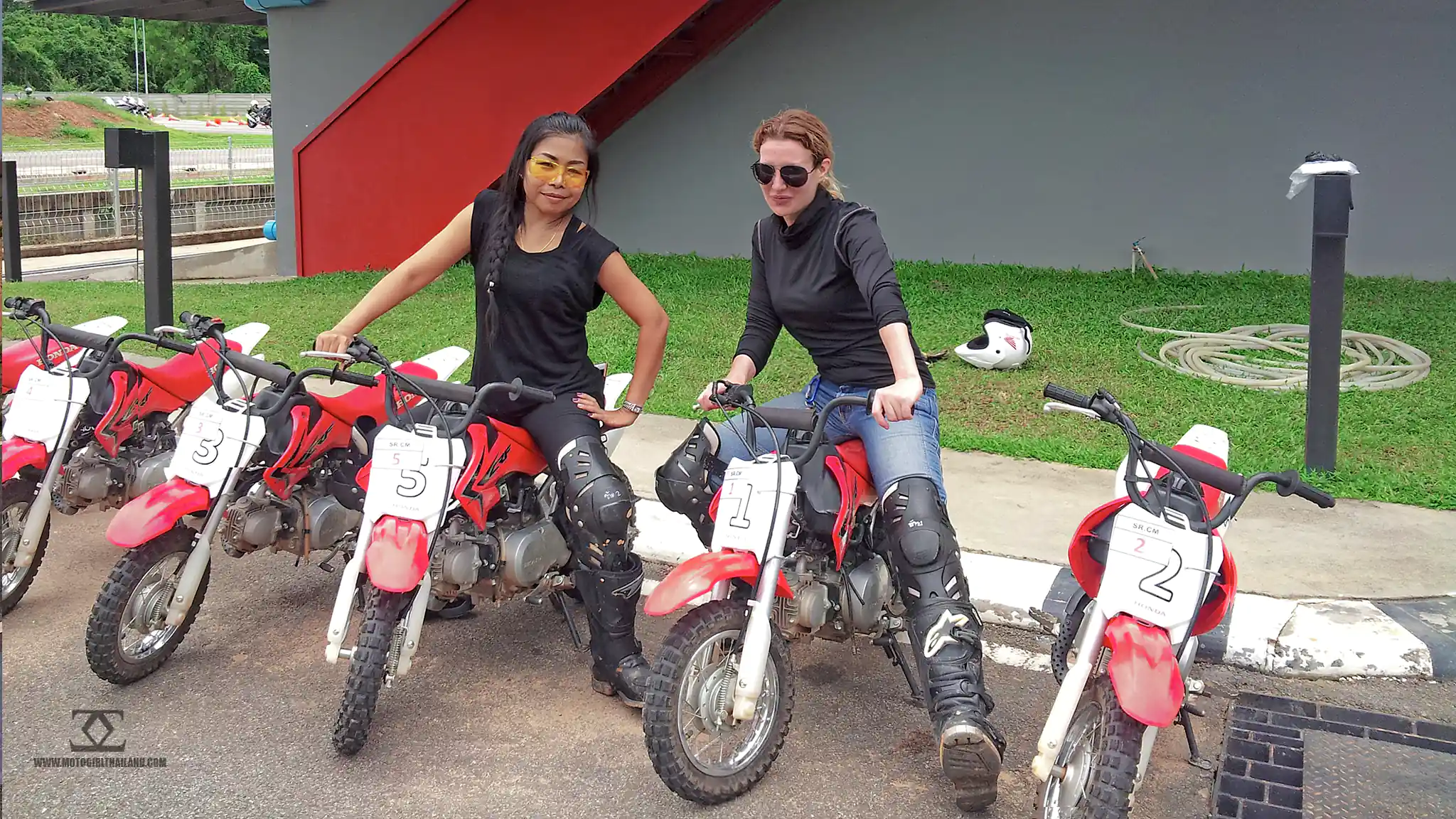
I hope you found the Honda Safety Riding Park guide useful. If you have questions I haven’t covered, drop them in the comments below.
When is your next courses for Basic Big bike, Beginning Dirt and Basic dirt?
Hi Len,
Please can you contact Honda Safety Riding direct.
(I just wrote up about them as i took a course, but do not know the details about courses myself).
This is their facebook page: https://www.facebook.com/Honda-Safety-Riding-Park-Chiang-Mai-1733561466926527/
Best of luck! 🙂